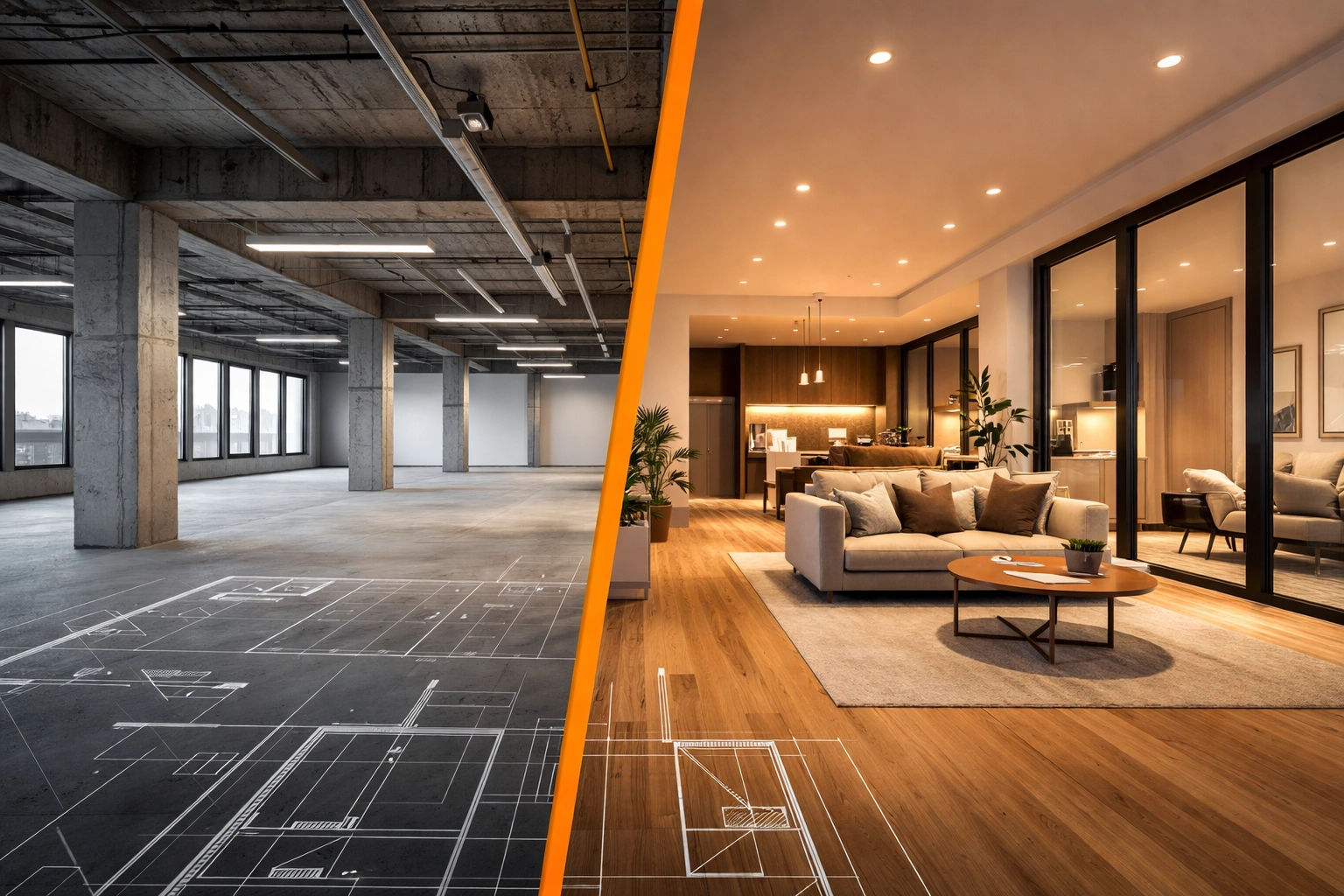
San Francisco's Financial District is sitting at a 35% office vacancy rate. Let that sink in. That's millions of square feet of prime real estate collecting dust while the Bay Area faces an ongoing housing crunch. The math doesn't add up: until you flip the script.
Office-to-residential conversion isn't just a buzzword anymore. It's a legitimate strategy that smart developers and investors are using to turn underperforming commercial assets into thriving residential communities. And in 2026, the city has finally made it easier than ever to get these projects off the ground.
This guide walks you through the five essential steps to underwrite SF office-to-residential conversions: designed to empower developers, investors, and anyone exploring Bay Area real estate investment opportunities. Whether you're a seasoned real estate development firm or just getting started, this is your roadmap.
Step 1: Navigate the New Zoning & Policy Landscape
Here's the good news: San Francisco has spent the last two years streamlining the conversion process. If you tried this in 2022, you'd have hit a wall of red tape. In 2026? The pathway is clearer.

What's changed:
- Eligibility zones are now well-defined. Projects must be located in C-3 zoning districts or C-2 districts east of Franklin Street/13th Street and north of Townsend Street.
- The city has capped fee waivers at the first 7 million square feet of conversion space: so timing matters.
- You'll need to secure a building or site permit within five years of final entitlement approvals to qualify for incentives.
- The Department of Building Inspections published clarified guidelines in September 2024, which means fewer surprises during plan review.
Action item: Before you run numbers on any deal, confirm your target property falls within eligible zones. This single step will save you months of wasted effort.
For Bay Area developers serious about urban neighborhood revitalization, these policy shifts represent a genuine window of opportunity: but it won't stay open forever.
Step 2: Assess Structural Feasibility (The Atlas Premier Factor)
Not every office building makes a good residential candidate. Floor plates, window placement, ceiling heights, plumbing risers, and seismic requirements all play a role.
This is where structural due diligence separates profitable projects from money pits.
Key cost benchmarks to model:
- Hard construction costs currently run between $472,000 to $633,000 per unit (excluding seismic upgrades)
- Soft costs: including city fees: add another 20-40% on top of total project development costs
- Recent incentives can reduce costs by $250,000–$300,000 per unit when you factor in fee waivers and property tax benefits
The buildings that convert most efficiently tend to have:
- Narrow floor plates (ideal for natural light in units)
- Adequate floor-to-ceiling heights
- Centralized mechanical systems that can be reconfigured
- Manageable seismic retrofit requirements
At McFadden Finch Holdings Company, our Atlas Premier division specializes in exactly this kind of structural analysis. Having boots-on-the-ground expertise in San Francisco housing development means you're not guessing: you're working from real data.
Step 3: Structure the Financing (The Nucleus Holdings Approach)
Let's talk money. Conversion projects require creative capital stacks, especially when traditional lenders still view adaptive reuse as "alternative."
Incentives you should be modeling:
| Incentive | Details |
|---|---|
| Real estate transfer tax waiver | Up to 5 million sq ft (Prop C, March 2024) |
| Inclusionary housing fee waiver | Up to 7 million sq ft (approved March 2025) |
| Development impact fee waiver | Bundled with inclusionary waiver |
| Property tax reimbursement | Via downtown revitalization financing district (June 2025) |
These incentives aren't automatic: you need to apply correctly and structure your deal timeline to qualify. Miss a deadline, and you're leaving hundreds of thousands on the table.
This is where working with the right real estate development firm makes all the difference. Nucleus Holdings, part of the MFHC family, helps developers and investors structure financing that maximizes ROI while navigating the incentive landscape.
Pro tip: Build your pro forma with and without incentives. Know your break-even point in both scenarios before you commit.
Step 4: Quantify the Community Impact
Here's something most underwriting guides skip: the neighborhood.
Urban neighborhood revitalization isn't just a feel-good talking point: it's a material factor in project success. Cities are more likely to fast-track projects that demonstrate community benefit. Neighbors are more likely to support developments that address real needs. And tenants are more likely to pay premium rents in thriving, walkable neighborhoods.
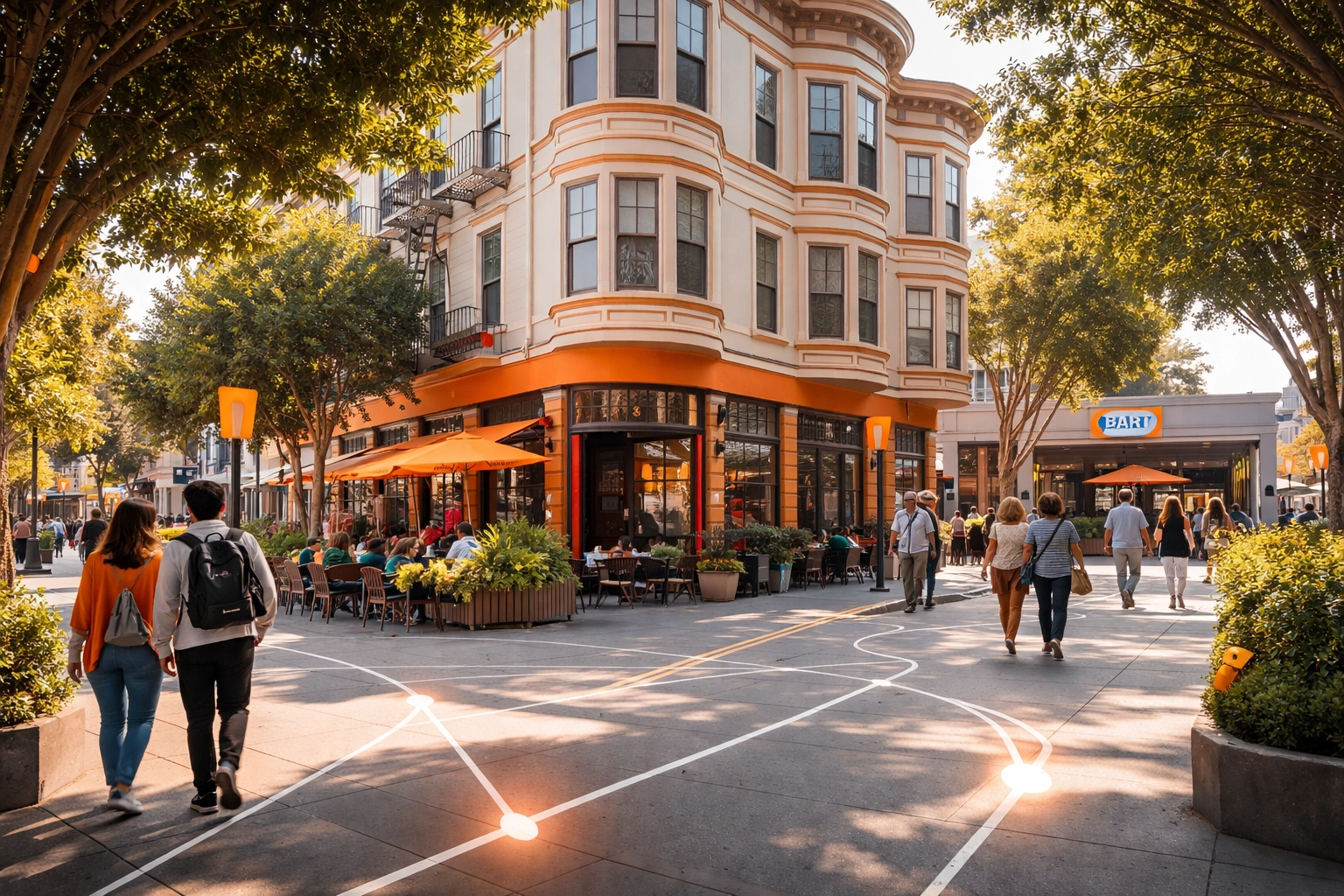
When underwriting, consider:
- Proximity to transit (BART, Muni, Caltrain)
- Retail and amenity mix within walking distance
- School access for family-oriented units
- Local employment centers driving rental demand
Projects that contribute to neighborhood vitality: adding ground-floor retail, preserving historic elements, incorporating affordable units: tend to move faster through approvals and attract stronger tenant pools.
At Drea Finch Real Estate Services, we evaluate every conversion opportunity through this community-first lens. Because a project that works for the neighborhood works better for everyone.
Step 5: Prioritize Speed to Market
In Bay Area real estate investment, timing is everything. The incentive windows are finite. Construction costs keep climbing. And the longer your capital sits in a project, the harder it is to hit your return targets.
Ways to accelerate your timeline:
- Pre-application meetings with Planning and DBI to identify potential issues early
- Modular or prefab interior systems that reduce on-site construction time
- Phased occupancy permits that let you lease completed floors while finishing others
- Experienced GCs with conversion-specific track records
The city's streamlined requirements (updated July 2023) were specifically designed to cut approval timelines for qualifying projects. Use them.
Speed to market isn't just about getting to revenue faster: it's about reducing exposure to market shifts, interest rate changes, and cost escalation.
Ready to Move Forward?
San Francisco's office-to-residential conversion opportunity is real, but it's not simple. Between zoning requirements, structural analysis, financing incentives, community considerations, and execution timelines, there's a lot to coordinate.
That's where Drea Finch Real Estate Services comes in. As part of McFadden Finch Holdings Company, we bring together the expertise, capital relationships, and on-the-ground knowledge to turn complex conversion projects into successful developments.
Whether you're exploring your first conversion or scaling a portfolio, we'd love to talk. Contact us to discuss your next project.
Author: Maury McFadden, Owner – McFadden Finch Holdings Company
Social Media Captions
LinkedIn:
San Francisco's 35% office vacancy rate isn't a crisis: it's an opportunity. Our latest guide breaks down the 5 steps to underwrite office-to-residential conversions in 2026, including new incentives that can save $250K+ per unit. #BayAreaRealEstate #SanFranciscoHousing #RealEstateDevelopment #UrbanRevitalization #AdaptiveReuse
Instagram:
Empty offices → new homes. It's happening in SF, and the city just made it easier. We're breaking down exactly how to underwrite these conversions in 2026. Link in bio. #SFRealEstate #HousingCrisis #RealEstateInvesting #BayAreaDevelopers #UrbanPlanning
Twitter/X:
SF's Financial District has a 35% vacancy rate. Here's how smart developers are turning that into housing; and why 2026 is the year to move. Full breakdown: [link] #SanFrancisco #RealEstateDevelopment #Housing #BayArea #AdaptiveReuse