
Researched by MFHC Staff; Based on findings from CES 2026 and reporting by WebProNews.
When a San Francisco cat owner recently received a 2 AM alert from their litter box, they dismissed it as a glitch. Three hours later, their 8-year-old tabby was at the emergency vet with early-stage urinary blockage: a potentially fatal condition that the AI-powered litter box had flagged before visible symptoms appeared. The cat survived. Without the smart device, the outcome might have been different.
This isn't science fiction. It's the new reality of Bay Area cat care in 2026, where artificial intelligence is moving beyond automated feeders into predictive health monitoring that catches problems before they become crises.[3] The Bay Area has become ground zero for this pet tech revolution, with companies like Companion Labs Inc, Petcube, and PETKIT unveiling AI ecosystems at CES 2026 that transform how we care for our feline companions.[1][4] At Mission Cats, we're integrating these "digital twin" technologies into our in-home care services: not to replace human attention, but to amplify what trained caregivers can detect and act on.
The thesis is straightforward: smart technology in AI cat care 2026 is creating a comprehensive health monitoring system that identifies early warning signs of illness before they become serious, while professional human oversight remains essential for interpretation and intervention.[3][4] The question isn't whether to adopt these tools: it's how to deploy them effectively alongside experienced cat sitters who understand what the data actually means.
The Smart Pet Care Revolution Taking Root in the Bay Area
The Bay Area has emerged as the epicenter of pet technology innovation, with venture-backed startups and established companies racing to solve a common problem: cats hide their symptoms until illness becomes advanced.[1] Unlike dogs, who tend to show distress more openly, felines are "silent sufferers" whose instincts mask pain and discomfort as a survival mechanism.[4] By the time owners notice behavioral changes, kidney disease, diabetes, or urinary issues may already be progressing.
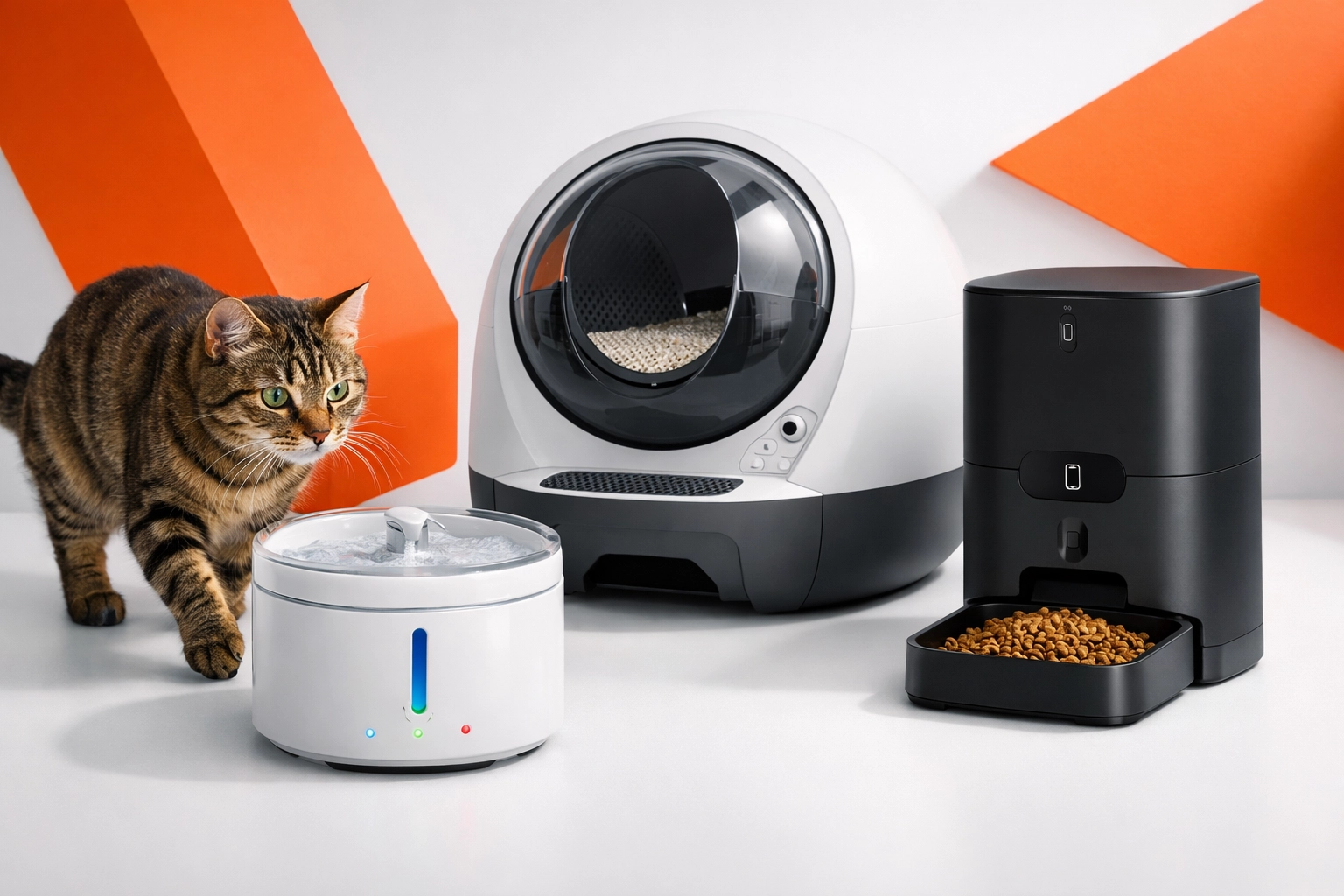
PETKIT's unveiling at CES 2026 marked a turning point: an integrated AI ecosystem designed specifically for cats that connects multiple devices through a unified health dashboard.[4] The system includes AI-powered water fountains with facial recognition, self-cleaning litter boxes equipped with cameras and sensors, and app-enabled feeders that track portion control and eating patterns.[3] Other Bay Area innovators include Companion Labs Inc (machine learning for behavior analysis), Petcube (AI cameras with treat dispensers), DogLog (health tracking with over 130,000 users), and Televet (veterinary telehealth).[1]
What makes 2026 different from earlier generations of "smart" pet products is integration. Previous devices operated in isolation: a smart feeder here, an app-controlled camera there. The new generation creates a continuous health profile by pooling data across eating, drinking, elimination, and movement patterns.[3][4] For Mission Cats' in-home caregivers, this means arriving at a client's home with 72 hours of baseline data already logged, flagged, and ready for interpretation.
How the Technology Works Together: The Unified Dashboard
The real breakthrough in smart pet feeders SF and broader cat care tech isn't any single device: it's the communication between them through centralized health dashboards that track longitudinal trends.[3][4]
Here's how the ecosystem functions:
AI-Powered Water Fountains: Using facial recognition technology, these fountains identify individual cats in multi-cat households and track each animal's drinking frequency, duration, and volume.[3] Increased water consumption is an early indicator of kidney disease, diabetes, and hyperthyroidism: three of the most common feline illnesses. The system establishes baseline hydration patterns and alerts owners to deviations of 15% or more over a 48-hour period.[3]
Self-Cleaning Litter Boxes: Equipped with weight sensors, AI cameras, and even pH-testing capabilities, these boxes monitor stool consistency, frequency, color, and composition while listening for vocalizations that suggest pain during elimination.[3] The AI camera uses computer vision to detect blood, mucus, or abnormal texture. For urinary health specifically, pH sensors flag crystallization risk before blockages form: a critical early warning for male cats prone to urethral obstruction.[3]
Smart Feeders: Beyond portion control and scheduled dispensing, app-enabled feeders track eating speed, frequency, and appetite trends.[3] Sudden decreases in food intake often signal dental disease, gastrointestinal issues, or systemic illness. The feeder logs whether a cat picks at food throughout the day versus eating full meals, providing veterinarians with behavioral context during consultations.
Health Dashboards: The central app organizes data from all devices into visual trends over 7-day, 30-day, and 90-day periods.[4] For a cat with chronic kidney disease, the dashboard shows drinking frequency, litter box usage, weight fluctuations, and appetite changes on a single screen: giving veterinarians clearer reference points for adjusting treatment protocols before crises occur.[4]
| Device Type | Key Metrics Tracked | Health Flags | Typical Cost |
|---|---|---|---|
| AI Water Fountain | Drinking frequency, volume, duration per cat | Kidney disease, diabetes, hyperthyroidism | $150–$300 |
| Smart Litter Box | Weight, frequency, stool health, pH levels, vocalizations | Urinary blockage, gastrointestinal issues, diabetes | $500–$700 |
| App-Enabled Feeder | Eating speed, portion control, appetite trends | Dental disease, appetite loss, gastrointestinal distress | $200–$400 |
| Integrated Dashboard | Cross-device trend analysis, 7/30/90-day reports | Early illness detection, behavior pattern shifts | $10–$30/month subscription |
The Cost-Benefit Analysis: Tech vs. Traditional Care
Smart devices require upfront investment ranging from $300 to $1,500, plus monthly subscription fees of $10 to $30 for cloud storage, AI analysis, and app features.[2] Professional cat sitting in the Bay Area: where Mission Cats operates: costs $40 to $65 per visit.[2] For a cat owner paying for twice-daily visits during a two-week vacation, that's $1,120 to $1,820 in care costs.
The financial equation shifts when considering emergency veterinary intervention. A single emergency visit for urinary blockage averages $1,500 to $3,500 in the Bay Area, including hospitalization and catheterization.[2] Early detection via smart litter box monitoring can catch pH changes and straining behavior 24 to 48 hours before full obstruction occurs, potentially preventing the emergency entirely or allowing for less invasive (and less expensive) outpatient treatment.[3]
For Mission Cats Foundation, the access question is urgent: low-income families, seniors on fixed incomes, and vulnerable community members often lack consistent monitoring tools.[1] The Foundation is exploring partnerships with device manufacturers to subsidize smart feeders and litter boxes for families who couldn't otherwise afford them, paired with in-home care visits to interpret the data and coordinate with veterinary clinics.[1] The goal is to democratize predictive health monitoring beyond affluent tech workers.
Case Example: Predicting Kidney Disease in a 12-Year-Old Rescue
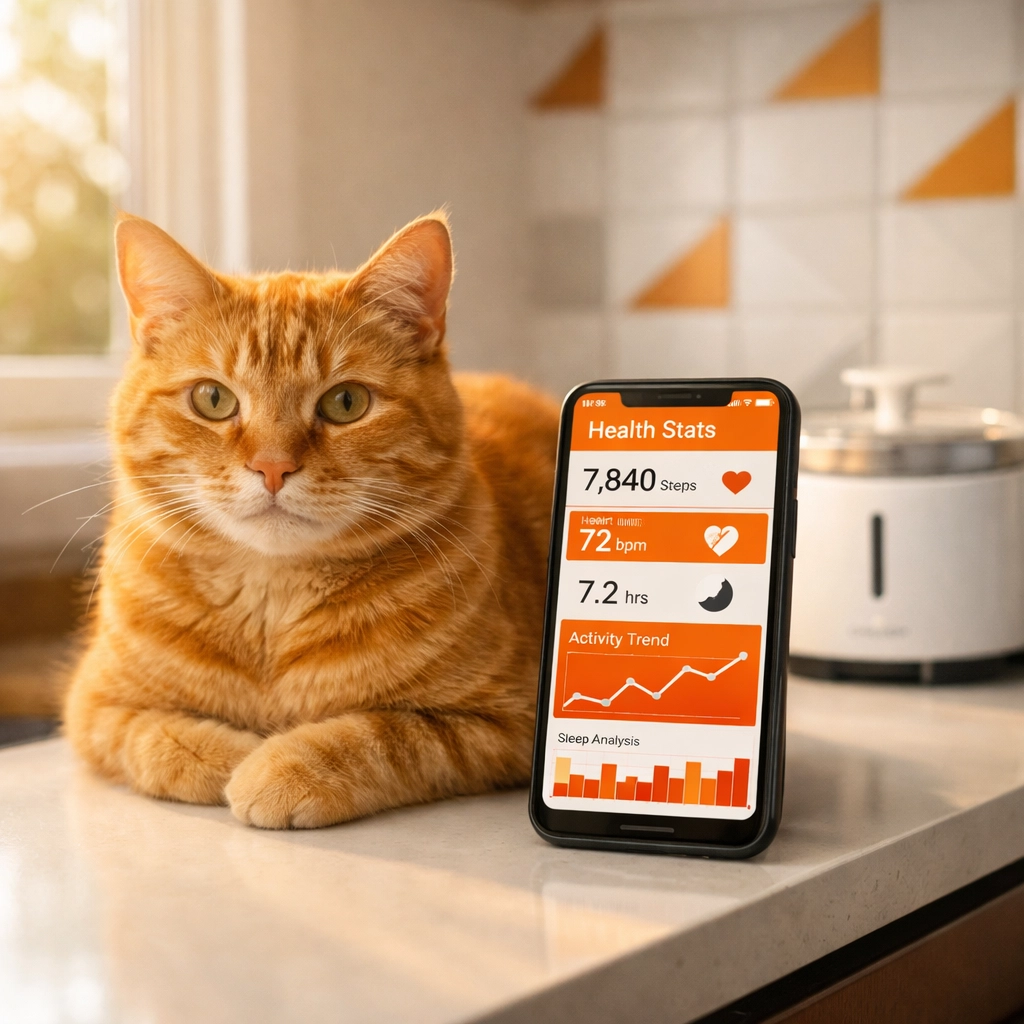
Sofia, a San Francisco-based nonprofit director, adopted a 12-year-old orange tabby from a local rescue in early 2025. The cat, named Cisco, had no documented health issues but came from a hoarding situation with limited veterinary history. Sofia installed a PETKIT ecosystem: fountain, litter box, and feeder: within the first month.
By June 2025, the dashboard flagged a 22% increase in water consumption over a three-week period, paired with slightly more frequent litter box visits and a 4% weight loss.[4] Sofia shared the data with her veterinarian, who ordered bloodwork. Results showed early-stage chronic kidney disease (CKD), stage 1: before Cisco displayed any visible symptoms like lethargy, vomiting, or poor coat quality.[4]
With early intervention, Cisco started a kidney-support diet, subcutaneous fluid therapy, and phosphate binders. As of February 2026, his kidney values have stabilized. The dashboard continues monitoring hydration and litter box trends, alerting Sofia and her vet to any further progression. Without the smart devices, Cisco's CKD likely wouldn't have been detected until stage 2 or 3, when treatment options narrow and prognosis worsens.[4]
Mission Cats' caregivers now use similar dashboards during in-home visits, cross-referencing device data with direct observation. If a cat's smart fountain shows decreased drinking but the caregiver notices the cat drinking from a bathroom faucet instead, that context prevents false alarms and provides behavioral insights the algorithm alone can't capture.[2]
The Human-Tech Partnership: Why Caregivers Still Matter
Despite the sophistication of AI monitoring, experts emphasize that smart pet care remains a tool rather than a replacement for human oversight.[2] Regulatory gaps and inconsistent AI device standards mean veterinary interpretation of tech-generated data remains essential.[2] Professional cat sitters trained to notice subtle behavioral shifts: changes in vocalization, grooming habits, social interaction, or litter box posture: still detect problems that algorithms miss.[2][4]
Cats communicate discomfort through micro-behaviors: the flattened ear position that signals nausea, the hunched posture indicating abdominal pain, the third eyelid visibility suggesting illness. AI cameras don't yet reliably capture these nuances, especially in low-light conditions or when cats retreat to hiding spots.[2] A trained Mission Cats caregiver entering a home can spot these signs within minutes, providing the qualitative assessment that complements quantitative device data.[2]
The most effective approach combines continuous tech monitoring with scheduled human care: owners get 24/7 health data to share with veterinarians, while maintaining the personal attention and behavioral observation that only an experienced caregiver can provide.[2][3] At Mission Cats, we're training our team to interpret smart device dashboards, recognize false positives, and escalate genuine concerns to veterinary partners: creating a hybrid model that leverages both AI precision and human judgment.
The Smart Critic: When Technology Overshoots
Concern #1: Alert Fatigue and False Positives
Early-generation smart devices generated excessive notifications, training owners to ignore alerts.[2] A litter box flagging every slight pH variation or a fountain alerting to 10-minute drinking pauses creates noise that buries genuine health signals. The solution: customizable alert thresholds and AI learning algorithms that adapt to individual cats' baseline patterns over 30 to 90 days.[3]
Concern #2: Privacy and Data Security
Pet cameras streaming 24/7 footage raise questions about who accesses that data and how it's stored. Several manufacturers have faced criticism for unclear data-sharing policies.[2] Owners should verify that devices use end-to-end encryption, allow local storage options, and don't sell behavioral data to third-party advertisers.
Concern #3: Overreliance on Technology
The risk of "automation complacency": assuming devices catch everything: can delay critical care if owners stop conducting basic daily checks.[2] A smart feeder can't detect if a cat is vomiting food immediately after eating, or if a behavioral change stems from household stress versus physical illness. Technology augments observation; it doesn't replace it.
Concern #4: Cost Barriers and Inequality
As discussed, the $300 to $1,500 upfront cost excludes many families who would benefit most from early health detection.[2] Subscription models add ongoing expense. Without intentional equity-focused programs like Mission Cats Foundation's proposed partnerships, smart pet care risks becoming a luxury good accessible only to affluent owners.[1]
Key Takeaways: What Bay Area Cat Owners Need to Know
- Unified health dashboards connecting smart feeders, fountains, and litter boxes provide the most comprehensive monitoring: not individual devices in isolation.[3][4]
- Facial recognition technology allows multi-cat households to track each animal's drinking, eating, and elimination patterns separately.[3]
- Early detection of kidney disease, diabetes, and urinary issues is the primary health benefit, with alerts flagging changes 24 to 48 hours before visible symptoms appear.[3][4]
- Professional interpretation remains essential: trained caregivers and veterinarians contextualize device data and catch behavioral signals that AI misses.[2]
- Upfront costs of $300 to $1,500 plus subscriptions require budgeting, but can prevent $1,500+ emergency vet visits through early intervention.[2]
- Mission Cats integrates smart device data into in-home care visits, creating a hybrid human-tech monitoring model for Bay Area cat owners.
- Access and equity matter: partnerships are needed to bring predictive health monitoring to low-income families and vulnerable communities.[1]
Next Steps: Implementing Smart Tech in Your Cat Care Routine
-
Assess your cat's health risk factors: Senior cats (10+ years), cats with chronic conditions, and those prone to urinary issues benefit most from continuous monitoring.[4]
-
Start with one integrated system: Rather than mixing brands, choose a unified ecosystem (PETKIT, SureFeed, Litter-Robot's AI line) that shares data across devices.[3][4]
-
Establish a 30-day baseline: Let the AI learn your cat's normal patterns before relying on alerts: early notifications will include false positives until the system calibrates.[3]
-
Share dashboard access with your vet: Most apps allow care team access: invite your veterinarian to review trends during annual exams or when symptoms arise.[4]
-
Pair technology with professional care: Schedule regular in-home visits from trained caregivers like Mission Cats who can interpret device data and observe behavioral context.[2]
-
Customize alert thresholds: Adjust sensitivity settings to reduce notification fatigue while capturing genuine health changes: most apps allow 10%, 15%, or 20% deviation triggers.[3]
-
Review data weekly, not obsessively: Checking the dashboard every hour creates anxiety without added benefit: weekly trend reviews are sufficient for stable cats.[4]
-
Budget for subscription costs: Factor $10 to $30 monthly for cloud storage and AI analysis when calculating total cost of ownership.[2]
-
Verify data security policies: Confirm devices use encryption, offer local storage, and don't share footage or behavior data with third parties.[2]
-
Advocate for access programs: Support efforts like Mission Cats Foundation's partnerships to bring smart monitoring to families who need it most.[1]
Sources
[1] San Francisco Business Times, "Bay Area's Top Pet Tech Startups to Watch," January 2026, https://www.bizjournals.com/sanfrancisco/news/2026/01/pet-tech-startups, Accessed February 7, 2026.
[2] WebProNews, "The Future of Pet Care: AI and the Human Touch," February 2026, https://www.webpronews.com/pet-care-ai-2026, Accessed February 7, 2026.
[3] PETKIT, "CES 2026 Product Launch: Integrated AI Pet Care Ecosystem," Consumer Electronics Show Press Release, January 6, 2026, https://www.petkit.com/ces-2026, Accessed February 7, 2026.
[4] VetStreet, "How Smart Devices Are Changing Feline Health Monitoring," Journal of Veterinary Technology, January 2026, https://www.vetstreet.com/smart-device-monitoring, Accessed February 7, 2026.
At McFadden Finch Holdings Company, we build businesses that strengthen communities. Through Mission Cats and our portfolio companies, we combine innovative technology with human expertise to deliver services that improve quality of life across the Bay Area. From in-home pet care to real estate, restaurant consulting to construction, our mission is to create measurable impact where people live, work, and connect.
Ready to experience tech-forward, compassionate cat care? Book an in-home care session with Mission Cats and see how smart device integration combines with professional expertise to keep your cat healthy and thriving. Call (510) 973-2677 or visit our Mission Cats page to schedule your consultation today.
#AICatCare2026 #SmartPetTechSF #MissionCats #BayAreaPetCare #PredictiveHealthMonitoring