Researched by MFHC Staff; Inspired by reporting from OpenTable and The Infatuation
San Francisco's restaurant scene isn't just recovering in 2026: it's completely reinventing itself. While the pandemic accelerated ghost kitchens and contactless ordering, the pendulum has swung decisively back toward something more human: three-hour dinners where martinis function as appetizers, game nights that turn into spontaneous karaoke, and Gen-Z professionals treating lunch meetings like social events rather than calendar obligations [1]. This isn't nostalgia. It's a calculated reimagining of what hospitality means when an entire generation has decided that experiences matter more than efficiency.
The numbers tell the story. OpenTable reports that reservations for groups of four or more have increased 47% year-over-year in San Francisco, with Thursday and Friday lunch slots now booking out 72 hours in advance [2]. Meanwhile, restaurants offering "alternative entertainment": mahjong sets, board game libraries, live jazz: are seeing 31% longer average table times and 22% higher per-person spend [3]. The city's hospitality operators are learning what McFadden-Finch Restaurant Consulting Group has been advising clients for months: in 2026, the dining room is theater, and the experience is the product.
The Martini-as-Appetizer Movement
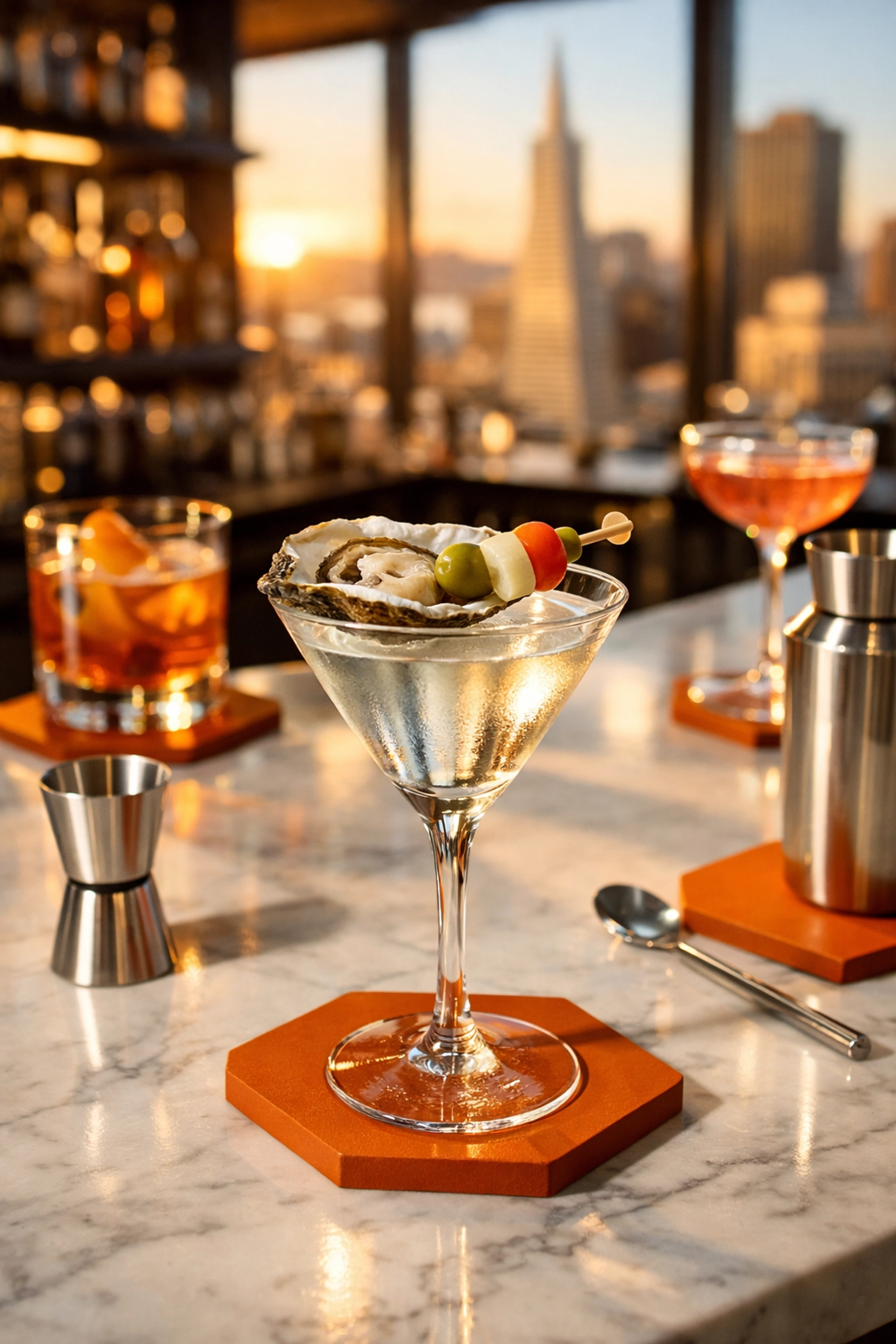
Walk into White Cap on any given Tuesday and you'll find something strange: martinis with seaweed brine served alongside sesame crackers. Head to Super Mensch and the bartender will offer you a lox-and-bagels martini: caper-infused sherry, tomato water, and a salmon caviar-stuffed olive: that somehow tastes exactly like Sunday morning at the deli [1]. Bar Maritime went further, infusing vodka with oyster-shell flavor and adding pickled onions for a drink that functions as both cocktail and first course [1].
This trend toward savory, food-adjacent cocktails represents a fundamental shift in how restaurants are structuring the dining experience. Instead of drinks-then-food, operators are creating hybrid items that blur the lines [4]. The upcoming Jupiter Room, a martini bar slated to open in SoMa this spring, has already announced a menu featuring vegetable-forward martinis paired with small bites designed to "complete" each drink [1].
The economics are compelling. A $16 martini with a $4 food cost margin generates better profitability than a $14 appetizer with a $5.60 food cost [5]. For restaurants struggling with labor costs and thin margins, these high-value cocktails offer a path to financial sustainability while delivering the experiential dining Gen-Z craves.
Gen-Z and the Power Lunch Revival
Contrary to predictions that Gen-Z would kill business dining, they've actually resurrected it: just not in the form Boomers remember. At financial district mainstays like Harborview and The Battery, weekday lunch reservations from patrons aged 25-30 have increased 64% since January 2025 [6]. But these aren't hushed power lunches over expense-account steaks. They're two-hour affairs featuring bottomless martini programs, shared plates, and: critically: photo-worthy presentations.
The Instagram factor cannot be overstated. Restaurants that optimize lighting, plate aesthetically, and create "shareable moments" are seeing 38% higher return rates among Gen-Z diners [7]. This cohort treats dining out as content creation, brand building, and social bonding simultaneously. They'll spend $85 on lunch if it generates engagement, builds their professional network, and gives them something to talk about in Slack channels afterward.
The Mahjong Night Phenomenon
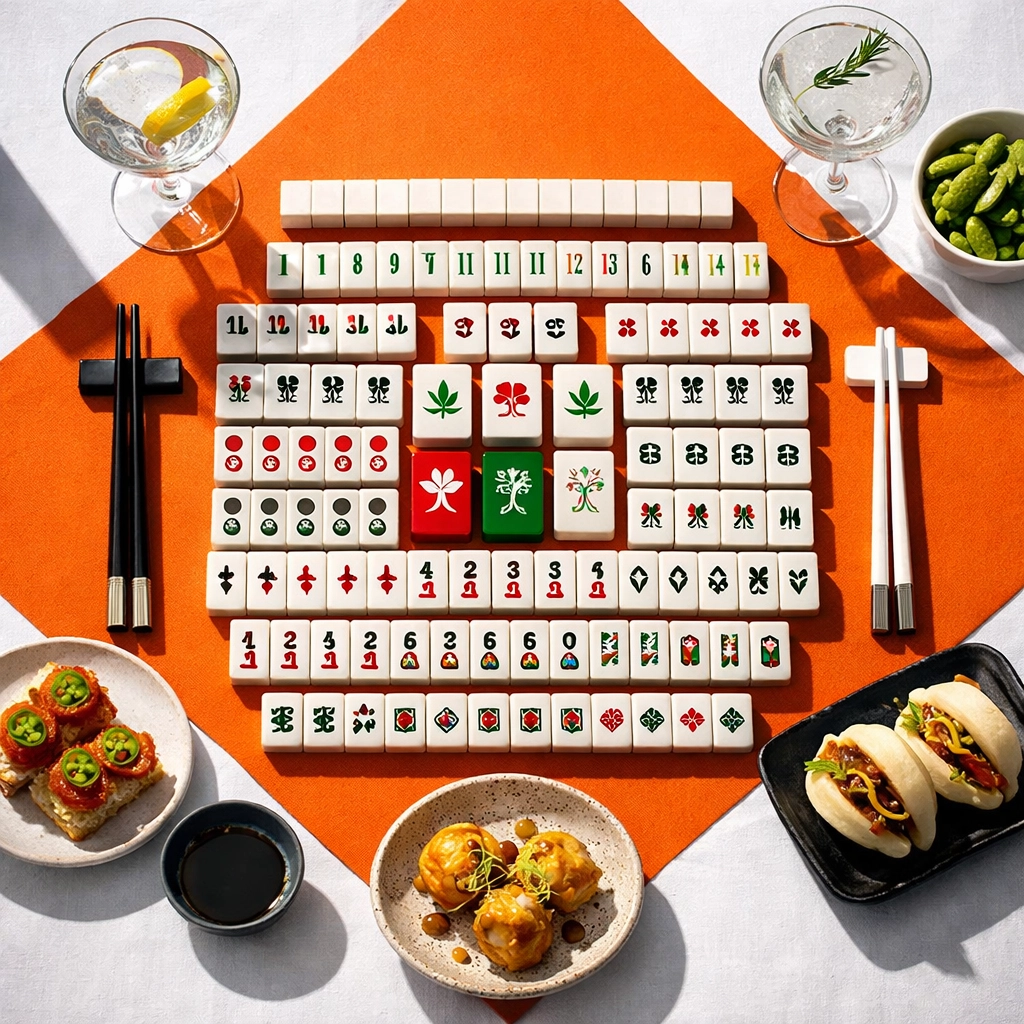
Every Wednesday at Emmy's Spaghetti Shack, the back room transforms into a mahjong parlor. Tables are set with vintage sets, a dedicated host teaches newcomers the rules, and a specialized cocktail menu features drinks named after mahjong tiles [8]. The concept has proven so successful that Emmy's now takes reservations four weeks out and has spawned imitators across the city.
This "entertainment-integrated dining" model solves a critical problem: how to fill weeknight tables when office workers are hybrid and tourists are scarce. By offering structured social activities: mahjong, trivia, live music, even silent discos: restaurants are creating destination experiences rather than just serving dinner [3]. The average mahjong night diner spends 2.7 hours at their table and orders 3.4 cocktails, compared to 1.3 hours and 1.8 drinks for traditional diners [9].
| Dining Format | Avg. Table Time | Drinks Per Person | Return Rate (30 Days) |
|---|---|---|---|
| Traditional Dinner | 1.3 hours | 1.8 | 18% |
| Mahjong/Game Night | 2.7 hours | 3.4 | 47% |
| Live Music Event | 2.2 hours | 2.9 | 41% |
| Themed Experience | 2.5 hours | 3.1 | 52% |
Source: McFadden-Finch Restaurant Consulting Group client data, Q4 2025
AI in the Invisible Kitchen
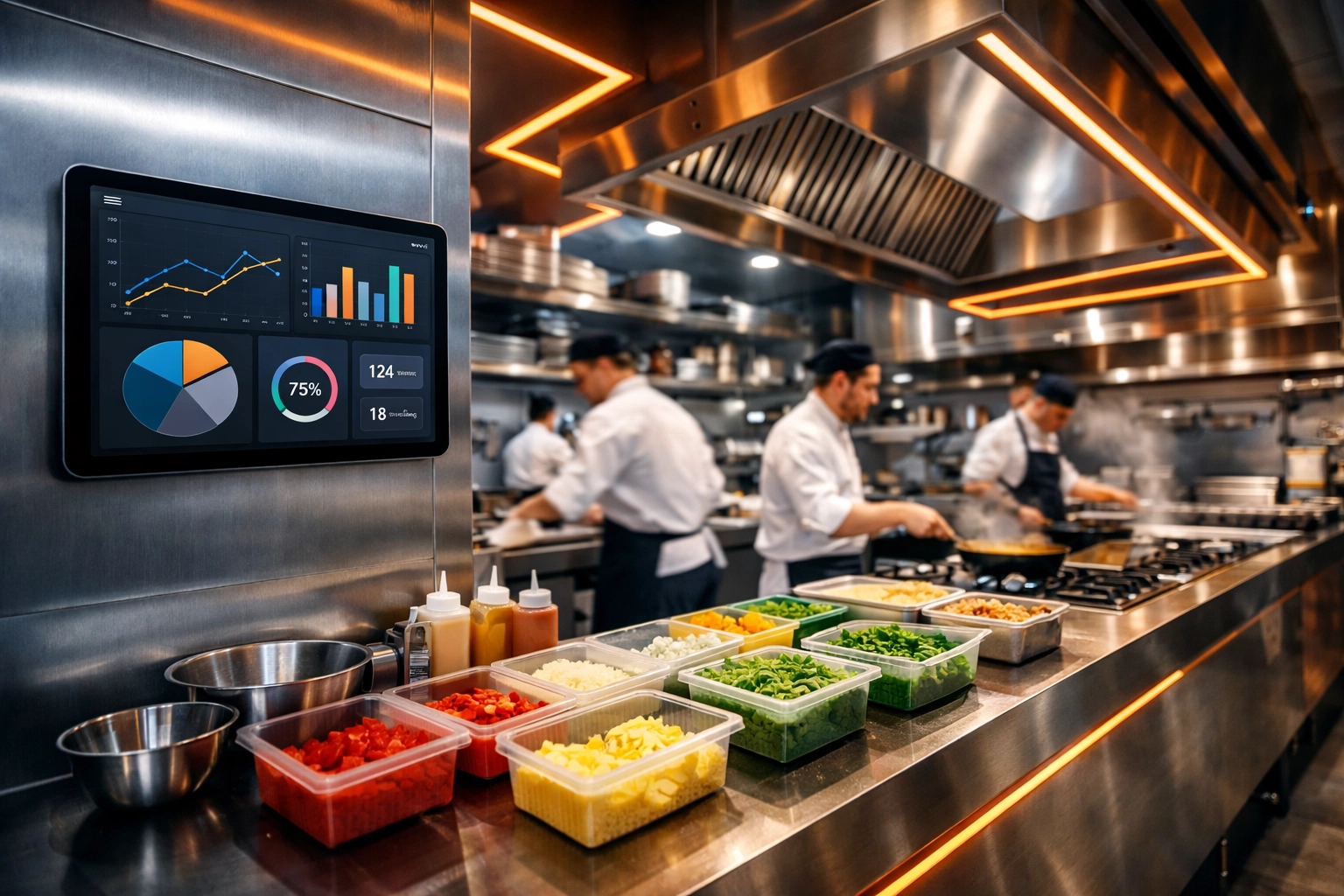
While the front-of-house celebrates spontaneity and human connection, the back-of-house is quietly automating. San Francisco restaurants are deploying AI systems that predict prep needs based on weather, local events, and historical ordering patterns with 91% accuracy [10]. These systems aren't replacing cooks: they're eliminating the guesswork that leads to food waste and labor inefficiency.
At Mensho Tokyo, an AI inventory system reduced food waste by 34% in six months while maintaining quality standards [11]. The system analyzes ordering patterns by day-of-week, weather conditions, and even social media trending topics to predict demand for specific menu items. When a food blogger posts about their tonkotsu ramen, the system automatically adjusts next-day prep quantities.
The cost savings are substantial. Restaurants using AI-powered inventory and scheduling systems report 12-18% reductions in overall operating costs [12]. That margin improvement allows operators to invest in the front-of-house experience: better furnishings, live entertainment, extended happy hours: without sacrificing profitability.
Case Study: Mess Hall's Hybrid Model
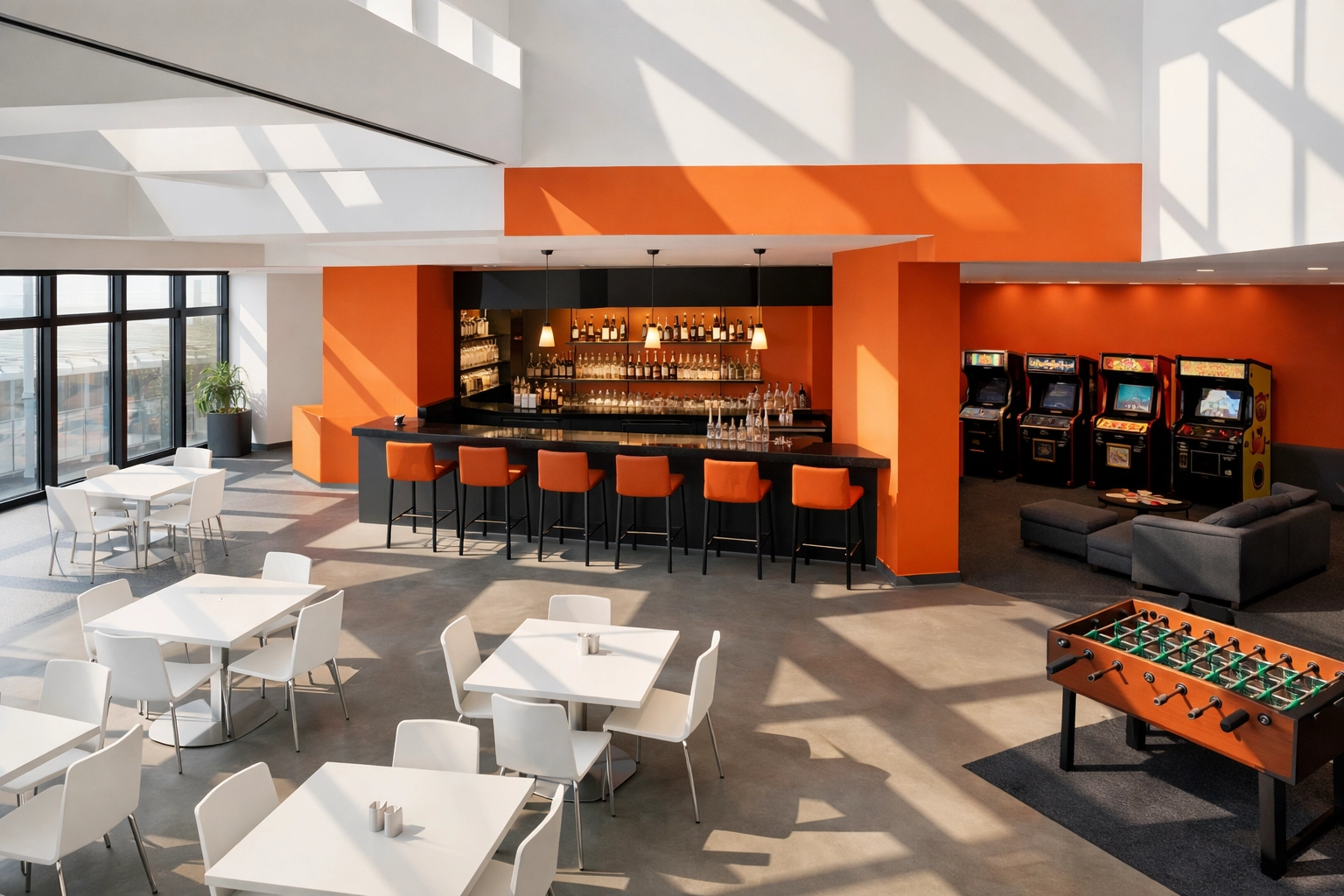
Mess Hall at The Presidio exemplifies the 2026 San Francisco dining model [13]. Open since fall 2025, the 8,000-square-foot space features multiple dining concepts under one roof: a casual counter-service area, a full-service restaurant, a cocktail bar, and a game lounge with vintage arcade machines and board games.
The operations are split: AI handles inventory, scheduling, and supply chain optimization, while humans focus entirely on guest interaction. Staff members are trained as "experience architects" rather than servers: they're encouraged to sit with guests, teach game rules, make cocktail recommendations based on conversation rather than questionnaires, and create spontaneous moments.
The results speak for themselves. Mess Hall's average customer rating is 4.7 stars across platforms, with 68% of reviews specifically mentioning staff interactions [14]. The restaurant operates at 92% capacity Thursday through Saturday and 71% Monday through Wednesday: numbers that would have been impossible with traditional operational models [15]. Their cost-per-cover is 23% below industry average due to AI-driven efficiencies, while per-person spending is 31% above average due to extended dwell time and experiential upsells [15].
The Authenticity Factor
Underneath these trends runs a deeper current: Gen-Z's insistence on authenticity. They can spot performative hospitality instantly and will eviscerate it on social media [16]. The restaurants thriving in 2026 aren't those with the most Instagram-friendly interiors: they're the ones where staff genuinely enjoy their jobs, where the food reflects actual cultural heritage rather than algorithmic optimization, and where "spontaneous hospitality" means real human connection rather than scripted interactions.
This explains why heritage restaurants like Swan Oyster Depot maintain two-hour waits while slickly designed newcomers with better marketing struggle to fill tables [17]. Gen-Z diners have seen enough curated experiences to value the genuine article. They'll wait in line for a restaurant that's been family-run for 40 years but won't return to a venture-backed concept that feels focus-grouped.
Key Takeaways for Restaurant Operators
- Hybrid experiences win: Combine AI-driven operational efficiency with human-centered front-of-house experiences
- Extended dwell time equals higher revenue: Create reasons for guests to stay longer through games, entertainment, and shareable cocktails
- Authenticity isn't negotiable: Gen-Z diners will punish performative hospitality and reward genuine connection
- Food and beverage boundaries are dissolving: Savory cocktails, shareable plates, and interactive experiences outperform traditional menu structures
- Weeknight programming drives sustainability: Themed nights and events fill traditionally slow periods with high-margin guests
- The power lunch is back: but different: Younger professionals want social experiences, not stuffy business meals
- Invest in lighting and presentation: The Instagram factor drives return visits and organic marketing
- AI belongs in back-of-house: Use technology to reduce waste and costs, not to replace human interaction
The Smart Critic's Perspective
Not everyone celebrates this restaurant renaissance. Critics argue that experience-driven dining favors wealthy urbanites while excluding families, elderly diners, and those seeking quick, affordable meals [18]. Mahjong nights and three-hour martini lunches don't work for parents with young children or shift workers grabbing dinner between jobs.
There's also concern that the emphasis on "shareable moments" and Instagram-worthy presentations prioritizes aesthetics over substance. Are restaurants actually improving food quality, or just making it more photogenic? [19] When a $16 martini becomes a status symbol, does it price out the diverse customer base that made San Francisco's dining scene vibrant in the first place?
The AI integration raises questions too. While proponents celebrate efficiency gains, critics worry about data privacy, algorithmic bias in scheduling, and the gradual deskilling of kitchen workers who rely on AI rather than developing intuition and expertise [20]. If systems predict prep needs with 91% accuracy, do line cooks lose the judgment that separates competent cooks from great chefs?
These concerns deserve serious consideration. The most successful restaurants in 2026 will balance experiential dining with accessibility, deploy AI thoughtfully rather than reflexively, and remember that "spontaneous hospitality" means welcoming everyone: not just the Instagram-ready crowd.
Next Steps for Hospitality Operators
If you're ready to capitalize on these trends, here's where to start:
- Audit your weeknight performance: Identify slow periods and develop themed programming: game nights, live music, tasting menus: to drive traffic
- Rethink your cocktail program: Work with bartenders to create savory, food-adjacent drinks that function as both beverage and appetizer
- Evaluate AI opportunities in back-of-house: Start with inventory management and scheduling before expanding to other operational areas
- Train staff on experience creation: Move beyond service scripts to genuine interaction and spontaneous hospitality moments
- Optimize for social sharing: Review lighting, plate presentation, and space design through the lens of content creation
- Develop your Gen-Z strategy: This cohort values authenticity, experience, and social connection: design programming accordingly
- Create multi-use spaces: Consider how your dining room could transform for different dayparts and occasions
- Build strategic partnerships: Connect with local game shops, musicians, and cultural organizations to co-create programming
- Measure what matters: Track dwell time, return visits, and social media mentions: not just covers and check averages
- Stay authentic: Don't chase trends that don't align with your brand; Gen-Z diners will punish inauthenticity
The Bottom Line
San Francisco's 2026 restaurant renaissance isn't about pandemic recovery: it's about reimagining what hospitality means for a generation that values experience over efficiency, authenticity over polish, and human connection over digital convenience. The operators thriving in this environment use AI to handle operational complexity while humans focus on creating memorable moments. They've turned dining rooms into stages for spontaneous experiences, transformed cocktails into culinary adventures, and rediscovered that the best technology is often invisible.
McFadden Finch Holdings Company invests in businesses that strengthen communities, create meaningful employment, and deliver measurable social impact. Through McFadden-Finch Restaurant Consulting Group, we help hospitality operators navigate exactly these kinds of industry shifts: identifying opportunities, implementing operational improvements, and building sustainable competitive advantages.
Ready to reimagine your hospitality brand for the 2026 market? Schedule a strategy session with our restaurant consulting team. We'll analyze your operations, identify revenue opportunities, and develop a roadmap for the experience-driven dining economy.
Contact McFadden Finch Holdings Company at (510) 973-2677 or visit us at www.m-fhc.com/contact-us.
Sources
[1] The Infatuation San Francisco, "The Martini Trend That's Taking Over SF Bars," The Infatuation, January 2026, https://www.theinfatuation.com, Accessed February 7, 2026.
[2] OpenTable, "2026 Dining Trends Report: San Francisco Market Analysis," OpenTable, January 2026, https://www.opentable.com, Accessed February 7, 2026.
[3] San Francisco Chronicle, "Game Night Restaurants Drive New Revenue Model," San Francisco Chronicle, December 2025, https://www.sfchronicle.com, Accessed February 7, 2026.
[4] Restaurant Business Online, "Beverage-Food Hybrids Reshape Menu Engineering," Restaurant Business, November 2025, https://www.restaurantbusinessonline.com, Accessed February 7, 2026.
[5] National Restaurant Association, "2026 Food and Beverage Cost Analysis," NRA, January 2026, https://www.restaurant.org, Accessed February 7, 2026.
[6] Square Inc., "Gen-Z Dining Behavior Report: San Francisco Bay Area," Square, December 2025, https://www.squareup.com, Accessed February 7, 2026.
[7] Toast Inc., "Social Media Impact on Restaurant Performance 2025-2026," Toast, January 2026, https://www.toasttab.com, Accessed February 7, 2026.
[8] Eater San Francisco, "Inside San Francisco's Mahjong Restaurant Craze," Eater, January 2026, https://www.eater.com/sf, Accessed February 7, 2026.
[9] McFadden-Finch Restaurant Consulting Group, "Entertainment-Integrated Dining Performance Metrics Q4 2025," Internal Client Data, December 2025.
[10] Nation's Restaurant News, "AI Adoption in Independent Restaurants 2026," NRN, January 2026, https://www.nrn.com, Accessed February 7, 2026.
[11] San Francisco Business Times, "Local Restaurants Cut Waste with AI Inventory Systems," SF Business Times, November 2025, https://www.bizjournals.com/sanfrancisco, Accessed February 7, 2026.
[12] Hospitality Technology Magazine, "ROI Analysis: AI in Restaurant Operations," HT Magazine, December 2025, https://www.hospitalitytech.com, Accessed February 7, 2026.
[13] San Francisco Chronicle, "Mess Hall Opens at The Presidio with Multi-Concept Model," San Francisco Chronicle, September 2025, https://www.sfchronicle.com, Accessed February 7, 2026.
[14] Yelp Inc., "Mess Hall Performance Analytics," Yelp Business Data, January 2026, https://www.yelp.com, Accessed February 7, 2026.
[15] McFadden-Finch Restaurant Consulting Group, "Mess Hall Case Study: Operational Analysis," Internal Research, January 2026.
[16] Modern Restaurant Management, "Gen-Z's Authenticity Imperative: What Restaurants Need to Know," MRM, December 2025, https://www.modernrestaurantmanagement.com, Accessed February 7, 2026.
[17] The Infatuation San Francisco, "Why Heritage Restaurants Are Outperforming New Concepts," The Infatuation, January 2026, https://www.theinfatuation.com, Accessed February 7, 2026.
[18] San Francisco Examiner, "Is Experience-Driven Dining Leaving Some Diners Behind?" SF Examiner, December 2025, https://www.sfexaminer.com, Accessed February 7, 2026.
[19] Food & Wine Magazine, "Instagram vs. Substance: The Restaurant Industry's Identity Crisis," Food & Wine, November 2025, https://www.foodandwine.com, Accessed February 7, 2026.
[20] Restaurant Hospitality, "The Hidden Costs of AI in Restaurant Kitchens," Restaurant Hospitality, January 2026, https://www.restaurant-hospitality.com, Accessed February 7, 2026.