Researched by MFHC Staff; Based on updates from the California Energy Commission and Hanson Bridgett.
California's building sector just crossed a regulatory threshold that will redefine how we design, construct, and retrofit every structure in the state. The 2025 Title 24 Energy Code: effective January 1, 2026: targets the 25% of California's greenhouse gas emissions that come from buildings, making decarbonization mandatory rather than aspirational.[3] For developers, contractors, and property owners working in the Bay Area and across California, this isn't just another compliance update. It's a complete recalibration of project economics, timelines, and construction methodology.
The new code eliminates natural gas as a default energy source, mandates heat pump installations across residential and commercial projects, requires solar-ready infrastructure and battery storage integration, and establishes electric-ready standards for everything from commercial kitchens to multifamily parking structures.[1][2] Projects permitted after January 1, 2026 must comply: no exceptions. For those operating under the assumption that these changes represent incremental shifts, the reality is far more disruptive. The code creates new cost structures, new supply chain dependencies, and new compliance risks that can reach $2,000 per day per violation category.[1] Understanding what changed, why it matters, and how to avoid costly mistakes is no longer optional.
What Changed and Why It Matters
The 2025 Energy Code represents California's most aggressive push toward building electrification and decarbonization to date. The state's 2045 carbon neutrality goal depends on eliminating fossil fuel consumption in buildings, which means natural gas heating systems, gas water heaters, and traditional HVAC equipment are being systematically phased out.[3]
Three core strategies drive the new requirements:
Electrification First. Heat pumps replace gas furnaces and boilers as the default heating and cooling technology. New residential construction is expected to use all-electric systems with no natural gas hookups for major heating and water heating systems.[2] Commercial buildings face similar mandates when replacing end-of-life rooftop HVAC units above certain capacity thresholds: retail, schools, offices, and libraries must install high-efficiency systems including heat pumps.[1]
Solar and Storage Integration. New residential construction must be solar-ready or include photovoltaic (PV) systems, with roof framing designed to accommodate PV and battery loading.[2] The code expands battery storage provisions for buildings with photovoltaic systems, directly supporting grid decarbonization efforts and reducing reliance on natural gas peaker plants during high-demand periods.[1]
Electric-Ready Infrastructure. The code establishes electric-ready requirements for commercial kitchens and multifamily buildings, enabling easier future transitions to clean electric appliances without costly retrofits.[3] This forward-looking approach reduces barriers to electrification while allowing property owners to upgrade appliances incrementally rather than all at once.
Heat Pump Mandates: The Electrification Shift
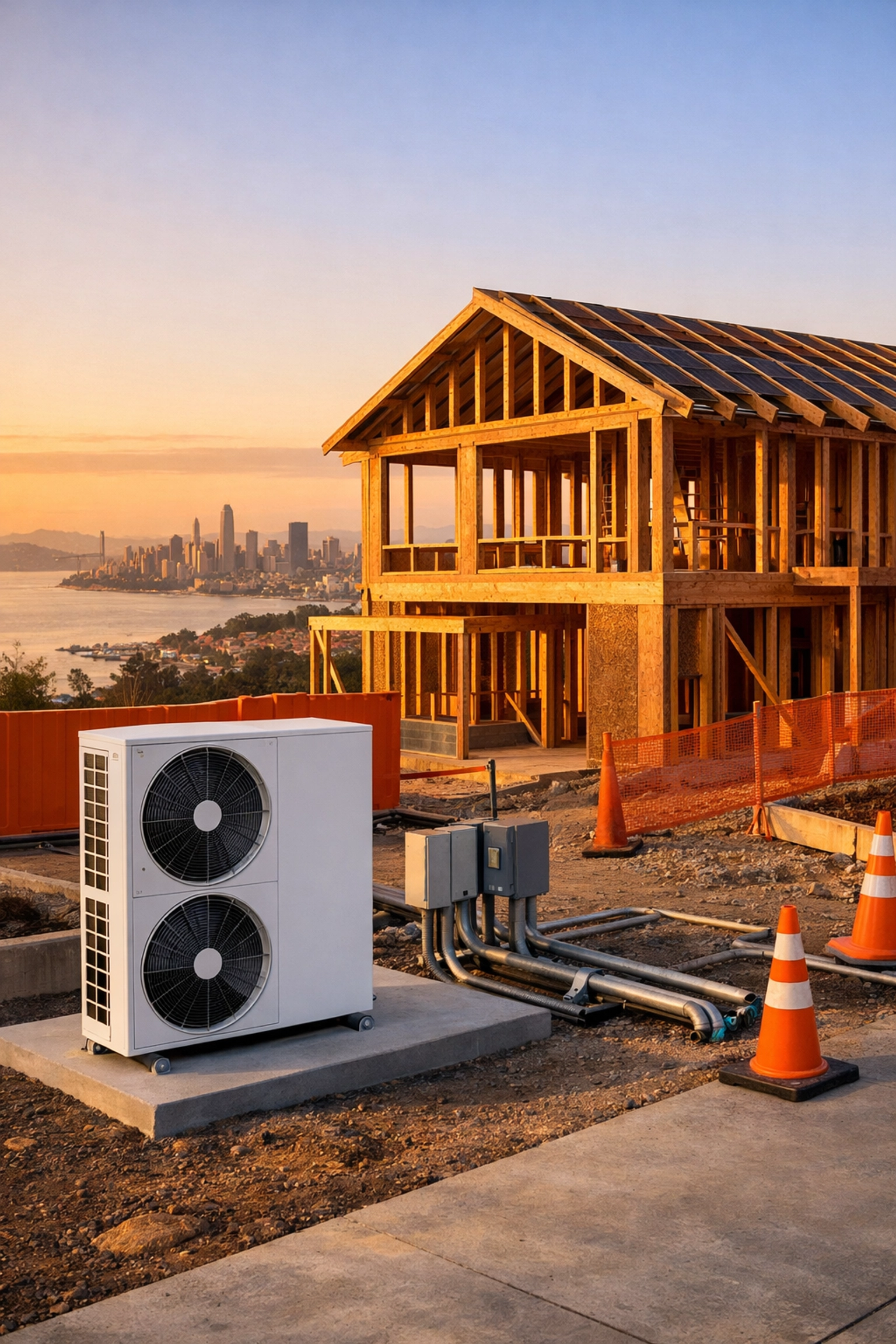
Heat pumps are now the centerpiece of California's building decarbonization strategy, and the 2025 Energy Code codifies their use across nearly all new construction and major HVAC replacements.[3]
Residential Requirements. New single-family homes and low-rise multifamily projects must install electric heat pumps for space heating, cooling, and water heating. Gas water heaters and furnaces are effectively eliminated from new residential construction.[2] Heat pump water heaters (HPWHs) must meet minimum efficiency standards and be properly sized for the building's hot water demand.
Commercial Replacements. When existing commercial buildings replace rooftop HVAC units that exceed specific capacity thresholds, they must install high-efficiency systems: which in most cases means heat pumps or other electric equipment.[1] This applies to retail stores, schools, offices, and libraries, covering a significant portion of California's commercial building stock.
Climate Zone Considerations. California's 16 distinct climate zones receive tailored specifications rather than one-size-fits-all rules.[1] Heat pump sizing, supplemental heating requirements, and efficiency minimums vary by climate zone to ensure systems perform effectively in both coastal microclimates and inland valleys where summer temperatures exceed 100°F.
The shift to heat pumps creates new design challenges. Electrical service upgrades are often required to handle increased loads. Equipment placement must account for noise and vibration impacts, particularly in multifamily settings. Cold-climate heat pumps may be necessary in mountain and high-desert regions where traditional heat pumps lose efficiency below 25°F.
Solar, Storage, and Grid Integration
The 2025 Energy Code significantly expands solar and battery storage requirements, treating buildings as active participants in grid decarbonization rather than passive energy consumers.[1][2]
Solar-Ready Mandates. All new residential construction must be solar-ready, with roof framing designed to accommodate PV panel loading and structural requirements.[2] Solar-ready doesn't necessarily mean solar panels must be installed immediately, but the infrastructure: conduit runs, electrical panel capacity, roof load calculations: must be in place from day one.
Battery Storage Expansion. Buildings with photovoltaic systems now face expanded battery storage provisions.[1] The code encourages battery systems that can store excess solar generation during the day and discharge during evening peak demand periods, reducing strain on the grid and lowering reliance on fossil fuel peaker plants.
Energy Data Display Systems. Commercial buildings must implement Energy Data Display Systems measuring total energy use and tracking end-use categories (HVAC, lighting, receptacles, process loads) at 15-minute intervals with 36-month data retention.[1] This data transparency requirement enables building operators to identify inefficiencies and optimize energy consumption in real time.
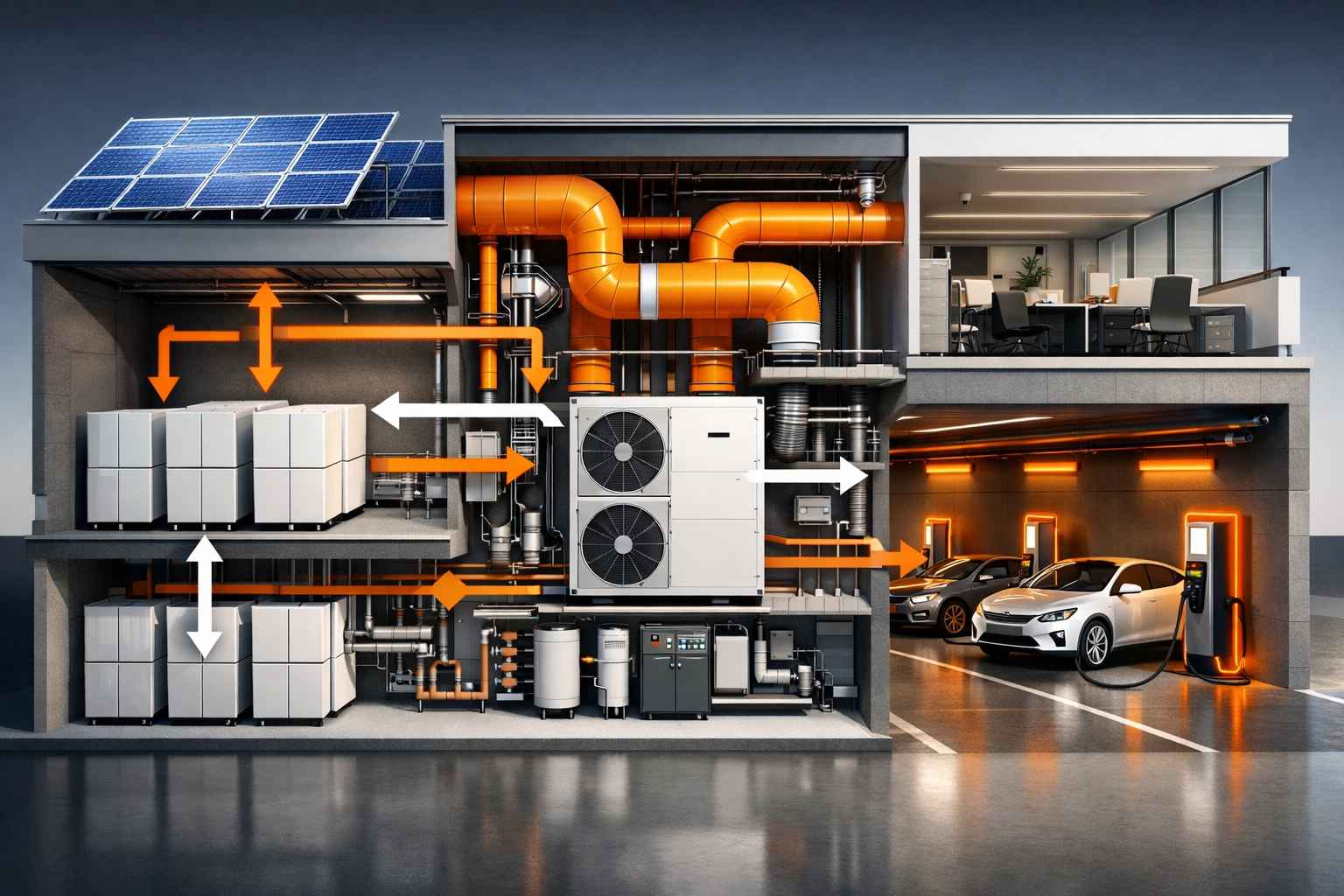
Integration Benefits. Solar and storage integration offers financial upside beyond code compliance. Buildings with battery systems can participate in demand response programs, reduce time-of-use charges, and provide backup power during outages. In the Bay Area, where PG&E rates continue climbing and Public Safety Power Shutoffs remain common, this combination delivers both cost savings and resilience.
EV-Ready and Electric Infrastructure Requirements
California's push toward vehicle electrification extends to building infrastructure, with new mandates designed to eliminate barriers to EV adoption at the point of construction.[2]
Multifamily EV Requirements. Every new multifamily building must be EV-ready, with Level 2 charging receptacles required per unit in assigned parking or at every spot in shared parking areas.[2] This eliminates the need for costly retrofits when residents purchase electric vehicles and ensures that charging infrastructure keeps pace with EV adoption rates.
Commercial Kitchen Electric-Ready Standards. The code establishes electric-ready requirements for commercial kitchens, enabling easier future transitions to induction cooktops and electric ovens without costly electrical service upgrades.[3] Pre-wiring and panel capacity must accommodate future electric equipment even if gas appliances are initially installed.
Electrical Service Planning. These requirements force developers to plan for significantly higher electrical loads from the outset. Electrical service upgrades, transformer capacity, and panel sizing must account for simultaneous EV charging, heat pump operation, and electric appliance use. Underestimating these loads creates bottlenecks that delay occupancy and require expensive post-construction retrofits.
Compliance Timeline and Penalties
Understanding when the code takes effect and what non-compliance costs is critical for project planning and risk management.[1]
| Permit Date | Applicable Code | Key Requirement |
|---|---|---|
| Before Jan 1, 2026 | 2022 Title 24 | Previous standards apply |
| On or After Jan 1, 2026 | 2025 Title 24 | Full compliance required |
| Residential Wildfire Zones | 2025 Title 24 + WUI | Enhanced fire resilience required[2] |
| LA Wildfire Exception | Temporary Solar Waiver | Solar-readiness still required[3] |
Compliance Process:
- Certificate of Compliance: Filed before permit issuance, documenting how the project meets code requirements.[1]
- Installation Certificates: Submitted during construction to verify equipment installation matches approved plans.[1]
- Certificates of Acceptance: Required for system performance verification, confirming that installed systems operate as designed.[1]
Penalties: Non-compliance penalties can reach $2,000 per day per violation category.[1] Multiple violations compound quickly: a project with heat pump, solar, and EV infrastructure deficiencies could face $6,000 in daily penalties until corrected. For developers operating on tight margins, these penalties can eliminate project profitability entirely.
Wildfire Exception: Executive Order N-29-25 temporarily suspends solar and battery storage requirements for residential structures damaged by the 2025 Los Angeles area wildfires, though solar-readiness infrastructure remains required.[3] This exception reflects the practical challenges of rebuilding quickly while maintaining long-term decarbonization goals.
Case Example: Bay Area Retail Retrofit
A 45,000-square-foot retail building in San Mateo faced an HVAC replacement decision in late 2025. The existing gas-fired rooftop units were 18 years old and failing, and the building owner initially planned a like-for-like replacement with new gas units before the January 1, 2026 code took effect.
After consulting with Atlas Premier Services & Consultants, the owner realized that delaying the project by six weeks to secure a permit before year-end would require a complete redesign under the new code. The analysis showed that complying with the 2025 Energy Code would require:
- Replacing five rooftop gas units with high-efficiency electric heat pumps ($185,000 additional equipment cost)
- Upgrading electrical service from 1,600 amps to 2,400 amps ($95,000)
- Installing a 150 kW rooftop solar array with 200 kWh battery storage ($320,000)
- Adding Energy Data Display Systems and submetering ($40,000)
Total additional cost: $640,000. However, the solar and storage system qualified for a 30% federal Investment Tax Credit ($96,000), and the heat pumps reduced annual energy costs by $48,000 compared to gas equipment. The battery system allowed the building to shift 60% of its consumption to off-peak rates, saving an additional $22,000 annually. Payback period: 8.2 years.
The owner proceeded with the 2025 code-compliant design, but the decision required securing additional financing and extending the construction timeline by four weeks. The case illustrates how the new code fundamentally changes project economics: what appears as a cost increase on paper often delivers long-term operational savings, but only if developers plan for the upfront capital requirements.
Smart Critic: The Counterarguments
Not everyone views the 2025 Energy Code as a clear win. Several legitimate concerns deserve consideration:
Upfront Cost Burden. The code significantly increases construction costs at a time when housing affordability is already a crisis in California. Heat pumps, solar systems, battery storage, and electrical upgrades add tens of thousands of dollars to residential projects and hundreds of thousands to commercial developments. Critics argue that these costs will be passed to buyers and tenants, making housing and commercial space even less affordable.[4]
Grid Capacity Questions. Electrifying millions of buildings while simultaneously electrifying transportation creates massive new electricity demand. California's grid already faces reliability challenges during heat waves, and adding heat pump and EV charging loads during peak hours could exacerbate the problem. Without significant grid infrastructure investment, the code's electrification mandates could strain the system.[5]
Technology Lock-In. Mandating specific technologies like heat pumps assumes those technologies are optimal for all applications and climate zones. In reality, heat pumps underperform in extreme cold, and California's climate diversity means one-size-fits-all solutions may not work. Critics argue that performance-based standards allowing multiple pathways to decarbonization would be more effective than technology mandates.[6]
Supply Chain Constraints. The construction industry is already dealing with material shortages and labor constraints. Adding new requirements for specialized equipment like cold-climate heat pumps, battery storage systems, and EV chargers could create bottlenecks that delay projects and drive up costs further.[7]
These concerns are valid, and the success of the 2025 Energy Code depends on how effectively California addresses grid modernization, workforce training, and financial incentives to offset upfront costs. For developers and contractors, the key is to plan proactively rather than react to mandates at the last minute.
Key Takeaways
- Heat pumps are mandatory for new residential construction and commercial HVAC replacements, eliminating natural gas as the default energy source.[1][2][3]
- Solar-ready infrastructure and battery storage are now standard requirements, with roof framing, electrical capacity, and data monitoring systems designed in from the start.[1][2]
- EV-ready mandates apply to all new multifamily buildings, requiring Level 2 charging receptacles at every parking space or assigned spot.[2]
- Compliance penalties reach $2,000 per day per violation category, making post-construction corrections financially catastrophic.[1]
- Electrical service upgrades are nearly always required to handle simultaneous heat pump, EV charging, and electric appliance loads: budget accordingly.[8]
- Climate zone tailoring means requirements vary across California's 16 climate zones; one-size-fits-all approaches will fail.[1]
- The wildfire exception temporarily waives solar installation (but not solar-readiness) for LA-area wildfire rebuilds.[3]
- Federal tax credits offset 30% of solar and storage costs, improving project economics significantly.[9]
Next Steps: Compliance Action Plan
To avoid costly mistakes and ensure projects meet the 2025 Energy Code requirements, developers and contractors should take these specific actions:
-
Conduct a Project Compliance Audit. Engage a qualified consultant to review your current project pipeline and identify which projects will be subject to the new code. Atlas Premier Services & Consultants offers comprehensive compliance audits tailored to Bay Area construction. Contact McFadden Finch Holdings Company at (510) 973-2677 to schedule your audit.
-
Revise Cost Estimates. Update all project pro formas to account for heat pump systems, electrical service upgrades, solar and storage systems, and EV infrastructure. Underestimating these costs by 20-30% is common in early-stage projects: validate assumptions with current market pricing.
-
Pre-Qualify Equipment Suppliers. The shift to heat pumps and battery storage systems creates new supply chain dependencies. Identify suppliers who can meet your project timelines and specifications before you finalize designs. Lead times for high-efficiency heat pumps can exceed 12 weeks in high-demand periods.
-
Engage Electrical Engineers Early. Electrical service upgrades are the most common source of project delays under the new code. Bring electrical engineers into the design process during schematic design rather than design development to avoid costly redesigns.
-
Map Climate Zone Requirements. California's 16 climate zones have different requirements for insulation, window performance, and HVAC efficiency. Verify which climate zone applies to your project and design systems accordingly. Don't rely on standard details from previous projects in different climate zones.
-
Plan for Energy Monitoring Systems. Commercial projects require Energy Data Display Systems with 15-minute interval tracking and 36-month data retention.[1] Budget for hardware, software, and ongoing data management costs: these systems aren't one-time installations.
-
Leverage Federal and State Incentives. The federal Investment Tax Credit covers 30% of solar and storage costs,[9] and California offers additional rebates for heat pump water heaters and high-efficiency HVAC systems. Identify all available incentives before finalizing project budgets.
-
Train Your Construction Teams. Heat pump installation, battery storage safety, and EV charger installation require specialized knowledge. Invest in workforce training now to avoid installation errors that delay occupancy and trigger compliance penalties.
-
Review Tenant Lease Structures. For commercial projects, clarify how energy costs and compliance responsibilities will be allocated between landlords and tenants. The shift to solar and storage systems changes energy cost structures: update lease language accordingly.
-
Monitor Code Interpretations. Local building departments are still developing processes for enforcing the 2025 Energy Code. Stay in contact with your local jurisdiction to understand how they're interpreting specific requirements and what documentation they expect during plan review.
McFadden Finch Holdings Company is a Bay Area-based holdings and investment management firm committed to sustainable development, community impact, and forward-thinking infrastructure solutions. Through our portfolio companies like Atlas Premier Services & Consultants, we help developers, contractors, and property owners navigate complex regulatory environments and build projects that deliver long-term value.
Ready to ensure your next project complies with California's 2025 Energy Code? Contact McFadden Finch Holdings Company today for a comprehensive project compliance audit. Our team will identify code requirements, quantify cost impacts, and develop a compliance strategy that keeps your project on schedule and within budget.
Call us at (510) 973-2677 or visit www.m-fhc.com to get started.
Sources
[1] California Energy Commission, "2025 Building Energy Efficiency Standards," California Energy Commission, December 2024, https://www.energy.ca.gov/programs-and-topics/programs/building-energy-efficiency-standards, Accessed February 7, 2026.
[2] Hanson Bridgett LLP, "California's 2025 Title 24 Energy Code: What Developers Need to Know," Hanson Bridgett LLP, January 2026, https://www.hansonbridgett.com/Publications/articles/2025-title-24-energy-code-update, Accessed February 7, 2026.
[3] California Energy Commission, "Building Decarbonization and the 2025 Energy Code," California Energy Commission, January 2026, https://www.energy.ca.gov/programs-and-topics/topics/building-decarbonization, Accessed February 7, 2026.
[4] California Building Industry Association, "Cost Impacts of the 2025 Energy Code on Housing Affordability," CBIA Research Report, November 2025, https://www.cbia.org/research/energy-code-costs, Accessed February 7, 2026.
[5] California Independent System Operator, "Grid Reliability and Building Electrification," CAISO Technical Report, December 2025, https://www.caiso.com/Documents/building-electrification-grid-impacts-2025.pdf, Accessed February 7, 2026.
[6] American Gas Association, "Alternative Pathways to Decarbonization: A Technology-Neutral Approach," AGA Policy Brief, October 2025, https://www.aga.org/policy/decarbonization-pathways, Accessed February 7, 2026.
[7] Associated General Contractors of California, "Supply Chain Challenges in Title 24 Compliance," AGC California Industry Survey, December 2025, https://www.agc-ca.org/supply-chain-title-24, Accessed February 7, 2026.
[8] National Electrical Contractors Association, "Electrical Service Upgrades for Building Electrification," NECA Technical Guide, November 2025, https://www.necanet.org/technical-resources/building-electrification, Accessed February 7, 2026.
[9] U.S. Department of Energy, "Federal Tax Credits for Residential Solar and Storage Systems," DOE Energy Efficiency and Renewable Energy Office, January 2026, https://www.energy.gov/eere/solar/federal-solar-tax-credits-homeowners, Accessed February 7, 2026.
#CaliforniaEnergyCode2026 #SustainableConstructionSF #BuildingDecarbonization #AtlasPremierServices #BayAreaDevelopment