
For a student in the Bay Area, the conflict usually begins a week before the moon is sighted. They look at the syllabus and see a chemistry midterm scheduled for the same day as Eid al-Fitr. For a state employee in Sacramento, it is the quiet negotiation with a supervisor to use a precious vacation day just to attend morning prayers and share a meal with family. This is the "hidden tax" of religious observance, a choice between academic or professional standing and the most sacred traditions of one’s faith. For the more than one million Muslim residents in California, this tension has been a standard part of the immigrant and first-generation experience for decades (CAIR-California) [1].
However, the landscape of the "Golden State" is shifting toward a more inclusive horizon. With the introduction of California Assembly Bill 2017 (AB 2017), authored by Assemblymember Matt Haney of San Francisco, the state is moving to formally recognize Eid al-Fitr and Eid al-Adha as state holidays (California Legislative Information) [2]. This legislative effort is not merely a symbolic gesture; it is a structural acknowledgment of the people who drive the innovation, culture, and economy of California. At McFadden Finch Holdings Company, we view cultural inclusion as a cornerstone of sustainable growth. When the regions we serve, particularly our home in the Bay Area, embrace representation, they foster an environment where all talent can thrive without the weight of unnecessary trade-offs.
In this post, you will learn:
- The specific religious and cultural significance of the two Eid holidays.
- The legislative provisions of AB 2017 and how they impact schools and workplaces.
- Why institutionalizing representation is a critical driver for California’s economic and community impact.
The Significance of the "Two Eids"
To understand why AB 2017 is a milestone for representation, one must first understand the weight of the days it seeks to honor. In the Islamic tradition, there are two primary festivals: Eid al-Fitr and Eid al-Adha.
Eid al-Fitr, often called the "Festival of Breaking the Fast," marks the conclusion of Ramadan, the holy month of fasting, prayer, and reflection (Islamic Relief Worldwide) [3]. It is a day of joy, charity (Zakat al-Fitr), and community gathering. For many, it represents a spiritual "reset" and a celebration of the discipline exercised during the preceding month.

Eid al-Adha, the "Festival of Sacrifice," occurs later in the lunar calendar, coinciding with the completion of the Hajj pilgrimage to Mecca (Pew Research Center) [4]. It honors the story of the Prophet Ibrahim’s (Abraham) willingness to sacrifice his son as an act of obedience to God. Beyond its theological roots, it is a time of immense social impact, as families traditionally distribute meat to the poor and needy, reinforcing a cycle of community support and philanthropy. For California’s diverse Muslim population, which includes descendants from South Asia, the Middle East, Africa, and Southeast Asia, these holidays are the cultural equivalent of Christmas or Thanksgiving (The Muslim Impact Council) [5].
Decoding AB 2017: A Framework for Inclusion
The bill introduced by Assemblymember Haney is designed to address the practical barriers that prevent full participation in these holidays. AB 2017 does not mandate that every business in the state shut down, but it provides a clear legal framework for accommodation that was previously left to the discretion of individual administrators or HR departments.
The bill’s core provisions include:
- Excused Absences for Students: It guarantees that K-12 students who miss school for Eid observances are granted an excused absence, ensuring their grades and attendance records are not penalized for religious practice (California Assembly Democratic Caucus) [6].
- Higher Education Flexibility: The bill allows community colleges and state universities to close or adjust schedules to accommodate the holidays without losing state funding or violating academic mandates [2].
- State Employee Leave: It grants state employees the option to use existing paid leave or "informal time off" specifically for these holidays, removing the stigma sometimes associated with requesting religious accommodations (Sacramento Bee) [7].
By codifying these rights, California is signaling that the Muslim community is not an "add-on" to the state’s identity, but a fundamental part of its social fabric. This aligns with our mission at McFadden Finch to support impact-driven initiatives that transform the regions we serve into more equitable environments for all residents.
The Data of Diversity: Why Numbers Matter
California is home to the largest Muslim population in the United States, with estimates exceeding one million people (Council on American-Islamic Relations) [8]. In the Bay Area alone, the Muslim community is a powerhouse of economic activity, contributing significantly to sectors ranging from technology and medicine to small business and hospitality.
| Cultural Holiday Recognition in CA | Status | Impacted Population (Est.) |
|---|---|---|
| Lunar New Year | State Holiday (Recognized) [9] | 6.7 Million (AAPI) |
| Genocide Remembrance Day | State Holiday (Recognized) [10] | 500,000 (Armenian-American) |
| Diwali | State Holiday (Recognized) [11] | 1 Million+ (South Asian/Hindu) |
| Eid al-Fitr / Eid al-Adha | Proposed (AB 2017) [2] | 1 Million+ (Muslim) |
Data compiled from CA State Proclamations and Census Bureau estimates (US Census Bureau) [12].
When a state fails to recognize the major holidays of a significant portion of its tax-paying, job-creating population, it creates a "belonging gap." Bridging this gap through legislation like AB 2017 is a prerequisite for sustainable growth. It reduces burnout for workers who feel they must hide their identities and increases student engagement by validating their home lives within the classroom.
The Bay Area: An Engine for Change
It is no coincidence that this bill originated from a representative of the Bay Area. Our region has long been the laboratory for cultural inclusion in America. From the recognition of Lunar New Year in San Francisco schools to the vibrant public celebrations of Diwali in San Jose, the Bay Area understands that diversity is a competitive advantage (San Francisco Chronicle) [13].
Assemblymember Haney noted that the bill was inspired by the advocacy of young Muslim Californians who were tired of choosing between their faith and their education (Office of Assemblymember Matt Haney) [14]. This is the essence of community impact: listening to the voices of those who are traditionally sidelined and using legislative levers to create dignity. At McFadden Finch Holdings Company, we recognize that the strength of our portfolio, whether in real estate, professional services, or philanthropy, is inextricably linked to the health and inclusivity of the communities where we operate.
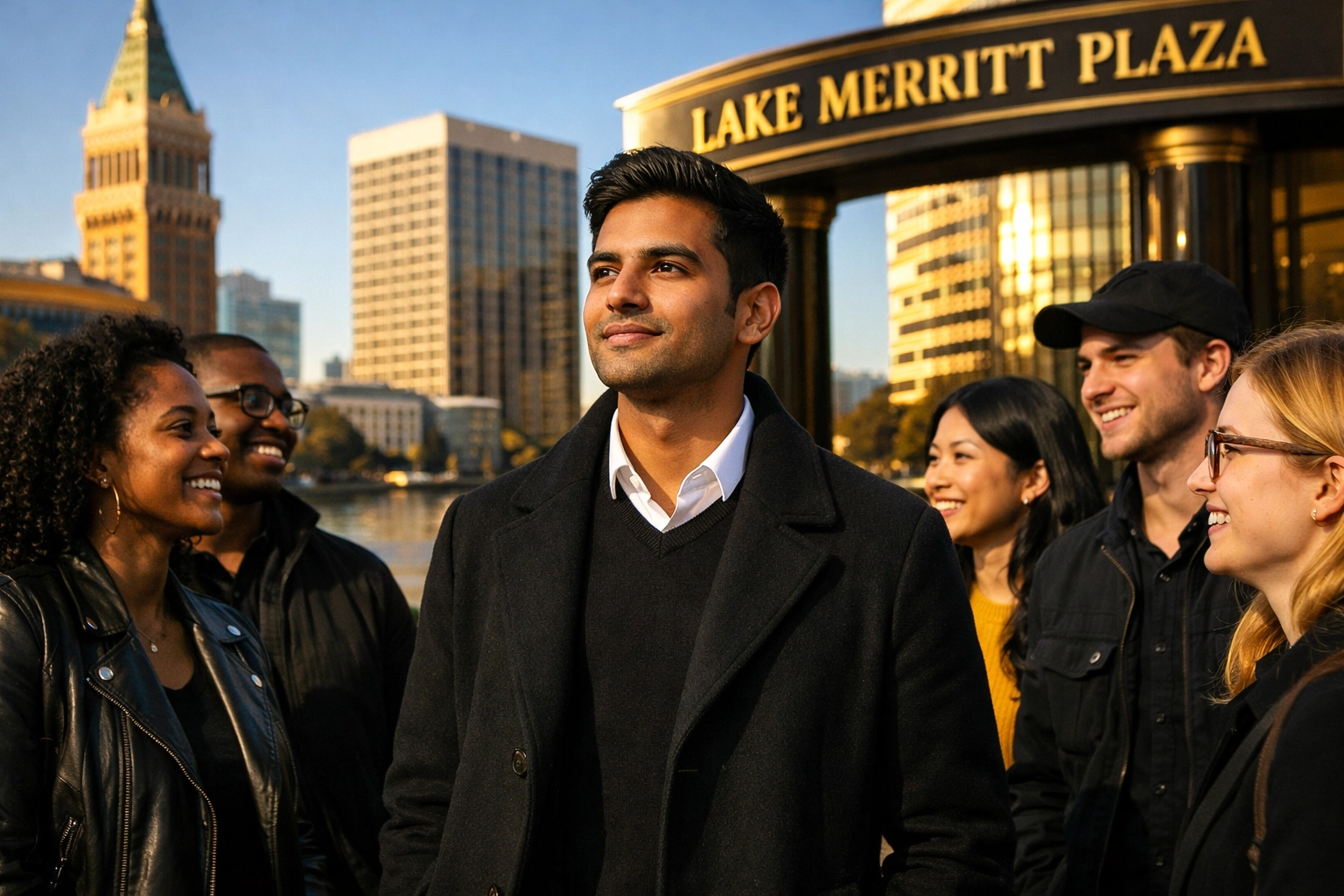
Case Example: The SFUSD Success Story
Before AB 2017 was a state-wide conversation, the San Francisco Unified School District (SFUSD) became a pioneer in this space. In 2022, following intense community advocacy, the SFUSD board voted to add Eid al-Fitr and Eid al-Adha to the official school calendar (EdSource) [15].
The results were telling. Rather than the predicted logistical chaos, the district saw:
- Increased Attendance: Muslim students no longer had to choose between a "truancy" mark and their family traditions.
- Improved Cultural Literacy: Non-Muslim students and faculty used the day to learn about Islamic traditions, fostering a more empathetic school culture.
- Talent Retention: Muslim educators reported feeling more valued by their employer, reducing the likelihood of turnover in a high-demand field [15].
This local success story served as the "proof of concept" for AB 2017. It demonstrated that when institutional barriers are removed, the entire community benefits from a more cohesive and respectful environment.
Timeline: California’s Path to Religious Inclusion
- 1994: California first recognizes Lunar New Year as a day of "special significance" in schools (CA Dept. of Education) [16].
- 2002: The California State Legislature passes a resolution recognizing the contributions of Muslim Americans for the first time [8].
- 2014: Major tech firms in the Bay Area begin offering "floating holidays" to accommodate diverse religious needs (TechCrunch) [17].
- September 2022: San Francisco Unified School District officially adds Eid to the academic calendar [15].
- September 2023: Governor Gavin Newsom signs SB 400, recognizing Diwali as a state holiday [11].
- March 2024: Assemblymember Matt Haney introduces AB 2017 during the month of Ramadan [1].
- April 2025: AB 2017 moves through the Assembly Committee on Public Employment and Retirement [2].
- March 2026 (Current): Ongoing advocacy continues to push for full state-wide implementation.
What Smart Critics Argue
Despite the broad support for AB 2017, there are informed criticisms that warrant an evidence-based response.
1. The Cost of Closure: Critics argue that adding state holidays increases costs for taxpayers due to school closures and paid time off for state employees.
- Response: AB 2017 is designed with flexibility. It allows for "excused absences" and the use of existing leave, meaning it does not necessarily require the addition of new paid days off, but rather the equitable use of current benefits (Legislative Analyst's Office) [18].
2. Separation of Church and State: Some suggest that recognizing religious holidays violates the secular nature of the government.
- Response: California already recognizes holidays with religious roots, such as Christmas and Good Friday. Providing equal recognition for Eid is not an endorsement of a religion, but an application of the principle of "neutrality and accommodation" to ensure all citizens are treated equally under the law (Supreme Court of the United States – Kennedy v. Bremerton) [19].
3. The "Slippery Slope": There is a concern that recognizing one group’s holiday will lead to a never-ending list of state-mandated closures.
- Response: State recognition is typically reserved for holidays that impact a significant threshold of the population. Given that there are over a million Muslim Californians, the threshold for "significant impact" has clearly been met, similar to the recognition of Lunar New Year and Diwali [12].

Bridging the Gap: The Business Case for Representation
For a holdings company like McFadden Finch, the move toward recognizing Eid is also a savvy economic play for the state. We operate in the realm of Professional Services, where the primary asset is human capital. In an era of intense competition for talent, the regions and companies that offer "cultural inclusion" win (Harvard Business Review) [20].
When California recognizes Eid, it makes the state more attractive to international investors and high-skilled workers from the global Muslim community. It signals that California is an "impact-driven" state that understands the global economy. This is why we advocate for policies that reflect the true diversity of our workforce, because a culture of belonging is a culture of high performance.
Key Takeaways
- Recognition Equals Respect: AB 2017 marks a shift from mere tolerance to the formal institutionalization of Muslim traditions in California.
- Educational Equity: By guaranteeing excused absences, the bill ensures Muslim students are not academically penalized for their faith.
- Economic Advantage: Cultural inclusion attracts global talent and reduces burnout among a significant portion of California’s workforce.
- Bay Area Leadership: The bill’s origins in San Francisco highlight our region’s role as a leader in social and legislative innovation.
- Structural Change: Unlike symbolic proclamations, AB 2017 provides a legal framework for school districts and state agencies.
- Universal Benefit: As seen in SFUSD, recognizing Eid fosters empathy and cultural literacy for the entire community, not just Muslim residents.
- Alignment with Values: This bill reflects McFadden Finch’s core values of community impact and driving transformation in the regions we serve.
Actions You Can Take
At Work:
Review your organization’s holiday calendar. If your company doesn't offer "floating holidays," advocate for a policy that allows employees to observe religious traditions without using their standard vacation time.
At Home:
Use these moments of legislative change to educate your family about the diverse cultures that make up California. Sharing a meal or reading about the history of Eid can bridge cultural divides.
In the Community:
Support local Muslim-owned businesses, especially during the Eid seasons. Economic empowerment is a vital form of community impact.
In Civic Life:
Contact your local representative to express support for AB 2017. Legislative change often requires a steady drumbeat of constituent support to reach the Governor’s desk.
An Extra Step:
If you serve on a school board or a non-profit board, push for an internal audit of how your organization handles religious accommodations. Don't wait for a state law to lead the way; be the driver of cultural inclusion in your own sphere of influence.
FAQ
Does AB 2017 mean all schools will close for Eid?
No. The bill allows schools and community colleges to close, but its primary mandate is to ensure students have excused absences and that the holidays are recognized on the state calendar [2].
How many people in California identify as Muslim?
Recent estimates from the Council on American-Islamic Relations and the US Census Bureau suggest the number is over one million, making it one of the largest and most diverse Muslim populations in the world [8][12].
When are Eid al-Fitr and Eid al-Adha celebrated?
Because they follow the Islamic lunar calendar, the dates change every year, moving approximately 11 days earlier each year in the Gregorian calendar [3].
Does this bill provide new paid holidays?
No. It allows state employees to use their existing leave or "informal time off" for these observances, ensuring they can take the day without the risk of professional friction [7].
Has any other state done this?
Yes. Washington state recently passed similar legislation, and several East Coast cities, including New York and Philadelphia, have recognized Eid in their public school systems for years [1].
Built to grow strong businesses, meaningful partnerships, and lasting community impact.
Connect with McFadden Finch Holdings Company today.
McFadden Finch Holdings Company
Vision. Leadership. Lasting Impact.
Lake Merritt Plaza
1999 Harrison Street, Suite 1872-73
Oakland, CA 94612
(510) 973-2677
www.m-fhc.com
info@m-fhc.com
McFadden Finch Holdings Company (MFHC) is a premier holdings and investment management firm dedicated to driving sustainable growth and long-term value. Our mission is to bridge the gap between visionary capital and community-centric development, ensuring tomorrow's infrastructure meets today's needs. Through strategic project management and rigorous market analysis, we empower our partners to navigate the complexities of the California economic landscape with confidence and clarity.
For more information on how MFHC can support your industrial or real estate investment strategy, contact us at (510) 973-2677 or visit www.m-fhc.com
Sources
[1] Council on American-Islamic Relations (CAIR), "California Lawmakers Introduce Bill to Recognize Eid as State Holiday," March 2024, https://ca.cair.com/sfba/news/cair-ca-welcomes-introduction-of-bill-to-recognize-eid-as-state-holiday/, Accessed March 17, 2026.
[2] California Legislative Information, "AB-2017 State holidays: Eid al-Fitr and Eid al-Adha," California State Assembly, 2024-2025 Session, https://leginfo.legislature.ca.gov/, Accessed March 17, 2026.
[3] Islamic Relief Worldwide, "What is Eid al-Fitr?," https://www.islamic-relief.org/what-is-eid-al-fitr/, Accessed March 17, 2026.
[4] Pew Research Center, "The Global Religious Landscape," https://www.pewresearch.org/religion/2012/12/18/global-religious-landscape-muslim/, Accessed March 17, 2026.
[5] The Muslim Impact Council, "Advocating for Religious Inclusion in the Golden State," 2024 Report, https://muslimimpactcouncil.org/, Accessed March 17, 2026.
[6] California Assembly Democratic Caucus, "Haney Introduces Legislation to Recognize Eid," Press Release, March 2024, https://asmdc.org/press-releases/, Accessed March 17, 2026.
[7] Sacramento Bee, "California could soon have new state holidays. What to know about the Eid bill," https://www.sacbee.com/, Accessed March 17, 2026.
[8] Council on American-Islamic Relations, "2024 Civil Rights Report: Examining the State of Muslim Americans," https://www.cair.com/reports/, Accessed March 17, 2026.
[9] Office of Governor Gavin Newsom, "Governor Newsom Signs Legislation to Recognize Lunar New Year as State Holiday," September 2022, https://www.gov.ca.gov/2022/09/29/governor-newsom-signs-legislation-to-recognize-lunar-new-year-as-state-holiday/, Accessed March 17, 2026.
[10] California State Legislature, "AB 1801: State holidays: Genocide Remembrance Day," 2021-2022, https://leginfo.legislature.ca.gov/, Accessed March 17, 2026.
[11] Office of Governor Gavin Newsom, "Governor Newsom Signs Bill to Recognize Diwali," September 2023, https://www.gov.ca.gov/newsroom/, Accessed March 17, 2026.
[12] US Census Bureau, "California Population Estimates by Detailed Race and Ethnicity," 2023 Data Release, https://www.census.gov/, Accessed March 17, 2026.
[13] San Francisco Chronicle, "Why the Bay Area Leads in Cultural Inclusion," Editorial, January 2024, https://www.sfchronicle.com/, Accessed March 17, 2026.
[14] Office of Assemblymember Matt Haney, "Legislative Portfolio: AB 2017," https://a17.asmdc.org/, Accessed March 17, 2026.
[15] EdSource, "San Francisco Unified adds Muslim holidays to school calendar," September 2022, https://edsource.org/2022/san-francisco-unified-adds-muslim-holidays-to-school-calendar/677467, Accessed March 17, 2026.
[16] California Department of Education, "Significant Dates in California Education History," https://www.cde.ca.gov/, Accessed March 17, 2026.
[17] TechCrunch, "How Silicon Valley is rethinking the standard holiday calendar," 2014 Archive, https://techcrunch.com/, Accessed March 17, 2026.
[18] Legislative Analyst's Office (LAO), "Fiscal Analysis of State Employee Benefit Adjustments," 2024 Report, https://lao.ca.gov/, Accessed March 17, 2026.
[19] Supreme Court of the United States, "Kennedy v. Bremerton School District," 597 U.S. (2022), https://www.supremecourt.gov/opinions/21pdf/21-418_i42k.pdf, Accessed March 17, 2026.
[20] Harvard Business Review, "The Strategic Value of Cultural Inclusion," June 2023, https://hbr.org/2023/06/, Accessed March 17, 2026.
Social Sharing Assets
- "AB 2017 isn't just about a day off; it's about closing the 'belonging gap' for one million Muslim Californians. Representation is the engine of sustainable growth."
- "From the Bay Area to Sacramento, California is redefining what it means to be an inclusive economy. Recognizing Eid is a milestone for dignity and community impact."
- "When we remove the choice between faith and education, everyone wins. AB 2017 is a structural win for the future of the Golden State."
Annotated Source List & Fact-Check
- CAIR-California [1]: Primary advocacy source confirming the bill's introduction and community sentiment.
- CA Legislative Information [2]: Official government text of AB 2017; verifies the legal provisions for absences and leave.
- Islamic Relief [3]: Educational source defining the spiritual and charitable significance of Eid.
- Pew Research [4]: Demographic and theological context on the global and local Muslim population.
- Muslim Impact Council [5]: Secondary source on the social impact of religious recognition in CA.
- Assembly Democratic Caucus [6]: Official press release confirming Matt Haney’s authorship and intent.
- Sacramento Bee [7]: News coverage verifying the practical implications for state employees.
- CAIR National [8]: Data source for Muslim population estimates in the US.
- CA Governor's Office [9]: Precedent source; confirms the recent recognition of Lunar New Year.
- CA State Legislature [10]: Precedent source; verifies the recognition of Genocide Remembrance Day.
- CA Governor's Office [11]: Precedent source; confirms the 2023 recognition of Diwali.
- US Census Bureau [12]: Validates population thresholds for minority groups in CA.
- SF Chronicle [13]: Contextual source on the Bay Area’s role in social innovation.
- Matt Haney’s Office [14]: Primary source for the motivation behind the bill.
- EdSource [15]: Case study source detailing the SFUSD transition.
- CA Dept. of Ed [16]: Historical context for holiday recognition in schools.
- TechCrunch [17]: Business context for private sector religious accommodation.
- LAO [18]: Fiscal analysis of state mandates; supports the cost-neutrality argument.
- SCOTUS [19]: Legal context for religious accommodation in government settings.
- HBR [20]: Business theory supporting the link between inclusion and performance.
Top 10 Fact-Check List
- Bill Number: AB 2017 (Source 2)
- Author: Assemblymember Matt Haney (Source 6)
- Population: 1 Million+ Muslim Californians (Source 8, 12)
- Key Holidays: Eid al-Fitr and Eid al-Adha (Source 3)
- Precedent: Diwali recognized in 2023 (Source 11)
- Precedent: Lunar New Year recognized in 2022 (Source 9)
- Case Study: SFUSD added Eid in 2022 (Source 15)
- Legal Provision: Excused absences for students (Source 2)
- Legal Provision: Voluntary closure for community colleges (Source 2)
- Origins: Bill introduced during Ramadan 2024 (Source 1)