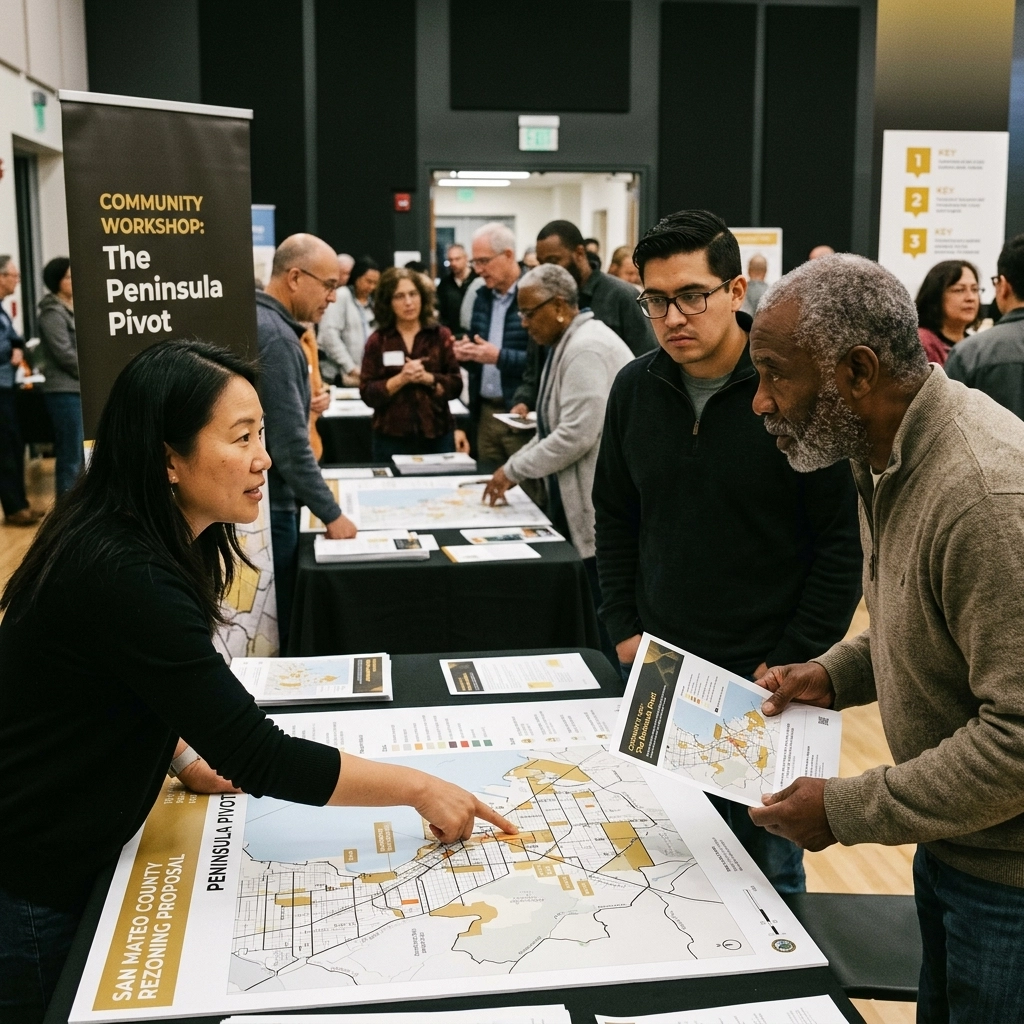
San Francisco’s Fillmore District is standing at the edge of a massive transformation. For decades, the Safeway at 1335 Webster Street served as a foundational, if sometimes controversial, anchor for the community. When news broke last year that the grocery giant intended to shutter its doors and sell the 3.7-acre site, the immediate reaction was a mix of anxiety and frustration. In a city already grappling with "food deserts" and shifting retail landscapes, losing a primary grocery source felt like a step backward.
But where some saw a vacuum, Align Real Estate saw a canvas.
Inspired by reporting from Sarah Klearman at the San Francisco Business Times, we are looking at a proposal that represents one of the most ambitious post-pandemic residential efforts in the city. Align is moving forward with a plan to deliver approximately 1,800 new homes to the Fillmore. To put that in perspective, this single project would create more housing than the neighborhood has seen in the last twenty years combined.
This isn’t just a housing project; it is a $3 billion statement of faith in the future of San Francisco.
The Scale of the Vision
The sheer density of the 1335 Webster Street proposal is staggering. By proposing 1,800 units, Align is positioning this site as a true mixed use community development. The plan involves a strategic cluster of mid-rise and high-rise buildings centered around a shared open space. This "village within a city" approach is designed to create a sense of place that goes beyond just providing four walls and a roof.

Working with Multistudio as the lead architect, the developer is aiming for a phased rollout. This is a pragmatic move. In a financial climate where interest rates and construction costs remain volatile, the ability to build in stages allows for flexibility. It also means the neighborhood can begin to absorb the new population incrementally rather than all at once.
For a real estate development firm, a project of this magnitude is a high-stakes play. While other megaprojects across the city: particularly in areas like Central SoMa: have largely stalled or been forced back to the drawing board to incorporate more "feasible" uses, Align is charging ahead with a residential-heavy focus. It suggests a conviction that the demand for high-quality housing in San Francisco isn’t just coming back; it never truly left.
Balancing Housing with Community Needs
One of the loudest criticisms of the Safeway closure was the loss of food access for the Fillmore community. It’s a neighborhood with a deep, complex history, and the removal of a primary grocer felt like another chapter of disinvestment.
Align seems to have been listening.
The updated proposal includes a 20,000-square-foot ground-floor grocery store. While smaller than the original 50,000-square-foot Safeway, it is a targeted response to community input. This isn't just about checking a box; it’s about urban neighborhood revitalization that respects the existing residents' needs. A modern, efficiently designed grocery space can often serve a community just as well as a sprawling, older supermarket, especially when integrated into a high-density residential hub.
Beyond the groceries, the project includes 500 underground parking spaces, acknowledging the reality of transit needs while prioritizing a pedestrian-friendly ground plane.
Affordability and Impact
A major pillar of the proposal is the commitment to affordable housing development support. Approximately 15% of the 1,800 units: roughly 270 homes: are slated to be affordable. In a city where the cost of living continues to be a primary driver of the "doom loop" narrative, these units are critical. They provide the necessary diversity in the housing stock to ensure that the Fillmore remains accessible to a broader range of San Franciscans.

The impact of adding 1,800 households to this specific corridor cannot be overstated. New residents mean more foot traffic for local businesses on Fillmore Street and Geary Boulevard. It means more people using public transit and more eyes on the street. It’s the kind of density that fuels the local economy and prevents the stagnation that often leads to urban decay.
The $3 Billion Vote of Confidence
Perhaps the most significant takeaway from Align’s recent move is the broader context of their investment strategy. The firm has indicated plans to file applications for a total of 3,500 homes across San Francisco in the very near future, representing a collective $3 billion investment.
Look at the headlines from the last two years. Most of them have been about retail flight, office vacancies, and the challenges of the Tenderloin. But professional developers don't invest $3 billion based on headlines; they invest based on data and long-term trajectory.
Align’s David Balducci noted that this project is an "important step toward meeting the city’s growing housing demand." That demand is the fundamental truth underneath all the noise. People still want to live in San Francisco. The city remains a global hub for tech, culture, and innovation. What it has lacked is a pipeline of housing that can meet that demand at scale.
By advancing this proposal now, Align is betting that by the time these buildings are ready for occupancy, San Francisco’s recovery won’t just be underway: it will be a reality.
Navigating the Complexity of Megaprojects
The road from a "formal project review meeting" to a ribbon-cutting is long and paved with bureaucratic hurdles. Dan Sider, chief of staff at the San Francisco Planning Department, has expressed the city’s eagerness to move "thoughtful mixed-use, mixed-income" projects forward. This alignment between city officials and developers is a refreshing change of pace from the adversarial relationships that have historically slowed San Francisco’s growth.

However, challenges remain. Align has not yet officially acquired the site from Safeway, and securing the necessary capital for a $3 billion portfolio is no small feat in a tight lending market. But the fact that they are willing to put these plans on the record, engage with the community on "food desert" issues, and propose record-breaking density shows a level of sophistication we should all be watching.
These are the types of community centered construction projects that define the next era of a city. They move past the "big box" retail models of the 1990s and toward a more integrated, sustainable urban fabric.
Looking Ahead
The transformation of 1335 Webster Street is more than just a real estate story. It’s a case study in how cities evolve. The Fillmore has seen many iterations: from its roots as the "Harlem of the West" to the scars of urban renewal in the 60s and 70s. This project represents the next chapter.
If Align can execute on this vision, they won’t just be building apartments. They will be rebuilding the confidence of a neighborhood and proving that San Francisco is still a place where big ideas can take root.
The shift from grocery aisles to apartment hallways is a significant one. It reflects a city that is learning to prioritize people and density over surface parking and single-use buildings. As we watch this $3 billion bet play out, one thing is certain: the Fillmore will never be the same. And for a city that needs to grow to survive, that is exactly the point.
Built to grow strong businesses, meaningful partnerships, and lasting community impact.
Connect with McFadden Finch Holdings Company today.
McFadden Finch Holdings Company
Vision. Leadership. Lasting Impact.
Lake Merritt Plaza
1999 Harrison Street, Suite 1872-73
Oakland, CA 94612
(510) 973-2677
www.m-fhc.com
info@m-fhc.com
McFadden Finch Holdings Company (MFHC) is a premier holdings and investment management firm dedicated to driving sustainable growth and long-term value. Our mission is to bridge the gap between visionary capital and community-centric development, ensuring tomorrow's infrastructure meets today's needs. Through strategic project management and rigorous market analysis, we empower our partners to navigate the complexities of the California economic landscape with confidence and clarity.
For more information on how MFHC can support your industrial or real estate investment strategy, contact us at (510) 973-2677 or visit www.m-fhc.com
Disclaimer: This content is for general informational purposes only and does not constitute legal, financial, tax, investment, real estate, business, or other professional advice. Reading this content does not create an advisory, client, fiduciary, or contractual relationship with McFadden Finch Holdings Company. Because every business, investment, property, and strategic situation is different, you should consult qualified professionals regarding your specific circumstances. McFadden Finch Holdings Company makes no warranties regarding the accuracy or completeness of this information and is not responsible for third-party content, links, products, services, or organizations referenced. Testimonials, examples, case studies, and projected outcomes are illustrative only and do not guarantee similar results.