
The Bay Area's real estate development landscape has transformed dramatically as interest rates hover between 6.2% and 6.6%, forcing developers to rethink traditional financing models. While conventional construction loans and private equity partnerships remain expensive, a new wave of public-private partnerships (PPPs) is emerging as the strategic alternative that's keeping projects alive: and profitable.
This isn't about waiting for rates to drop. Smart developers across San Francisco, Oakland, and the broader Bay Area are leveraging government incentives, infrastructure collaborations, and mixed-use development frameworks to secure funding, reduce risk, and accelerate timelines. These partnerships represent more than just financial engineering: they're reshaping how communities grow, how housing gets built, and how developers navigate one of the most challenging rate environments in decades.
What This Solves: The High-Interest Rate Crisis Facing Bay Area Developers
Traditional real estate financing has become prohibitively expensive. Construction loans that once carried rates of 3-4% now exceed 7-8%, compressing margins and making pencil-thin deals completely unviable. For Bay Area developers, this creates three critical problems:
Cash Flow Constraints: Higher debt service payments eat into operating budgets, delaying timelines and reducing the number of projects a developer can pursue simultaneously.
Equity Partner Hesitation: Private equity firms and institutional investors are demanding higher returns to compensate for rate risk, pushing required IRRs from 12-15% to 18-22%: thresholds many projects simply cannot meet.
Community Impact Delays: Affordable housing, mixed-use developments, and neighborhood revitalization projects are stalling precisely when Bay Area communities need them most, with San Francisco facing a mandate to deliver 82,069 new housing units by 2031.
Public-private partnerships address these challenges by introducing government capital, tax incentives, land contributions, and regulatory streamlining that fundamentally change project economics. When structured properly, PPPs can reduce financing costs by 30-40%, accelerate entitlement timelines by 6-12 months, and create downside protection that makes projects attractive even in volatile rate environments.

Strategy #1: Leveraging Transit-Oriented Development (TOD) Financing Partnerships
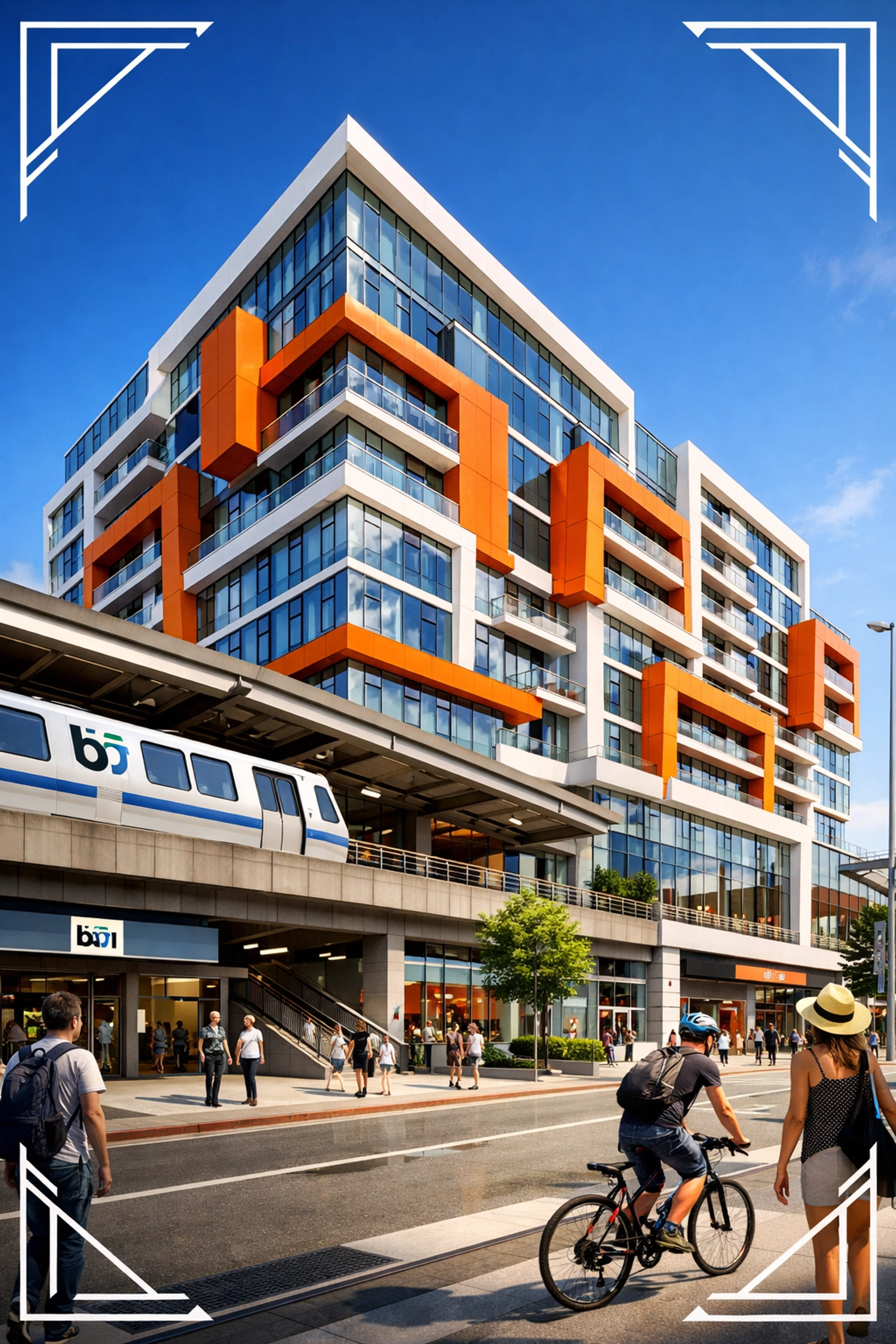
Bay Area transit agencies: including BART, Caltrain, and regional transportation authorities: are actively seeking development partners to unlock value from underutilized land parcels adjacent to transit stations. These TOD partnerships combine public land contributions with streamlined entitlements and access to low-cost municipal financing.
How It Works: Developers partner with transit agencies to ground-lease or purchase parcels near transit hubs, typically with reduced land costs in exchange for affordable housing commitments, retail activation, or revenue-sharing arrangements. The public agency benefits from increased ridership, station-area revitalization, and affordable housing delivery without direct capital outlay.
Real-World Application: Oakland's recent $35 million award for the 285 12th Street affordable housing and transit project demonstrates this model's viability. The project combines city funding, transit authority support, and developer expertise to deliver community-focused mixed-use development that wouldn't pencil under traditional financing.
Key Benefits:
- Reduced land acquisition costs (20-50% below market)
- Access to tax-exempt municipal bonds (200-300 basis points below conventional debt)
- Fast-tracked entitlements through pre-approved transit-oriented zoning
- Built-in demand drivers through proximity to transportation infrastructure
Strategy #2: State Density Bonus Programs and SB 423 Streamlining
California's evolving housing legislation: particularly Senate Bill 423 and the State Density Bonus law: provides developers with powerful tools to increase unit counts, reduce parking requirements, and streamline approval processes when partnering with municipalities on affordable housing components.
How It Works: Developers commit to dedicating 10-20% of units as affordable housing at specified income levels (typically 80% or 120% of Area Median Income) in exchange for density bonuses up to 50%, reduced parking requirements, and ministerial approval that bypasses lengthy discretionary reviews.
Real-World Application: The recently permitted 598 Dellbrook Avenue project in Twin Peaks utilized SB 423 and State Density Bonus provisions to deliver nine three-bedroom apartments with streamlined approvals. This approach transformed a small infill parcel into a viable project despite challenging rate conditions.
Key Benefits:
- Increased revenue potential through additional units (up to 50% density bonus)
- Reduced construction costs via lower parking requirements ($40,000-$60,000 per parking space saved)
- Faster time-to-market through ministerial approvals (6-12 months faster)
- Enhanced community goodwill through affordable housing contributions
Strategy #3: Infrastructure Finance Districts (IFDs) and Tax Increment Financing
Infrastructure Finance Districts represent a sophisticated public-private mechanism where future property tax increments generated by new development fund upfront infrastructure improvements: roads, utilities, parks, transit connections: that make projects viable.
How It Works: Municipalities establish IFDs in designated areas, typically brownfield sites or underutilized commercial corridors. As development occurs and property values increase, the incremental tax revenue (the difference between baseline and new tax collections) funds infrastructure bonds that pay for necessary improvements. Developers benefit from shovel-ready sites with world-class infrastructure without shouldering 100% of improvement costs.
Real-World Application: San Francisco's Mission Bay IFD pioneered this approach, using tax increment financing to transform 303 acres of industrial waterfront into a thriving mixed-use neighborhood. The model proved especially effective during previous high-rate cycles by de-risking infrastructure costs.
Key Benefits:
- Shared infrastructure cost burden (developers typically contribute 30-50% vs. 100% under conventional models)
- Enhanced site marketability through improved infrastructure
- Access to municipal bond rates for infrastructure improvements
- Community benefit without additional taxation
Strategy #4: Housing Trust Fund Partnerships and Below-Market-Rate (BMR) Co-Development
Regional housing trust funds: including the Bay Area Housing Finance Authority and local municipal housing funds: provide below-market capital to developers who deliver affordable and workforce housing within market-rate projects.
How It Works: Developers structure projects with mixed-income components, typically combining market-rate units with 20-40% affordable/workforce housing. Housing trust funds provide gap financing at 2-3% interest rates (versus 7-8% conventional rates) for the affordable component, while market-rate units carry conventional financing. The blended cost of capital makes projects financially viable despite high prevailing rates.
Real-World Application: Multiple San Francisco and Oakland developers are leveraging the Bay Area Housing Finance Authority's $1.5 billion portfolio to structure mixed-income projects that deliver community benefits while maintaining market-rate revenue streams.
Key Benefits:
- Dramatically reduced weighted average cost of capital (blended rates often 300-400 basis points below all-market-rate projects)
- Preferential treatment in entitlements and community support
- Access to additional incentives (density bonuses, fee waivers, expedited processing)
- Diversified revenue streams across income segments

Strategy #5: Adaptive Reuse and Historic Preservation Tax Credit Partnerships
The convergence of federal and state historic preservation tax credits with growing municipal support for adaptive reuse creates powerful financing advantages for developers converting underutilized historic and commercial buildings into residential, mixed-use, or hospitality projects.
How It Works: Developers acquire historic buildings or structures in designated historic districts, partner with municipalities on preservation plans, and access combined federal (20% of qualified rehabilitation expenses) and state (up to 25% of qualified expenses) tax credits. These credits can be syndicated to investors, generating immediate equity that offsets high-rate debt financing.
Real-World Application: San Francisco's Financial District and Oakland's downtown core contain numerous candidates for adaptive reuse partnerships, with city governments actively supporting conversions that activate street life and preserve architectural heritage.
Key Benefits:
- Equity infusion from tax credit syndication (typically 80-90 cents per dollar of credit)
- Reduced acquisition costs for underutilized historic properties
- Fast-tracked entitlements for preservation-focused projects
- Differentiated product in competitive rental/for-sale markets
How McFadden Finch Holdings Company Helps Bay Area Developers Navigate PPP Opportunities
At McFadden Finch Holdings Company, our real estate and investment teams specialize in structuring complex public-private partnerships that make challenging projects financially viable. We bring decades of experience navigating Bay Area entitlements, government partnerships, and creative financing structures that turn high-interest-rate obstacles into strategic opportunities.
Our approach combines deep local market knowledge with sophisticated financial modeling to identify optimal partnership structures for each unique project. Whether you're exploring transit-oriented development opportunities, adaptive reuse conversions, or mixed-income housing partnerships, we provide the strategic guidance and capital solutions to move projects from concept to completion.
We've successfully partnered on projects that leverage state density bonus provisions, infrastructure finance districts, and historic preservation incentives: delivering community benefits while maintaining strong financial returns for our development partners. Our commitment extends beyond financial structuring to include community engagement, entitlement strategy, and long-term asset management that ensures projects succeed throughout their lifecycle.
Frequently Asked Questions About Public-Private Partnerships in Bay Area Real Estate
Q: How long does it take to structure a public-private partnership compared to conventional financing?
A: While PPPs require additional upfront coordination with government agencies, the streamlined entitlements and reduced financing costs typically accelerate overall project timelines by 6-12 months compared to conventionally financed projects facing extended discretionary reviews.
Q: What types of projects are best suited for public-private partnerships?
A: Mixed-use developments with affordable housing components, transit-oriented projects, adaptive reuse of historic buildings, and large-scale master-planned communities represent ideal PPP candidates. The key is substantial community benefit that justifies government partnership and support.
Q: Do public-private partnerships require developers to sacrifice returns?
A: Properly structured PPPs often deliver returns equal to or exceeding conventional projects by reducing capital costs, accelerating timelines, and de-risking entitlements. The affordable housing or community benefit components are offset by density bonuses, tax credits, and below-market financing that improve overall economics.
Q: How are Bay Area municipalities currently approaching PPP opportunities?
A: San Francisco, Oakland, and surrounding cities are actively seeking development partners to meet state housing mandates. Recent initiatives like San Francisco's Family Zoning Plan and Oakland's affordable housing awards demonstrate strong municipal commitment to creative partnership structures.
Q: Can smaller developers access public-private partnership opportunities?
A: Absolutely. Many PPP programs specifically target smaller infill projects and local developers. The 598 Dellbrook Avenue project demonstrates how modest nine-unit developments can leverage state density bonus and streamlining provisions effectively.
Transform Your Next Bay Area Development Project With Strategic PPP Structures
The current high-interest-rate environment demands innovative thinking from Bay Area developers. Public-private partnerships aren't just alternative financing mechanisms: they represent the future of community-focused development that delivers financial returns while addressing critical housing and infrastructure needs.
As mortgage rates moderate toward 6% by late 2026 and tech sector liquidity continues flowing into Bay Area real estate, developers who master PPP structures today will be positioned to capture outsized opportunities throughout this cycle and beyond.
Ready to explore how public-private partnerships can transform your next project's economics? Contact McFadden Finch Holdings Company to discuss strategic partnership opportunities, financing structures, and entitlement strategies tailored to your specific development goals.
Meta Title: High-Interest Rates? 5 Public-Private Partnership Strategies for Bay Area Developers | MFHC
Meta Description: Discover how Bay Area developers are using public-private partnerships, TOD financing, density bonuses & tax credits to build profitable projects despite 6%+ rates.
URL Slug: /high-interest-rates-killing-your-real-estate-projects-5-public-private-partnership-strategies-bay-area-developers-are-using-right-now
Primary Keyword: public-private partnerships Bay Area real estate
Supporting Keywords: TOD financing, State Density Bonus, SB 423, infrastructure finance districts, tax increment financing, housing trust funds, historic preservation tax credits, Bay Area development financing, transit-oriented development, affordable housing partnerships
Featured Snippet Target: "What are public-private partnerships in real estate? Public-private partnerships (PPPs) in real estate combine government capital, land contributions, tax incentives, and regulatory streamlining with private developer expertise to deliver community-focused projects that reduce financing costs by 30-40% and accelerate timelines by 6-12 months."
#BayAreaRealEstate #PublicPrivatePartnership #RealEstateDevelopment #AffordableHousing #TransitOrientedDevelopment