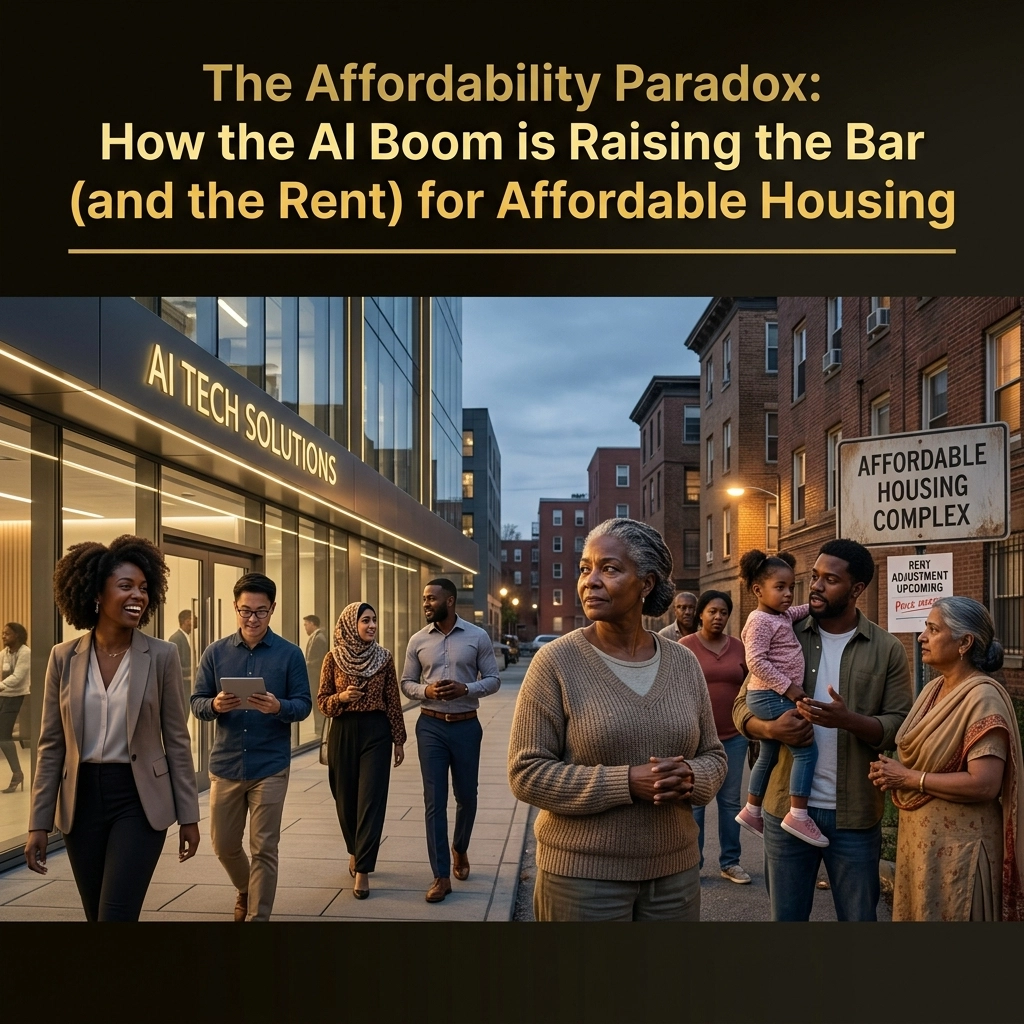

Right now, billions of dollars are sitting dormant in Donor-Advised Funds (DAFs) across the United States: waiting to be granted out. While traditional philanthropy follows a simple model of donate-wait-grant, a new paradigm is emerging: impact-first investing. This approach puts DAF capital to work before it's distributed as grants, creating a multiplier effect that addresses urgent community challenges like the Bay Area's deepening affordable housing crisis.
The question isn't whether DAFs can help solve housing shortages: it's whether philanthropists are ready to unlock their full potential.
What This Solves: Three Critical Gaps in Bay Area Housing Finance

The Bay Area faces a perfect storm of housing challenges that traditional funding mechanisms alone cannot solve. Impact-first DAF investing addresses three interconnected problems:
1. Capital Shortages for Affordable Housing Development
Despite record need, affordable housing projects consistently face funding gaps that delay or kill developments entirely. Banks remain cautious. Public funds are oversubscribed. Private equity demands returns that conflict with affordability mandates. DAFs sitting on the sidelines represent untapped capital that could bridge these gaps through recoverable grants, low-interest loans, and equity investments: all while preserving the donor's ability to eventually distribute funds as charitable grants.
2. Inefficient Philanthropic Timing
Traditional DAF structures create a timing disconnect: donors receive immediate tax benefits, but communities wait years: sometimes decades: for grant distributions. Meanwhile, housing costs rise 8-12% annually in high-demand Bay Area submarkets, making delay exponentially more expensive. Impact-first strategies deploy capital immediately as investments, generating both social returns (housing units) and financial returns (interest, equity appreciation) that can fund additional grants.
3. Deepening Local Inequity
The Bay Area's housing crisis isn't abstract: it's displacing teachers, service workers, artists, and longtime residents who built these communities. Conventional philanthropy treats symptoms through emergency rental assistance and homelessness services. Impact-first DAF investing tackles root causes by capitalizing the actual construction and preservation of affordable units, creating lasting infrastructure that serves communities for 50+ years.
The Shift Towards Impact-First DAF Portfolios

The philanthropic landscape is experiencing a fundamental transformation. Recent research reveals that 72% of DAF donors express interest in making impact-first investments, with willingness to allocate approximately 26% of their total DAF assets to mission-aligned investments. This isn't theoretical: it represents hundreds of billions in potential deployment capital.
How Impact-First DAF Mechanisms Work
Donor-Advised Funds have evolved beyond simple grant-making vehicles. Modern DAF sponsors now offer several impact-first investment structures:
Recoverable Grants allow donors to fund high-impact housing projects with the opportunity to recover funds if financial and social milestones are achieved. This capital recycling model means the same dollar can create multiple housing outcomes over time.
Program-Related Investments (PRIs) enable DAF sponsors to deploy funds as loans, equity stakes, or guarantees while maintaining tax-exempt status. For affordable housing, this might mean providing subordinate debt that makes a project financially viable, or equity that preserves long-term affordability.
Private Impact Investments give larger DAF accounts ($1-5 million+) access to professionally managed funds targeting measurable social and environmental benefits: including dedicated affordable housing funds focused on the Bay Area.
Local Infrastructure Already Exists
The San Francisco Foundation stands among over 100 community foundations implementing automatic allocations from DAFs into local impact investing pools. This existing infrastructure demonstrates proven pathways for place-based philanthropic investing that prioritizes Bay Area affordable housing alongside other community priorities.
The model works because it aligns incentives: developers access patient capital with flexible terms, donors see their assets actively solving problems before eventual grant distribution, and communities benefit from accelerated housing production.
Pooling Capital for Maximum Impact

Individual DAF investments can support specific projects, but pooled impact-first portfolios unlock transformational scale. When multiple DAFs coordinate through specialized investment vehicles, they create:
- Risk diversification across multiple housing developments and geographies
- Professional management by teams with deep affordable housing expertise
- Negotiating power to secure better terms and community benefit agreements
- Standardized impact measurement that demonstrates outcomes to all stakeholders
This pooled approach mirrors successful social finance models pioneered in Europe and increasingly adopted across U.S. markets. For the Bay Area specifically, it means DAF capital can support everything from workforce housing near transit hubs to permanent supportive housing for formerly homeless residents: all within a single, professionally managed portfolio.
How McFadden Finch Holdings Company Connects These Strategic Moves
At McFadden Finch Holdings Company, we recognize that solving the Bay Area's housing crisis requires innovative capital structures that bridge philanthropy, impact investing, and community development. Our work through the McFadden Finch Foundation and Nucleus Holdings positions us at the intersection of these converging strategies.
We specialize in identifying affordable housing opportunities that meet both community needs and investor requirements: including impact-first DAF portfolios. Whether you're a DAF donor exploring deployment options, a sponsor building impact investment capacity, or a community development organization seeking patient capital, we provide the expertise to structure transactions that work.
Our recent involvement in Oakland's $3.5M affordable housing award demonstrates our commitment to projects that combine financial sustainability with measurable community benefit: exactly the profile that impact-first DAF investors seek.
Frequently Asked Questions
What is a Donor-Advised Fund (DAF)?
A Donor-Advised Fund is a philanthropic vehicle that allows donors to make a charitable contribution, receive an immediate tax deduction, and then recommend grants from the fund over time. DAFs are sponsored by public charities but give donors advisory privileges over how funds are distributed. They've become the fastest-growing charitable giving vehicle in America due to their flexibility and simplicity.
How can a DAF investment be "impact-first" while still fulfilling charitable purposes?
Impact-first investments from DAFs use charitable assets to generate both financial and social returns before eventual grant distribution. These investments must align with the DAF sponsor's charitable mission (like affordable housing), but can earn returns that grow the fund's capacity for future grants. The key distinction: impact comes first in decision-making, with financial returns as an important but secondary consideration. All investments must ultimately support charitable purposes to maintain tax-exempt status.
Is impact-first DAF investing risky compared to traditional grant-making?
All investments carry some risk, but impact-first DAF portfolios can be structured to match donor risk tolerance. Options range from first-loss guarantees (higher risk, lower returns) to senior secured loans (lower risk, modest returns). Importantly, professional management and diversification across multiple projects significantly reduce individual project risk. Many donors find that recoverable grants and PRIs offer better risk-adjusted returns than traditional grant-making because capital can be recycled when projects succeed: creating multiple impact opportunities from the same dollars.
Join the Initiative
The Bay Area's housing crisis demands urgent, innovative responses. Impact-first DAF investing represents a powerful tool that's currently underutilized: but gaining momentum as donors recognize its potential to multiply philanthropic impact.
If you're a DAF donor, foundation trustee, or wealth advisor exploring how to deploy charitable assets for maximum community benefit, McFadden Finch Holdings Company can help you navigate the opportunity landscape and structure investments that align with your values and return requirements.
Join the Initiative and discover how your philanthropic capital can help solve one of the Bay Area's most pressing challenges while preserving resources for future charitable giving.
About McFadden Finch Holdings Company
McFadden Finch Holdings Company is a holdings and investment management firm dedicated to strategic investments that generate both financial returns and measurable community impact. Through our integrated approach spanning real estate development, community revitalization, and innovative financing structures, we help clients and communities turn challenges into opportunities for lasting positive change.