
Based on reporting by Ted Andersen, Digital Editor at San Francisco Business Times
San Francisco's real estate market is experiencing something extraordinary in early 2026: while national home price appreciation stutters and many regions see declining values, the city's median home sales prices are surging 12.4% year-over-year to $1.7 million.[1] This isn't just another market cycle: it's a high-stakes collision between two powerful forces reshaping urban real estate. On one side, the AI startup boom is flooding the city with wealth-driven demand and cash buyers. On the other, inventory constraints have reached crisis levels, with San Francisco now offering fewer homes for sale than Napa County, despite having six times the population.[1]
The thesis is clear: San Francisco's 2026 market represents a unique inflection point where technological wealth creation meets structural supply failure. This dynamic creates both unprecedented challenges and strategic opportunities for real estate development firms, investors, and policymakers focused on sustainable growth. Understanding how these forces interact: and what they mean for the future of Bay Area housing: is essential for anyone operating in or observing this market.
The Numbers Paint a Stark Picture
The data from Compass's February 2026 market report reveals the severity of San Francisco's supply crisis. As of February 1, only 651 homes were on the market or coming soon: a 27% year-over-year decline and the lowest February 1 count in over four years.[1] New listings in January dropped 19% compared to the previous year, exacerbating a shortage that persisted throughout 2025.[1]
The composition of available inventory tells its own story: approximately 30% are single-family homes, 60% are condos, and about 10% are TICs or co-ops.[1] This mix reflects a market under extreme pressure, where traditional single-family inventory has become so scarce that buyers are increasingly pivoting to condominiums and alternative ownership structures.
Prices reflect this scarcity. The median San Francisco home value now stands at approximately $1.27 million, up 2.1% over the past year, with single-family homes commanding a median of $1.7 million: the 12.4% surge that's defying national cooling trends.[1][6] Two-bedroom condos have hit a median price of $1.3 million, while the luxury segment continues to operate in its own stratosphere, exemplified by 3199 Jackson Ave. in Presidio Heights, which came to market at $32 million: the most expensive residential listing in the city as of early February.[1]
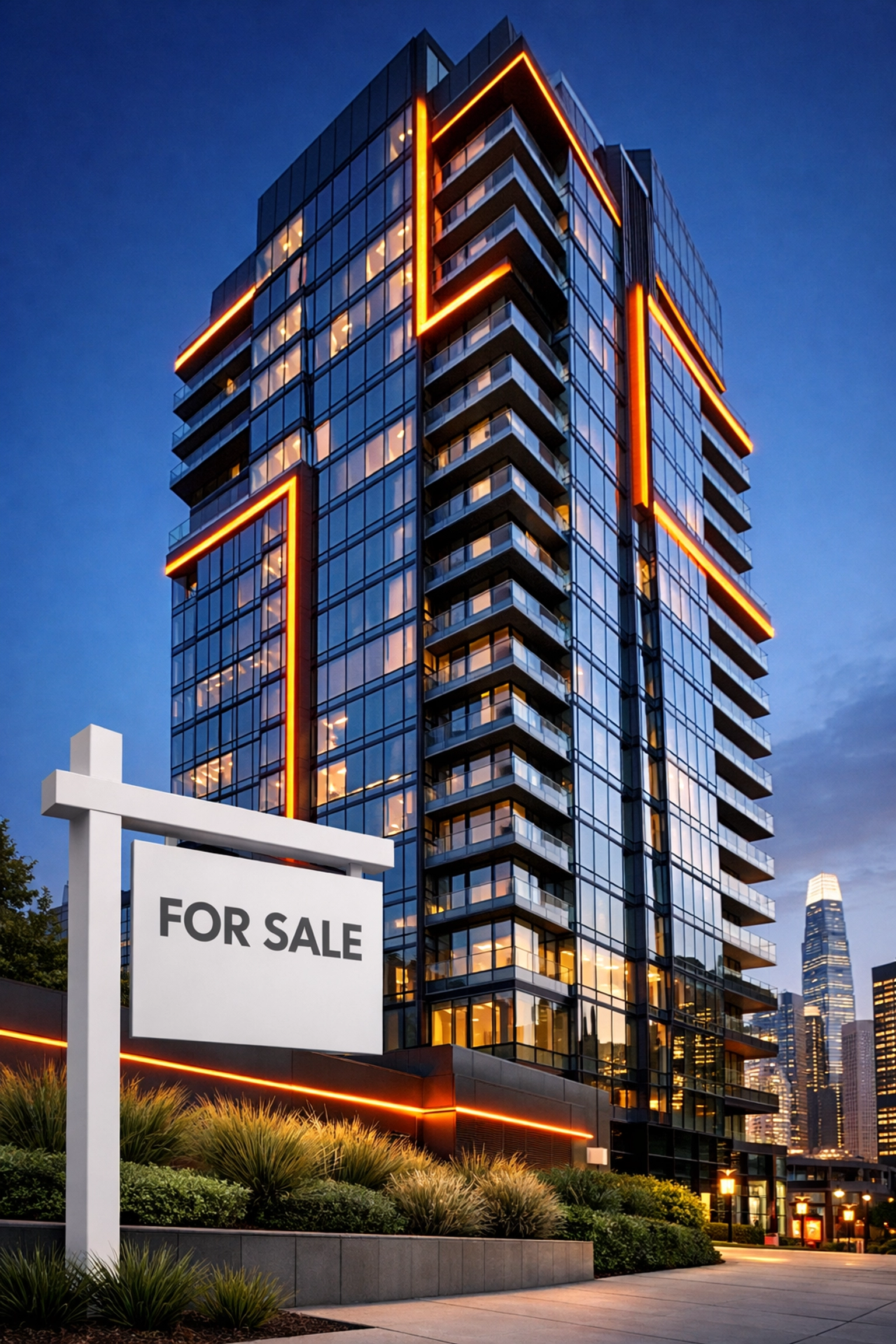
The AI Wealth Effect: Capital in Motion
The driving force behind demand escalation is unmistakable: AI-driven wealth creation. Capital from artificial intelligence companies, liquidity events, and generational tech wealth continues to flow into San Francisco real estate at an accelerating pace.[2] Bloomberg has documented tech entrepreneurs purchasing multi-million dollar mansions, igniting renewed buying activity in pockets of the Bay Area that had previously cooled.[2]
This isn't speculative capital: it's cash from realized gains. The luxury market is operating with distinct momentum separate from broader economic cycles, with homes offering exceptional design, views, privacy, and location remaining highly sought after.[2] In the $2M–$2.5M segment, the intensity is particularly acute: 86 homes closed in just three months during Q4 2025, averaging 20% over asking price with 20-day market times.[2]
Chief Market Analyst Patrick Carlisle from Compass noted the unusual nature of this dynamic: "While national home price appreciation is stuttering to a halt and many states and regions are seeing price declines, San Francisco's median home sales prices continue to surge higher, a dynamic we expect to see continue in 2026."[1] This divergence from national trends underscores how localized economic forces: particularly the concentration of AI industry capital: can override broader macroeconomic headwinds.
The wealth effect extends beyond purchases. Renewed confidence in the city, combined with strong economic tailwinds, is reinforcing housing demand across price points.[2] The result is a market where multiple offer situations and strong competition have become standard, particularly in value-driven neighborhoods like the Richmond and Sunset.[2]
The Inventory Paradox: Why Supply Can't Respond
The inventory shortage represents more than a temporary market condition: it's a structural constraint that has been decades in the making. Rental inventory grew only 0.6% year-over-year in San Francisco, compared to 6.4% growth in Austin, directly contributing to San Francisco's position as number one in the U.S. for rent growth at 6.6% through November 2025.[2]
Alan Mark, real estate strategist and founder of the Alan Mark Co. in San Francisco, identifies the root cause: "A lack of new residential construction over the past decade has shifted demand toward the newest existing inventory, reinvigorating buildings that have seen softer demand, particularly in neighborhoods like SoMa."[1] This construction deficit means that even as demand surges, the market has no release valve: no new supply to absorb buyer pressure.
Carlisle characterizes San Francisco's supply situation bluntly: the city's supply of houses for sale is "staggeringly low as compared to its population."[1] In fact, Napa County, with only 16% of San Francisco's population, actually has more houses on the market.[1] This comparison illustrates the severity of the crisis: it's not just that inventory is low: it's extraordinarily low relative to any reasonable population benchmark.
The condo market shows similarly critical constraints, with months of supply at just 1.3 months, well below the 6-month threshold that typically indicates a balanced market.[4] This scarcity is signaling a fundamental shift from the excess supply conditions that characterized the pandemic era toward a structurally undersupplied market.
Market Dynamics: Acceleration and Competition
| Metric | Q4 2025 | Change YoY | Market Implication |
|---|---|---|---|
| Single-Family Closings | 617 homes | +4.3% | Accelerating sales velocity |
| Condo Sales (2025 YTD) | : | +13.1% | Strong rebound from pandemic lows |
| Total Listings (Feb 1) | 651 homes | -27% | Extreme scarcity |
| New Listings (January) | : | -19% | Supply constraint deepening |
| Median House Price | $1.7M | +12.4% | Rapid appreciation |
| Absorption Rate | : | +8% vs Jan 2025 | Supercharged demand |
Data compiled from Compass February 2026 market report and San Francisco Business Times[1]
Late 2025 demonstrated clear momentum reversal after years of pandemic-era uncertainty. Single-family home sales accelerated sharply into year-end, with 617 homes closing in Q4 2025: a 4.3% increase year-over-year.[2] Condo sales improved substantially, rising 13.1% year-to-date in 2025.[4]
The absorption rate: which measures buyer demand compared to the supply of listings for sale: has been supercharged since autumn, climbing 8% higher than January 2025 levels.[1] Typically, absorption rates climb through spring as the market heats up, but the early 2026 acceleration suggests demand is arriving earlier in the seasonal cycle.
This shift in market timing is significant. Stronger buyer activity is beginning in January 2026 rather than waiting for the traditional spring market kickoff.[2] For sellers and developers, this means the competitive window has expanded, while for buyers, it means less time to prepare and more pressure to act decisively.
As competition intensifies in single-family homes, more buyers are strategically pivoting toward condos: a trend that will likely accelerate as rising rental prices improve the buy-versus-rent equation.[2] This pivot is reshaping neighborhood dynamics, particularly in areas like SoMa where newer construction is attracting buyers who might have previously focused on single-family options.
What This Means for Development and Investment Strategy
For real estate development firms and investment managers, this collision creates a unique strategic moment. The market is clearly signaling that supply-side solutions: new construction, adaptive reuse, transit-oriented development: are not just viable but urgently needed. However, the same forces driving demand are also creating operational challenges: rising construction costs, labor shortages, and extended permitting timelines.
At McFadden Finch Holdings Company, we view this as a call to action for sustainable growth and operational excellence in project management. The inventory crisis isn't being solved by market forces alone: it requires coordinated action from developers, investors, and public sector partners to address the structural supply gap.
The condo market rebound offers particular insights. As Alan Mark noted, the lack of new construction over the past decade has shifted demand toward the newest existing inventory.[1] This suggests that well-located, thoughtfully designed multifamily projects can capture significant market share, particularly if they incorporate the design quality and amenities that AI wealth buyers expect.
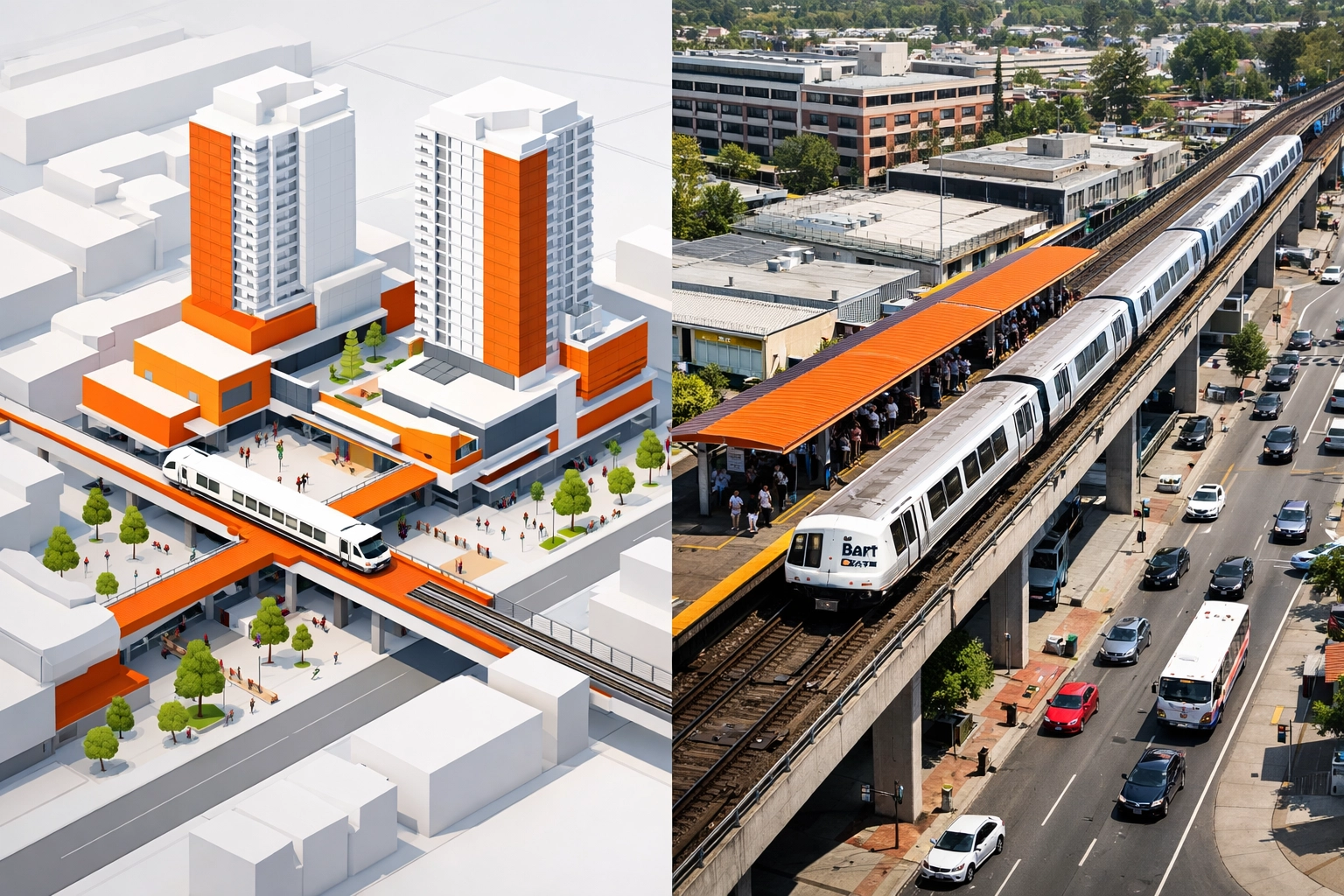
Transit-oriented development represents another high-potential strategy. As we've explored in our coverage of projects like the West Oakland BART development, integrating housing with transit infrastructure addresses both supply constraints and sustainability goals. The success of similar projects at MacArthur BART, Fruitvale BART, and Lake Merritt BART stations demonstrates proven demand for this development model.[3]
Case Study: The Presidio Heights Luxury Signal
The listing of 3199 Jackson Ave. at $32 million serves as more than just a headline-grabbing number: it's a market signal about the concentration of wealth flowing into San Francisco. Presidio Heights has long been one of the city's most prestigious neighborhoods, but the willingness of sellers to test this price point, and the expectation that buyers exist at this level, reflects the intensity of AI-driven capital seeking premium real estate.
This listing sits in a neighborhood characterized by architectural distinction, privacy, and proximity to both the Presidio and Pacific Heights. The property represents the kind of "exceptional design, views, privacy, and location" that remain highly sought after in the current market.[2] While most buyers aren't operating in the $30+ million range, the existence of this market segment creates a cascading effect: as ultra-high-net-worth buyers purchase at the top, they free up inventory at lower (but still elevated) price points, creating movement throughout the market.
The Presidio Heights example also illustrates the geographical concentration of wealth effects. While the broader San Francisco market is experiencing inventory constraints, luxury enclaves like Pacific Heights, Presidio Heights, and select parts of Russian Hill and Telegraph Hill are operating as discrete markets with their own supply-demand dynamics. Understanding these micro-market variations is essential for development and investment strategy.
What Smart Critics Argue
Not everyone views San Francisco's 2026 market dynamics as sustainable or beneficial. Several counterarguments deserve serious consideration:
"This is just another tech bubble that will burst." Critics point to previous cycles: particularly 2000 and 2022: when tech-driven real estate booms ended abruptly. However, the current AI boom differs in important ways: it's generating revenue and profits, not just venture capital funding, and it's attracting enterprise adoption across industries, not just speculative investment. While volatility is always possible, the breadth and depth of AI integration suggests more sustained demand than previous hype cycles.[5]
"Inventory will surge when interest rates stabilize." Some analysts argue that the current inventory shortage reflects sellers waiting for better rate environments, and that supply will flood the market once conditions normalize. However, demographic data suggests otherwise: many current homeowners have sub-3% mortgages from the 2020-2021 period and are unlikely to sell even if rates decline to 5-6%. The structural supply deficit is real, not just cyclical.[5]
"Luxury demand doesn't solve the housing crisis." This criticism is valid: wealthy AI entrepreneurs buying $30 million estates doesn't provide housing for teachers, service workers, or middle-income families. However, the broader market dynamics: including the condo rebound and increased absorption rates across price points: suggest demand is distributed across the market, not just concentrated at the top. The challenge is ensuring development responds with appropriate housing types and affordability levels.[2]
"Price appreciation will stabilize as the national market normalizes." Forecasts suggest modest 3-4% price appreciation nationally for 2026, and some analysts expect San Francisco to revert to this mean.[5] However, local supply constraints and concentrated wealth effects create conditions for San Francisco to continue diverging from national trends, at least in the near term. The question isn't whether prices will stabilize: it's when, and at what level.
These criticisms highlight the importance of evidence-based strategy rather than momentum chasing. Real estate development and investment decisions made in 2026 will need to account for multiple scenarios, including market corrections, regulatory changes, and shifts in technology industry dynamics.
Key Takeaways for Stakeholders
-
Inventory scarcity is the binding constraint: With only 651 homes on the market as of February 1, 2026, and listings down 27% year-over-year, supply limitations are driving price acceleration more than demand increases alone.[1]
-
AI wealth is concentrated but cascading: While luxury segments are experiencing the most intense activity (20% over asking, 20-day market times in the $2M–$2.5M range), wealth effects are creating movement across all price points.[2]
-
The condo market is rebounding strategically: Years of construction deficit have shifted buyer focus to newer existing inventory, creating opportunities for well-located multifamily development.[1]
-
Market timing has shifted earlier: Stronger buyer activity is beginning in January rather than waiting for spring, compressing decision timelines for both buyers and sellers.[2]
-
Transit-oriented development offers proven returns: Projects at MacArthur BART, Fruitvale BART, and Lake Merritt BART demonstrate successful integration of housing supply with infrastructure.[3]
-
Geographic micro-markets matter: Presidio Heights, Pacific Heights, and emerging neighborhoods like SoMa operate with distinct dynamics that require localized analysis.[1][2]
-
National trends don't apply: While national home price appreciation is "stuttering to a halt," San Francisco is experiencing 12.4% median price growth, underscoring the importance of local market analysis over national extrapolation.[1]
What to Do Next
For real estate investors and development firms:
-
Conduct micro-market analysis of neighborhoods experiencing the greatest inventory constraints relative to demand signals. Focus on areas with transit access, walkability, and proximity to AI industry employment centers.
-
Evaluate multifamily and mixed-use opportunities that can respond to the condo market rebound. Properties offering modern design, amenities, and location advantages are capturing disproportionate demand.[1]
-
Explore adaptive reuse strategies for underutilized commercial and office properties, particularly in neighborhoods like SoMa where residential demand is increasing.[1]
-
Build relationships with public sector partners to navigate permitting and entitlement processes more efficiently. As explored in our piece on Mayor Lurie's departmental consolidation, operational reforms are creating new pathways for project approvals.
-
Model multiple scenarios including market corrections, interest rate volatility, and potential shifts in tech industry growth. Stress-test projects against less optimistic assumptions than current momentum suggests.
For homeowners and potential buyers:
-
Act earlier in the year rather than waiting for spring market peaks. January-February activity is now competitive, eliminating the traditional advantage of early-year shopping.[2]
-
Expand geographic search parameters to include neighborhoods previously overlooked. Areas like Richmond and Sunset are experiencing strong competition but may offer better value than traditional luxury enclaves.[2]
-
Consider condominiums if single-family inventory in target neighborhoods is scarce. The condo market rebound is creating opportunities, particularly in buildings with modern amenities.[1][4]
For policymakers and community stakeholders:
-
Accelerate permitting and entitlement processes to enable supply response. The 27% year-over-year decline in listings underscores the urgency of removing development barriers.[1]
-
Prioritize transit-oriented development policies that integrate housing with infrastructure investments. The success of BART-adjacent projects demonstrates this model's viability.[3]
-
Ensure affordability components are integrated into new development approvals. While market-rate supply helps, San Francisco's housing crisis requires coordinated affordability strategies to serve all income levels.
McFadden Finch Holdings Company is a holdings company and investment management firm committed to sustainable growth, operational excellence, and community-focused real estate development. We partner with visionary leaders to create projects that strengthen neighborhoods, integrate with infrastructure, and address critical housing needs in the Bay Area and beyond.
Whether you're exploring development opportunities, seeking investment guidance, or navigating complex real estate projects, our team brings decades of expertise in project management, strategic planning, and execution. Contact us today at (510) 973-2677 to discuss how we can support your goals in this dynamic market.
Learn more about our approach to real estate development and explore our insights on housing construction and profitable investments in 2026.
Sources
[1] Ted Andersen, "S.F.'s median home sales prices surge 12.4% as AI boom collides with inventory crisis," San Francisco Business Times, February 10, 2026, https://www.bizjournals.com/sanfrancisco/news/2026/02/10/sf-home-prices-surge-ai-boom-inventory.html
[2] Compass Real Estate, "San Francisco Luxury Market Report Q4 2025," Compass, February 2026, https://www.compass.com/research/san-francisco-luxury-market-q4-2025/
[3] BART, "West Oakland BART Transit-Oriented Development Project Update," Bay Area Rapid Transit, February 2026, https://www.bart.gov/about/projects/tod/west-oakland
[4] San Francisco Association of Realtors, "San Francisco Housing Market Trends January 2026," SFAR Market Intelligence, January 2026, https://www.sfar.com/market-reports/january-2026
[5] Zillow Research, "2026 Home Price Forecast: National and Metro Trends," Zillow Economic Research, January 2026, https://www.zillow.com/research/2026-home-price-forecast/
[6] Zillow, "San Francisco Home Values," Zillow Real Estate Data, February 2026, https://www.zillow.com/san-francisco-ca/home-values/