If you're looking for proof that the Bay Area commercial real estate market has completely recalibrated, look no further than 222 Kearny Street and 180 Sutter Street in Union Square. These two office buildings just sold for $5 million. That's not a typo. Five million dollars for properties that were purchased for $74.4 million back in 2019.
A 93% loss in seven years.
At first glance, this looks like a catastrophic fire sale: a cautionary tale about the death of downtown San Francisco. But here's the thing: what looks like a disaster to some is starting to look like a generational opportunity to others. And if you're in the Bay Area investment game, this acquisition isn't just a headline. It's a signal.
Let's break down what's really happening, what it means for investors, and why McFadden Finch Holdings Company and our partners at Nucleus Holdings are watching this space very, very closely.

What Actually Happened: The Numbers That Shocked the Market
Richmond-based SVN Properties LLC acquired both buildings at auction for a combined $5 million. To put that in perspective, the previous owners paid nearly 15 times that amount just seven years ago. This wasn't a strategic exit: this was a capitulation.
The story here isn't unique to these two buildings. It's a microcosm of what's been happening across downtown San Francisco since the pandemic reshaped how we work, where we work, and whether we need traditional office space at all.
Legacy office buildings: the kind built decades ago without modern infrastructure, flexible floor plans, or the amenities that today's tenants demand: have been hit the hardest. Without major tenant commitments or significant capital investment, these properties face severe valuation pressure. And when lenders decide they're done waiting, you get auctions like this one.
But here's where it gets interesting.
Reading the Tea Leaves: Fire Sale or Market Reset?
This sale represents two competing narratives, and which one you believe will determine whether you see opportunity or disaster.
Narrative One: The Sky Is Falling
Downtown San Francisco is finished. Remote work has permanently decimated demand for office space. Buildings are worth pennies on the dollar, and investors should run for the hills.
Narrative Two: The Pendulum Swings Back
The market has over-corrected. Smart money is beginning to position itself for the inevitable recovery, and distressed acquisitions like this represent contrarian entry points for investors with vision and patience.
Here's the data that supports Narrative Two.

The Recovery Signals You Can't Ignore
While the Union Square sale grabbed headlines, the broader 2026 San Francisco office market is telling a different story:
- Five consecutive quarters of positive office absorption: meaning more space is being leased than vacated
- 1 million square feet leased on a net basis in Q3 2025 alone
- The vacancy rate fell 3.7% during 2025: the largest annual decrease since 2011
- Major AI-related leasing activity is driving demand, with companies like Sierra AI, OpenAI, and Nvidia signing significant deals
This isn't speculative optimism. This is actual tenant activity. Real companies with real capital commitments are moving into downtown San Francisco, and they're doing it at scale.
The catch? They're not leasing just any office space. They're choosing Class A buildings with modern infrastructure, sustainability features, collaborative floor plans, and proximity to transit and amenities. The buildings getting left behind are the ones that haven't evolved.
Which brings us to the elephant in the room: adaptive reuse.
The Adaptive Reuse Opportunity: Turning Liabilities Into Assets
If you buy a legacy office building for $5 million in one of the most expensive real estate markets in the country, you're not planning to keep it as-is. You're planning to transform it.
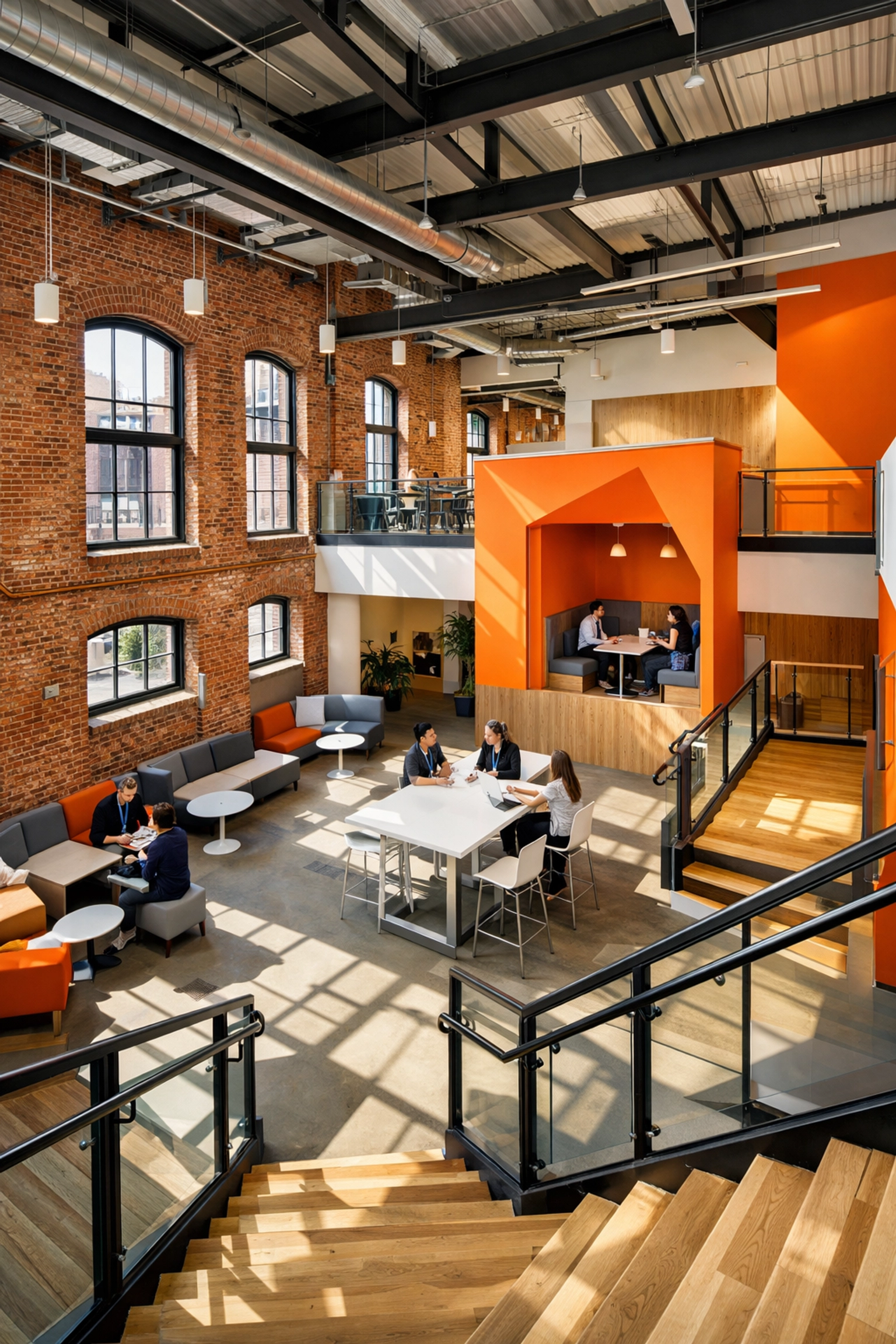
Adaptive reuse has become the go-to strategy for distressed commercial properties across the Bay Area. We're seeing conversions into:
- Residential housing (especially in cities desperate for housing supply)
- Mixed-use developments combining retail, co-working, and residential
- Innovation hubs designed for tech and AI companies that need flexible, collaborative environments
- Hospitality and experiential spaces that cater to the Bay Area's booming tourism and event industries
The math is simple: if you can acquire a structurally sound building for a fraction of its original cost, you can afford to invest in repositioning it for the market that actually exists in 2026: not the one that existed in 2019.
What Smart Investors Are Doing Right Now
Here's what we're seeing from institutional players, private equity groups, and strategic investors like those in the Nucleus Holdings network:
1. Targeting Distressed Assets with Strong Bones
Not every legacy building is worth saving, but the ones with solid infrastructure, good locations, and flexible floor plates are getting serious attention. The question isn't "What is this worth today?" It's "What can this become?"
2. Securing Anchor Tenants Before Breaking Ground
New development and major repositioning projects are contingent on securing major tenant commitments upfront. Construction timelines, elevated interest rates, and lease-up risk make speculative plays too risky. Pre-leasing is the new normal.
3. Betting on Sectors with Momentum
AI, biotech, and advanced manufacturing are driving real demand in the Bay Area. Investors are tailoring their repositioning strategies to serve these high-growth sectors rather than trying to recreate the generic office spaces of the past.
4. Playing the Long Game
The investors buying distressed assets today aren't planning quick flips. They're positioning for a 3- to 7-year horizon where the Bay Area office market stabilizes, rents recover, and transformed properties command premium valuations.
The Bottom Line: Recalibration, Not Collapse
The $5 million Union Square acquisition isn't evidence that San Francisco is doomed. It's evidence that the market is in the middle of a massive recalibration: and recalibrations create opportunities for those who can see past the noise.
Legacy office buildings that haven't adapted are getting hammered. But properties that are repositioned for the new economy, backed by strong tenant demand, and strategically located are starting to thrive.
The question for Bay Area investors isn't whether to engage with this market. It's how to engage intelligently: with the right partners, the right strategy, and the right risk tolerance.
At McFadden Finch Holdings Company, we're not just watching this transformation unfold. We're actively participating in it through our investment portfolio and strategic partnerships. The Bay Area commercial property market in 2026 is being rebuilt in real time, and the opportunities are bigger than they've been in a decade.

Ready to Make Your Next Move?
Whether you're evaluating a distressed acquisition, exploring adaptive reuse strategies, or positioning for the San Francisco office market recovery, having the right guidance matters.
Send us a scope summary for your next Bay Area investment project. Our team at McFadden Finch Holdings Company can help you navigate this complex, rapidly evolving market with confidence.
Contact us today and let's talk about what's possible.
#UnionSquareRealEstate #BayAreaInvestments #SanFranciscoOfficeMarket #CommercialRealEstate2026 #AdaptiveReuse