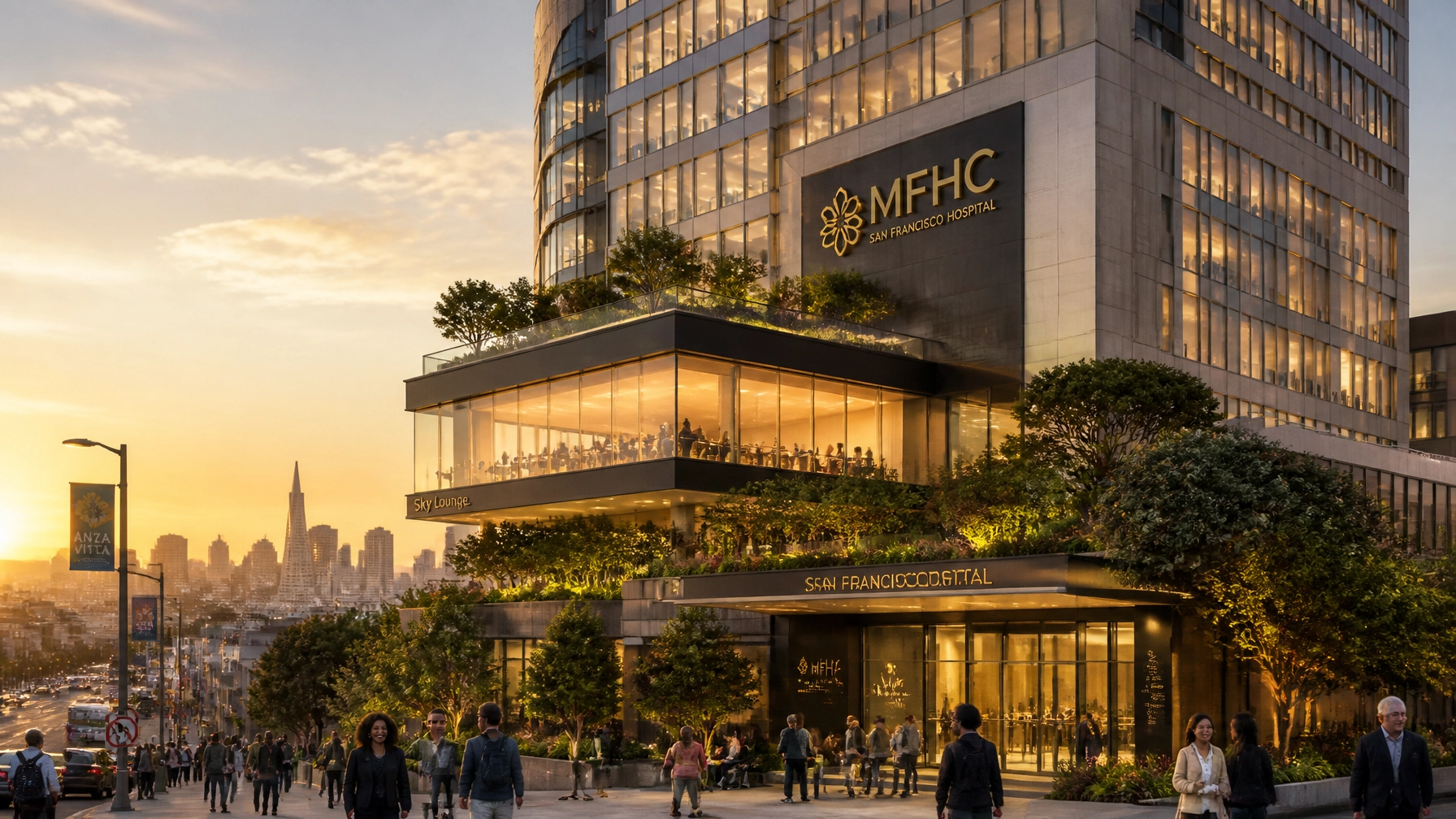
Remember when every headline declared San Francisco's office market dead? When pundits predicted a decade-long "doom loop" of empty towers and falling property values? That narrative just hit a wall: specifically, a wall of artificial intelligence firms actively hunting for 2.8 million square feet of premium office space across the city.
The San Francisco AI office market 2026 story isn't about a return to 2019. It's about something fundamentally different: a quality-driven recovery powered by companies that need robust infrastructure, turnkey facilities, and location proximity to talent pools that simply don't exist anywhere else at this scale.
What This Solves
This shift addresses several critical challenges facing commercial real estate stakeholders:
- Investor uncertainty: Clear demand signals from AI companies provide data-backed entry points for institutional capital that has sat on the sidelines since 2020
- Landlord repositioning anxiety: Property owners now have a defined tenant profile with specific infrastructure requirements, enabling strategic upgrade decisions rather than speculative spending
- Market timing questions: Five consecutive quarters of positive net absorption and the steepest vacancy decline since 2011 offer measurable recovery indicators rather than anecdotal optimism
- Portfolio allocation dilemmas: The "quality squeeze" in Class A space creates differentiated investment opportunities between premium and commodity office products
- Development pipeline paralysis: Demand-driven rather than speculative development finally returns as a viable strategy with pre-committed tenants

From Crisis to Catalyst: The Historical Pivot
The SF commercial real estate recovery didn't emerge from wishful thinking. It emerged from 9.8 million square feet of actual leasing activity in 2025: the highest annual figure since before the pandemic. But dig into the transaction data and the story gets more interesting: roughly 65% of deals closed were under 5,000 square feet, with only 2% exceeding 50,000 square feet.
This isn't a mega-deal distortion. It's distributed, operational demand from hundreds of small-to-mid-sized companies making real commitments. These aren't placeholder leases or defensive moves: they're companies building teams, shipping products, and hiring in San Francisco because they need to be here.
The turning point arrived when AI firm office demand shifted from theoretical to contractual. Sierra AI, OpenAI, and Nvidia didn't just sign leases: they signed substantial leases that required specific power infrastructure, cooling systems, and flexible floor plates. In Q3 2025 alone, AI-focused companies absorbed over 1 million square feet of office space. That single-quarter figure matches entire years during the post-pandemic trough.
What differentiates this cycle from previous tech booms? AI companies are seeking turnkey, heavily improved offices ready within 12-24 months, not speculative shells they'll customize over three years. The urgency reflects genuine operational timelines: models to train, teams to expand, and competitive positioning that can't wait for construction permits.
The Quality Squeeze: Why Class A Space is the New Battleground
Here's where tech leasing trends Bay Area get particularly interesting for investors: supply constraints are amplifying demand momentum in ways that create clear market segmentation.
Only 52,481 square feet remains under construction citywide, with no significant new deliveries on the immediate horizon. Sublease availability fell 30% year-over-year to 5.4 million square feet: the lowest level since early 2020. This isn't artificial scarcity; it's structural scarcity driven by a decade of underbuilding combined with a sudden demand spike for specific product types.
Properties upgraded to meet AI-company specifications: robust electrical infrastructure, advanced HVAC systems, fiber connectivity, and flexible layouts: are commanding premium interest from both tenants and investors. Meanwhile, commodity office space continues struggling to find relevance in a market where quality has become non-negotiable.

The dominant development strategy has become adaptive reuse: repositioning existing buildings rather than constructing new ones. Lincoln Property and McCourt Partners are exploring conversion of the former Golden Gate University campus. Hines secured permits for a tower at 77 Beale Street, but only with tenant commitments already secured. This demand-driven rather than speculative approach represents a fundamental shift in how San Francisco approaches its built environment.
San Francisco office vacancy 2026 still registers at 30.1%: the eighth consecutive quarter above 30%. But that figure masks the bifurcation: vacancy declined 100 basis points quarter-over-quarter, driven entirely by absorption in premium Class A buildings while lower-tier properties continue accumulating availability.
The city carries 30.8 million square feet of vacant space, but increasingly that inventory doesn't match what incoming tenants actually want. The "quality squeeze" is real: companies with capital and growth trajectories are competing for a limited subset of buildings that meet their infrastructure requirements.
AI-Driven Job Growth: The Multiplier Effect
The office demand story is ultimately an employment story. Institutional investment SF observers understand that sustained recovery requires sustained hiring: and AI companies are delivering both.
The multiplier effect extends beyond direct tech employment. Every AI engineer hired triggers demand for legal services, accounting expertise, HR support, facilities management, food service, transportation, and dozens of other ancillary industries. San Francisco's economic ecosystem, dormant since 2020, is reactivating around this core growth engine.

Forward projections through 2027 anticipate only "gradual" positive net absorption: broker language for "don't expect a miracle quarter." But gradual and consistent beats volatile and unpredictable. The recovery sustainability depends on AI and tech companies continuing to hire, which depends on venture funding, which depends on public market performance, which depends on macroeconomic conditions. None of those dependencies are guaranteed.
What is measurable: the demand pipeline for office space in San Francisco remains the strongest since 2019, driven by companies with specific operational needs rather than speculative expansion plans.
How We Help Navigate the Recovery
McFadden Finch Holdings Company specializes in identifying inflection points where data, capital, and operational expertise converge to create actionable investment opportunities. The San Francisco AI office market represents exactly this type of inflection: a fundamentally shifted landscape where traditional metrics require new interpretation frameworks.
Our approach combines institutional-grade market analysis with boots-on-the-ground intelligence from Drea Finch Real Estate Services, our integrated property advisory team. We help clients distinguish between buildings that will participate in the quality-driven recovery and those that face prolonged value compression.
Whether you're evaluating Class A repositioning opportunities, analyzing adaptive reuse feasibility, or assessing portfolio exposure to the AI-driven recovery, we provide strategic guidance grounded in transaction data rather than market sentiment. The goal isn't predicting the future: it's positioning portfolios to benefit from the future that's already emerging in lease comparables and tenant tours happening right now.
Frequently Asked Questions
What is the current state of San Francisco's office market in 2026?
San Francisco's office market is in early-stage recovery, with five consecutive quarters of positive net absorption and the steepest vacancy decline since 2011. While vacancy remains elevated at 30.1%, demand from AI companies: over 2.8 million square feet actively seeking space: is creating a "quality squeeze" for premium Class A properties. The recovery is real but bifurcated, with upgraded buildings outperforming commodity office space significantly.
Why are AI companies specifically choosing San Francisco?
AI firms require proximity to concentrated technical talent, venture capital access, and existing AI research ecosystems that exist at scale only in San Francisco and limited other metros. Beyond talent, these companies need office infrastructure: robust power, advanced cooling systems, fiber connectivity: that's more readily available in San Francisco's premium office inventory than in emerging secondary markets.
Is now the right time to invest in San Francisco commercial real estate?
Market timing depends on investment thesis and risk tolerance. Early indicators: record leasing activity, declining sublease inventory, and sustained tenant demand: suggest a demand-driven rather than speculative recovery. However, vacancy remains elevated and recovery sustainability depends on continued AI sector hiring. The opportunity exists primarily in the quality-differentiated segment rather than across all office products.
What's driving the "quality squeeze" in Class A office space?
Limited new construction (only 52,481 square feet currently under construction), combined with AI company requirements for turnkey, heavily improved spaces, has created demand concentration in a small subset of buildings. Properties that can't meet infrastructure specifications face prolonged vacancy, while upgraded Class A buildings are seeing competitive tenant interest for the first time since 2019.
How does this recovery differ from previous San Francisco tech booms?
Previous cycles were characterized by speculative leasing, mega-deals, and long-lead-time build-outs. The current recovery is driven by distributed demand (65% of deals under 5,000 square feet), operational urgency (companies need space within 12-24 months), and specific infrastructure requirements rather than generic office footprints. It's demand-driven rather than momentum-driven, creating more sustainable but gradual recovery dynamics.
Position Your Portfolio for the Quality Squeeze
The San Francisco AI office market recovery isn't happening in the future: it's happening in signed leases, declining vacancy rates, and institutional capital returning to the market right now. The question isn't whether recovery is occurring, but whether your portfolio is positioned to participate in the quality-differentiated segment where actual value creation is concentrated.
Request a Strategy Session with our team to evaluate how the AI-driven recovery impacts your specific investment thesis, property holdings, or capital deployment strategy. We provide candid analysis grounded in transaction data, market intelligence, and operational feasibility: not market hype.
McFadden Finch Holdings Company is a holdings and investment management firm dedicated to identifying strategic opportunities where data-driven insights, operational expertise, and disciplined capital deployment create sustainable value. We specialize in connecting institutional investors, property owners, and growth companies with actionable intelligence that turns market inflection points into measurable portfolio outcomes.