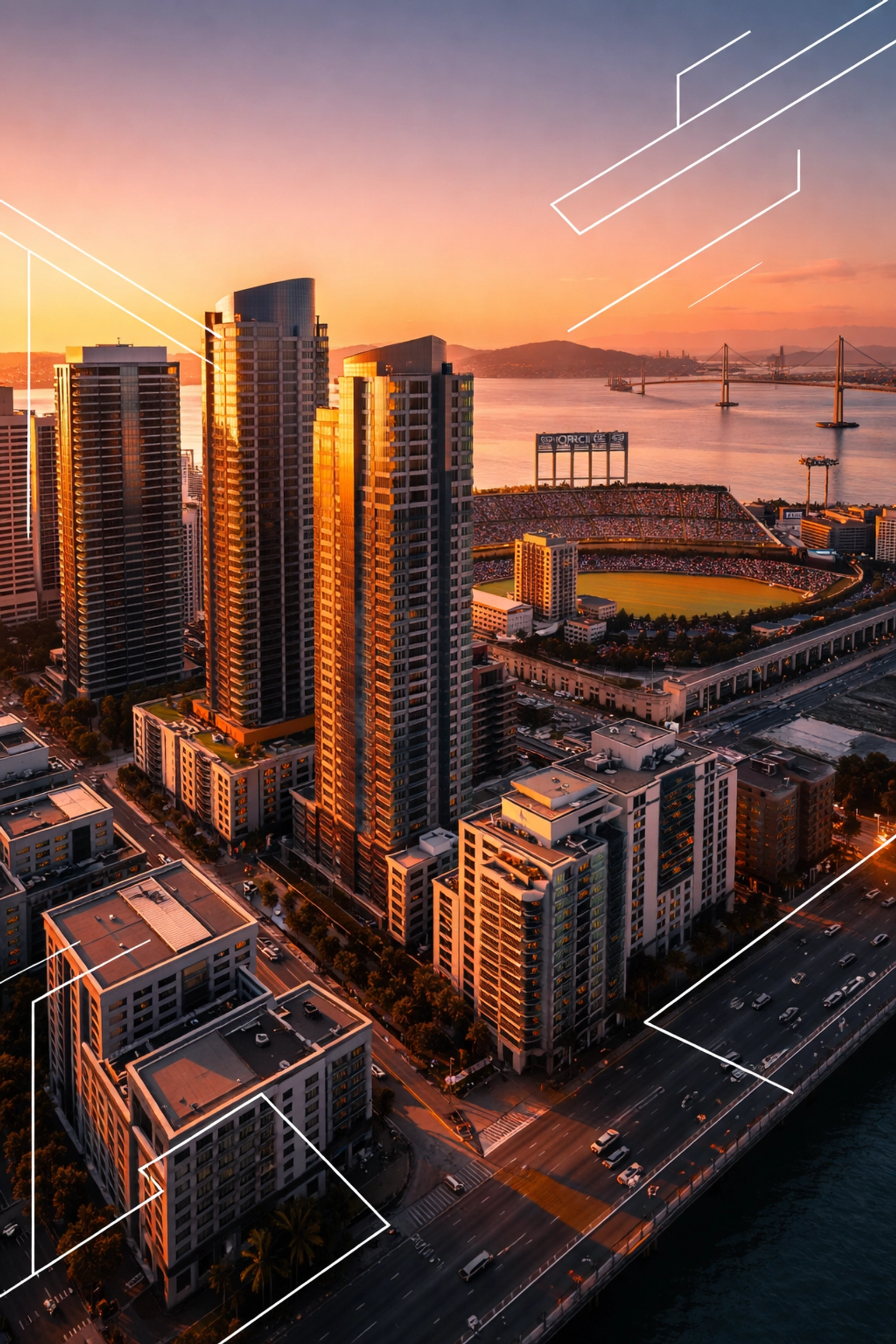
The view from Oracle Park is about to get a lot more interesting.
For years, San Francisco's residential development scene felt like a frozen tundra: pandemic uncertainty, rising construction costs, and developer hesitation created a perfect storm that brought the city's housing pipeline to a near standstill. But if you look closely at the South Beach neighborhood just one block from the ballpark, you'll spot something that looks a whole lot like a thaw.
Veteran San Francisco developer David O'Keeffe is putting $7.3 million where his mouth is, betting that the city's residential market is ready for a comeback. His proposed 33-story condominium tower at 329 Bryant Street isn't just another development proposal: it's a litmus test for whether local developers are genuinely ready to reenter the game or just dipping their toes in the water.
Let's break down what this project means for San Francisco real estate development and why it might signal the start of something bigger.
The Project: 260 Units, 33 Stories, and a Strategic Gamble
Here's what we know about the numbers behind O'Keeffe's bold move:
- 260 residential condominium units in a slender 33-story tower
- Half-acre site acquired from Fortress Real Estate Advisors for $7.3 million in October 2024
- 40 affordable housing units included to unlock density bonuses
- Three levels of parking beneath the tower
- Partnership with Stanton Architecture, a well-respected San Francisco–based firm
The project landed preliminary permits in December 2025, with a final application expected sometime in 2026. Construction timing? That depends entirely on city approvals and whether this fragile residential recovery continues to strengthen.
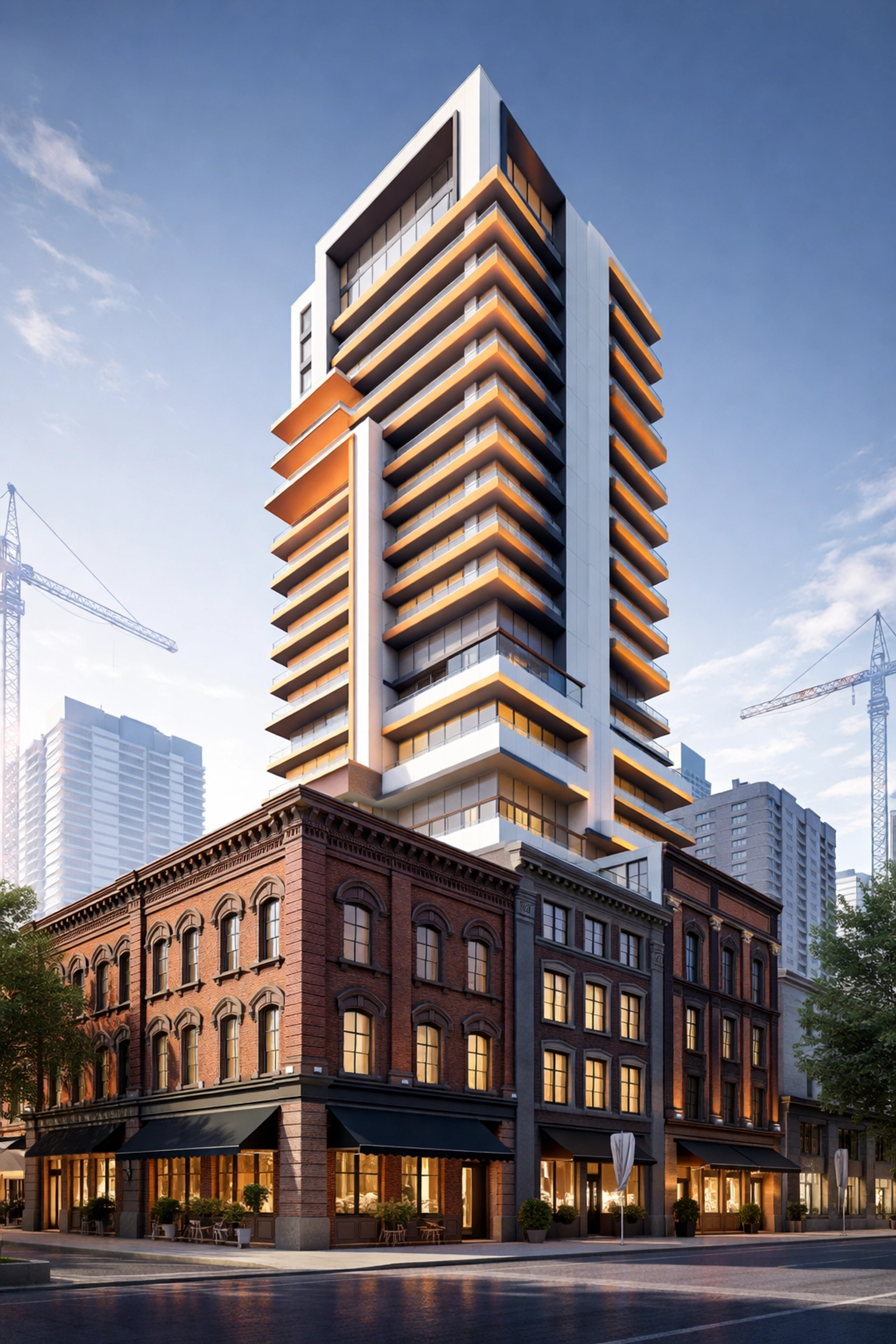
What makes this development particularly interesting is its location. South Beach has always been one of downtown San Francisco's most promising neighborhoods: walkable, transit-accessible, and packed with the kind of urban energy that attracts young professionals and empty nesters alike. Position a tower one block from Oracle Park, and you're not just selling condos: you're selling a lifestyle.
Preserving History: Where Modern High-Rise Living Meets San Francisco's Past
One of the most compelling aspects of O'Keeffe's proposal is how it handles the site's existing structures. The plans show a slender tower rising above two preserved historic buildings, weaving new construction into the neighborhood's architectural fabric rather than bulldozing it.
This isn't just good design: it's smart strategy. San Francisco residents have long pushed back against developments that ignore the city's character. By preserving these historic structures and integrating them into the overall project, the development team is positioning 329 Bryant Street as an enhancement to the neighborhood rather than an intrusion.
It's the kind of thoughtful approach that can turn potential opponents into supporters, and in a city where community sentiment can make or break a project, that matters.
The Density Bonus Play: Unlocking SF's Frozen Pipeline
Here's where things get really interesting from a San Francisco real estate development strategy perspective.
The 329 Bryant Street project leverages California's density bonus law: specifically Assembly Bill 1287: along with Senate Bill 330 and SB 423 to streamline approvals. By including 40 affordable units (roughly 15% of the total), O'Keeffe unlocks the extra height and density that makes a project like this financially viable.
This trade-off has become standard practice in San Francisco, and for good reason:
- Developers get the density they need to pencil out ambitious projects
- The city gets affordable housing units without subsidizing construction
- Neighborhoods get mixed-income communities rather than luxury-only enclaves
- State legislation provides a pathway around local bureaucratic bottlenecks
The pattern emerging along Bryant Street is hard to ignore. The 555-585 Bryant mixed-use project: 501 units with 71 affordable: commenced construction in early 2022 and is projected for completion in 2025. An 8-story infill project at 915 Bryant recently filed preliminary permits for 14 apartments. All of these projects share one thing in common: they're leveraging state-level housing incentives to navigate San Francisco's notoriously complex approval process.
For developers watching from the sidelines, this sends a clear message. The tools exist to move projects forward: the question is whether the market conditions justify the risk.
Market Barometer: What 329 Bryant Street Tells Us About Developer Confidence in 2026
Let's call this project what it is: a crucial barometer for San Francisco's residential recovery.
After years of pandemic-era stagnation, the SF condo market has shown tentative signs of life. Interest rates, while still elevated compared to 2021's historic lows, have stabilized enough for buyers to plan. Remote work has evolved from a pandemic necessity into a permanent fixture, and people are recalibrating where and how they want to live.
South Beach housing offers something increasingly rare in the Bay Area: urban density with genuine livability. The neighborhood's proximity to transit, employment centers, and world-class amenities makes it a natural target for developers testing the waters.
But here's the honest truth: one project doesn't make a trend. What we're watching for at McFadden Finch Holdings Company is whether 329 Bryant Street sparks additional proposals, whether the approval process moves at a pace that encourages rather than discourages investment, and whether buyers show up when units hit the market.
The early indicators are cautiously optimistic.
MFHC's Take: From Thaw to Full-Blown Comeback
At McFadden Finch Holdings Company, we've been tracking Bay Area real estate dynamics for years through our portfolio company Drea Finch Real Estate Services. What we're seeing in South Beach aligns with broader patterns across the region: strategic developers positioning themselves for the next cycle while others wait for certainty that may never come.
Here's our read on the situation:
The developers who move now are the ones who understand that real estate success is rarely about perfect timing: it's about identifying fundamentally strong locations, structuring deals that work across multiple scenarios, and executing with discipline.
San Francisco's housing pipeline isn't frozen anymore. It's not exactly flowing freely either. But projects like 329 Bryant Street suggest we're watching the early stages of a genuine recovery: one driven by:
- State-level policy tools that streamline approvals
- Developer confidence returning to strategic locations
- Pent-up demand from buyers who've been waiting on the sidelines
- A city that, despite its challenges, remains one of the most desirable places to live in the country
What Comes Next
The 329 Bryant Street project won't break ground tomorrow. City approvals take time, and construction timelines in San Francisco are notoriously unpredictable. But the fact that a veteran developer is placing a multimillion-dollar bet on the city's residential future tells us something important.
The thaw is real. Whether it turns into a full-blown comeback depends on factors ranging from macroeconomic conditions to local policy decisions. But the fundamentals driving San Francisco real estate development: limited land, strong demand, world-class location: haven't changed.
At McFadden Finch Holdings Company, we'll continue watching Bryant Street and the broader Bay Area market with interest. Because understanding these shifts isn't just about tracking headlines: it's about identifying the opportunities that emerge when markets transition from uncertainty to growth.
Stay connected with MFHC for ongoing insights into Bay Area revitalization, real estate trends, and investment perspectives. Explore our blog for more analysis, or reach out to learn how our portfolio companies are positioned across the region's most dynamic sectors.
Written by Maury McFadden | McFadden Finch Holdings Company
#SanFranciscoRealEstate #BayAreaDevelopment #AffordableHousingSF #SouthBeachSF #MFHC