Let's talk numbers that keep restaurant owners up at night.
The average restaurant profit margin in 2026 hovers between 3-5%. That's not a typo. For every hundred dollars that crosses your bar top or passes through your POS system, you're lucky to pocket a fiver. In the Bay Area, where labor costs are climbing, ingredient prices refuse to stabilize, and competition for diners is fiercer than a Saturday night reservation book, those margins feel even thinner.
Here's the thing: some restaurants aren't just surviving. They're thriving. And it's not luck, location, or a viral TikTok moment carrying them. It's framework.
McFadden-Finch Restaurant Consulting Group has spent years refining a three-pillar approach to restaurant business consulting that transforms struggling operations into sustainable profit engines. Whether you're eyeing a restaurant turnaround consulting engagement or building a new concept from scratch, these frameworks separate the restaurants that last from the ones that become cautionary tales.
Framework 1: Menu Engineering That Actually Moves the Needle
Your menu isn't just a list of dishes. It's your single most powerful sales tool, and most restaurant operators are leaving serious money on the table by treating it like an afterthought.
Menu engineering is the data-driven practice of analyzing every item's profitability and popularity, then strategically redesigning your offerings to maximize margins without alienating guests. Think of it as the intersection of culinary creativity and cold, hard math.
The Menu Matrix Approach
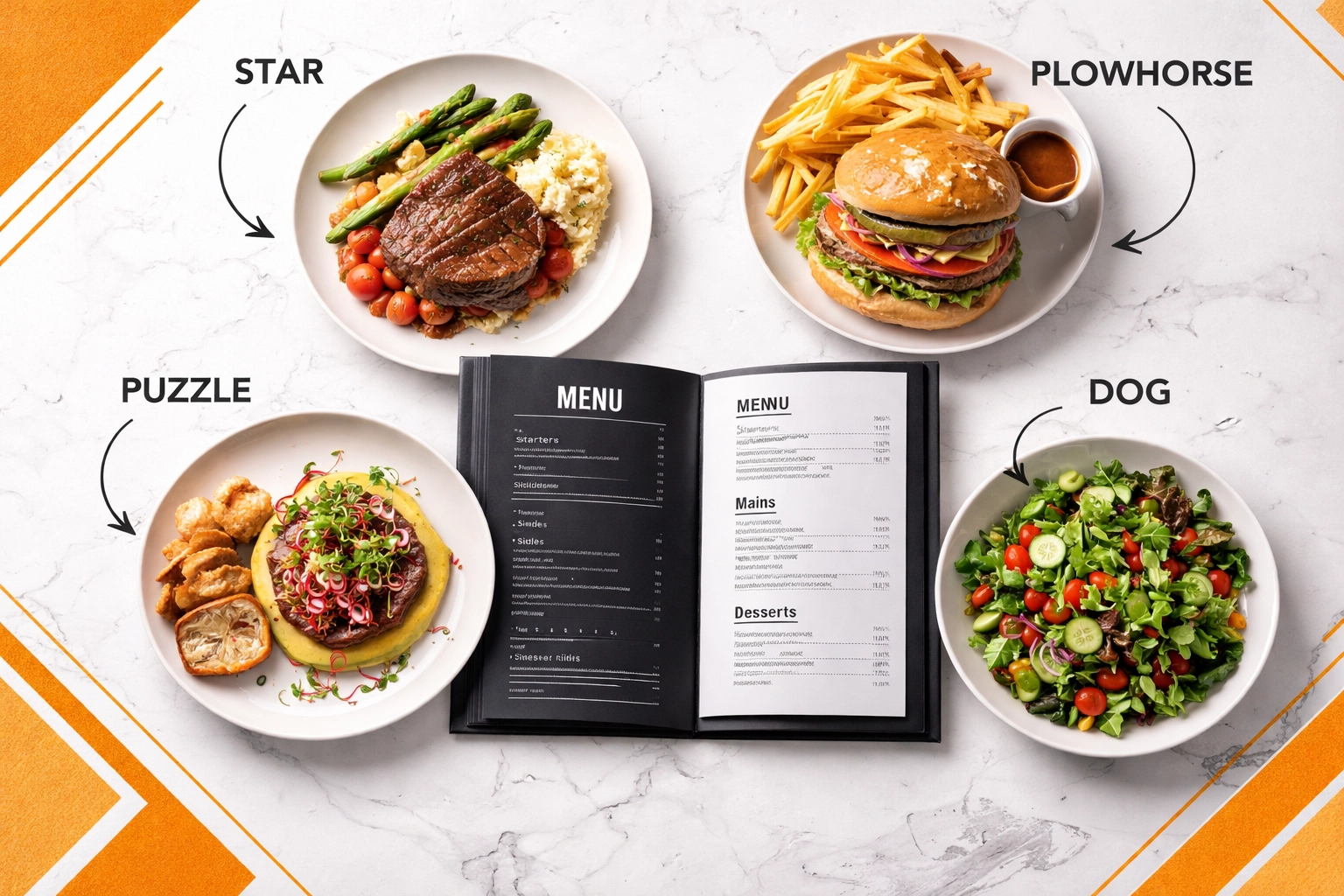
Every dish on your menu falls into one of four categories:
- Stars: High profit, high popularity. Protect these at all costs.
- Plowhorses: Low profit, high popularity. Guests love them, but they're dragging down your margins.
- Puzzles: High profit, low popularity. The hidden gems that need better positioning.
- Dogs: Low profit, low popularity. Time to say goodbye.
Restaurants that implement rigorous menu engineering typically see profit increases of 10-15% or more: without raising prices across the board or cutting portion sizes.
The Golden Triangle
Here's a design secret: when guests open a menu, their eyes naturally travel to the center first, then the top right, then the top left. That's your "golden triangle." Your highest-margin Stars and Puzzles belong there, with visual emphasis: boxes, icons, or strategic white space: drawing attention exactly where you want it.
A well-engineered menu doesn't just list food. It guides decisions.
Framework 2: Cost Control Beyond the Obvious Cuts
When margins tighten, the knee-jerk reaction is predictable: slash labor hours and buy cheaper ingredients. Both approaches are short-sighted, and both can crater your guest experience faster than a one-star Yelp review.
Effective restaurant operations strategy takes a smarter approach to cost control: one that protects quality while eliminating waste you didn't know existed.
Ingredient Overlap and Prep Efficiency
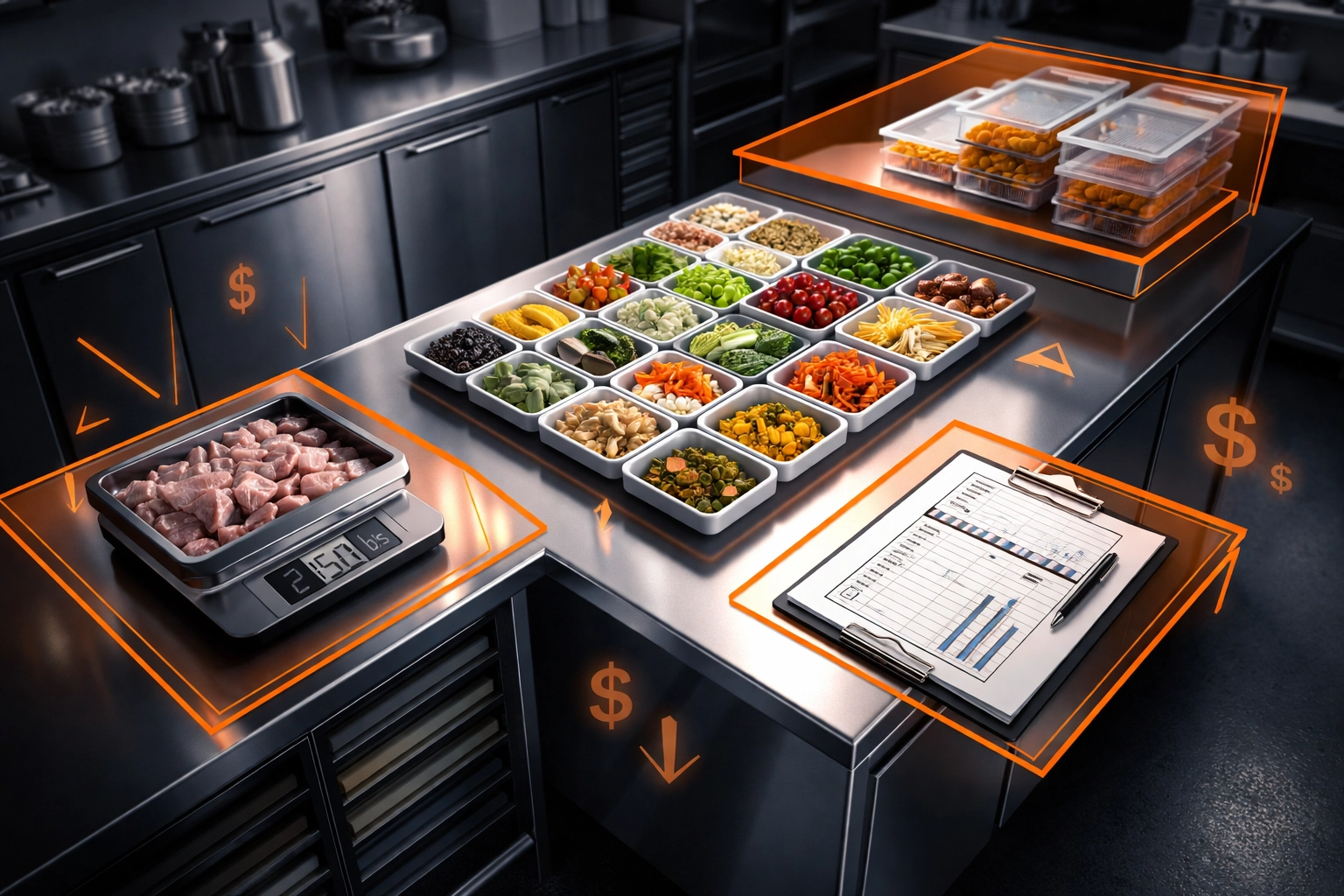
The most profitable kitchens share a secret: strategic ingredient overlap. When your signature appetizer, your best-selling entrée, and your most popular special all use variations of the same core components, you're reducing waste, streamlining prep, and negotiating better pricing with suppliers.
This isn't about making everything taste the same. It's about designing dishes with common building blocks that your team can execute consistently and efficiently.
The Hidden Cost Killers
Beyond food and labor, look at:
- Energy consumption: Outdated equipment and poor scheduling waste thousands annually.
- Inventory shrinkage: Without tight tracking, product walks out the door: or spoils in the walk-in.
- Over-portioning: A quarter-ounce extra on every plate adds up to thousands in lost margin per month.
True cost control is granular, systematic, and ongoing. It's not a one-time audit: it's an operational discipline.
Framework 3: Guest Retention That Turns One-Timers Into Regulars
Acquiring a new customer costs five to seven times more than retaining an existing one. Yet most restaurants pour their energy into chasing new faces while ignoring the guests who've already walked through the door.
Hospitality business development isn't just about opening new locations or launching delivery channels. It's about building a guest ecosystem that generates repeat visits, word-of-mouth referrals, and genuine community loyalty.

The Recognition Economy
Regulars don't just want discounts. They want to be known. The bartender who remembers their usual. The server who asks about their kid's soccer game. The manager who comps a dessert on their anniversary without being asked.
These micro-moments of recognition create emotional investment that no loyalty program can replicate. Train your team to capture and recall guest preferences, and you're building relationships that survive bad weather nights and competing promotions.
Systematic Touchpoints
Recognition alone isn't scalable. Pair it with systematic retention strategies:
- Post-visit follow-ups: A simple thank-you email with a personalized offer brings guests back within 30 days.
- Birthday and anniversary outreach: Low-cost, high-impact opportunities to surprise and delight.
- Feedback loops: Ask for input, act on it visibly, and guests become invested stakeholders in your success.
Neighborhood restaurant development thrives when the community feels ownership. Your regulars become your advocates, your critics, and your unpaid marketing team: if you give them reasons to care.
Why McFadden-Finch Restaurant Consulting Group Is the Unfair Advantage
These frameworks aren't theoretical. They're battle-tested across dozens of Bay Area restaurants: from fast-casual concepts struggling to break even to fine dining establishments looking to scale without sacrificing quality.
McFadden-Finch Restaurant Consulting Group brings a unique perspective to restaurant turnaround consulting: we're not just advisors, we're operators. We understand the 2 AM inventory counts, the last-minute call-outs, the produce delivery that shows up wrong. And we bring institutional knowledge, data-driven analysis, and a network of industry relationships that independent operators simply can't access alone.
Whether you're launching a new concept, rescuing an underperforming location, or optimizing a profitable restaurant to reach the next level, our team is designed to empower your success.
Ready to Stop Leaving Money on the Table?
The difference between a restaurant that struggles and one that thrives often comes down to framework: and the discipline to execute it consistently.
Book a consultation with McFadden-Finch Restaurant Consulting Group and discover how menu engineering, strategic cost control, and guest retention systems can transform your operation's profitability in 2026 and beyond.
Your margins don't have to be razor-thin. Let's build something sustainable together.
Share This Post
LinkedIn:
Restaurant margins in 2026 are brutal: but the operators winning aren't doing it by accident. Menu engineering, smart cost control, and guest retention systems that actually work. Here's the framework. #RestaurantConsulting #HospitalityBusiness #BayAreaRestaurants #RestaurantStrategy #FoodIndustry
Instagram:
3-5% margins? Not if you're doing it right. 🍽️ The framework that's helping Bay Area restaurants thrive: not just survive. Link in bio. #RestaurantLife #MenuEngineering #HospitalityConsulting #BayAreaEats #RestaurantOwner