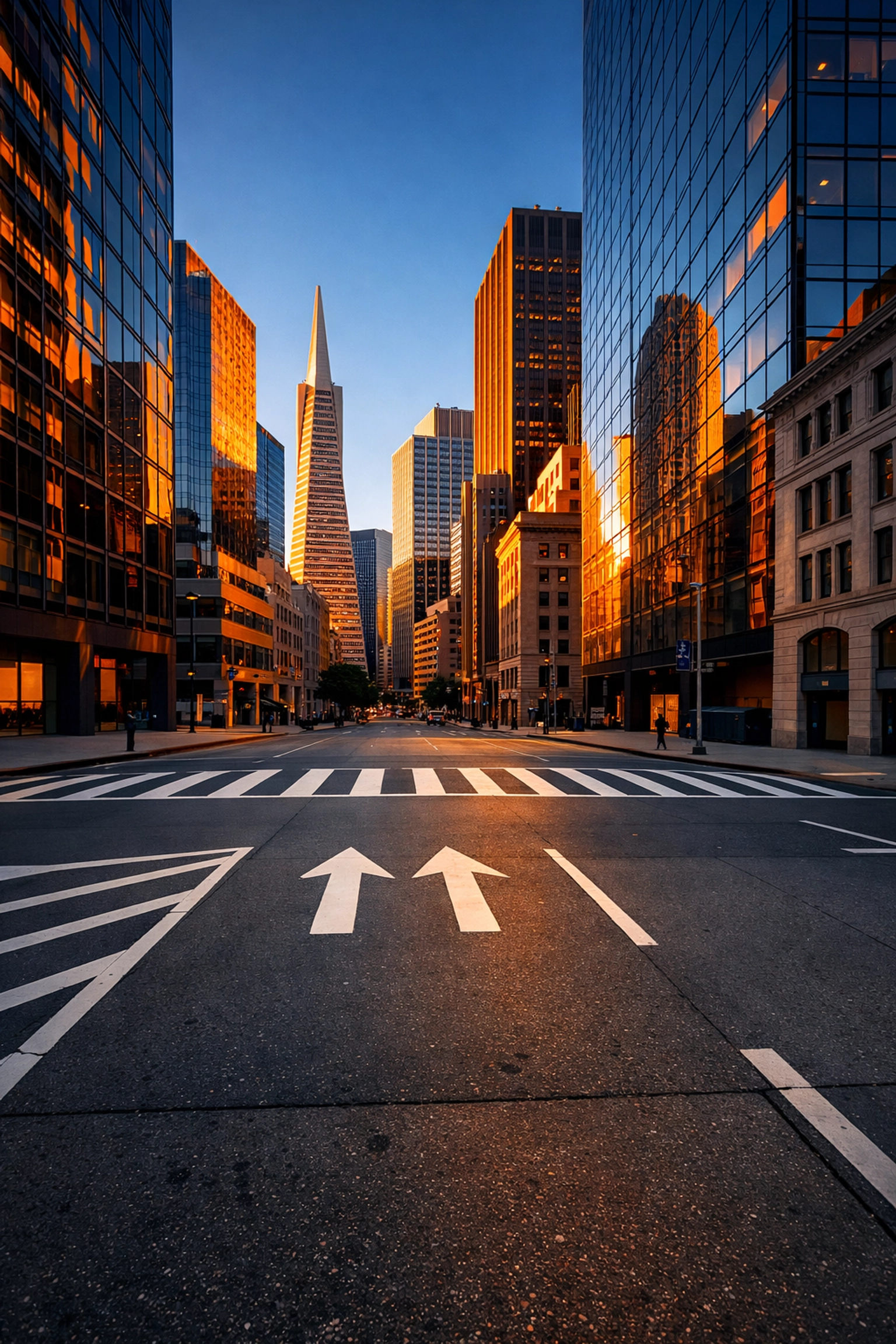
San Francisco just cleared one of the biggest financial hurdles standing between the city's empty office towers and a downtown residential renaissance. On February 12, 2026, Mayor Daniel Lurie signed legislation establishing the Downtown Revitalization Financing District (DRFD), a tax increment financing mechanism that will refund a portion of new property tax revenue back to developers who convert commercial buildings into housing over a 30-year period.[1] This isn't just another pilot program or study: it's a $610.5 million commitment that could reshape the economic and social fabric of San Francisco's commercial core.[2]
The thesis is straightforward: San Francisco's downtown is stuck in a structural real estate crisis that market forces alone cannot solve. Office vacancy rates have hovered near historic highs, with Class B and C buildings bleeding tenants and capital value.[3] Converting these obsolete assets into housing makes fiscal, social, and urban planning sense: but the numbers don't pencil without significant public sector intervention. The DRFD is that intervention, and it represents a rare alignment of political will, legislative enablement, and real estate pragmatism. For investors, developers, and urban revitalization advocates, this is the moment when "if" becomes "when."
What the DRFD Actually Does
The Downtown Revitalization Financing District operates on tax increment financing principles, a public finance tool that's been used successfully in redevelopment projects across the United States for decades.[4] Here's how it works in practice: when a developer converts an office building into residential units, the property's assessed value increases due to the change in use and improvements made during construction. The city captures the incremental tax revenue: the difference between the old assessed value and the new one: and refunds a portion of that revenue back to the developer annually for up to 30 years.[1]
This structure is crucial because it means the city is not spending existing tax dollars or issuing bonds backed by general obligation. Instead, it's sharing future tax gains that wouldn't exist without the conversion happening in the first place.[5] Projects must opt into the district by December 31, 2032, creating a seven-year enrollment window designed to generate urgency and momentum.[2]
To qualify, a project must meet several criteria:[1][2]
- Be located within the district's geographic boundaries (covering the Financial District, Market Street corridor, Union Square, South of Market neighborhoods including Rincon Hill, the East Cut, and Yerba Buena)
- Result in a building that is at least 60% residential by use
- Be zoned for residential or mixed-use development
- Not already be part of another area plan utilizing tax increment financing
The district also applies to projects that demolish an obsolete office building to construct new ground-up housing, recognizing that some structures are too functionally obsolete to be economically retrofit.[2]
The Numbers Behind the Incentive
The financial modeling behind the DRFD projects approximately $610.5 million in incentive payments allocated to eligible projects over the district's 45-year lifespan.[2] That figure represents shared incremental property tax revenue flowing back to developers who take on the risk and complexity of conversion projects.
Independent analysis suggests that approximately 50 properties within the district boundaries are viable candidates for conversion, which could yield roughly 4,400 new residential units capable of housing over 7,000 new residents in downtown San Francisco.[3] To put that in perspective, downtown San Francisco's residential population has historically been under 30,000 people: this program alone could increase that by more than 20%.[6]
| Program Metric | Projected Impact |
|---|---|
| Total Incentive Allocation | $610.5 million over 45 years |
| Enrollment Deadline | December 31, 2032 |
| Eligible Properties (Est.) | ~50 buildings |
| Projected New Units | ~4,400 residential units |
| New Residents (Est.) | 7,000+ people |
| Incentive Period per Project | 30 years |
The DRFD builds on prior incentives San Francisco has already deployed, including a transfer tax waiver (which eliminates the significant fee levied when property changes hands) and relief from inclusionary housing requirements (which typically mandate a percentage of units be set aside as below-market-rate affordable housing).[7] The transfer tax waiver applies to the first 5 million square feet of converted space, while the inclusionary housing waiver covers the first 1.5 million square feet.[2]
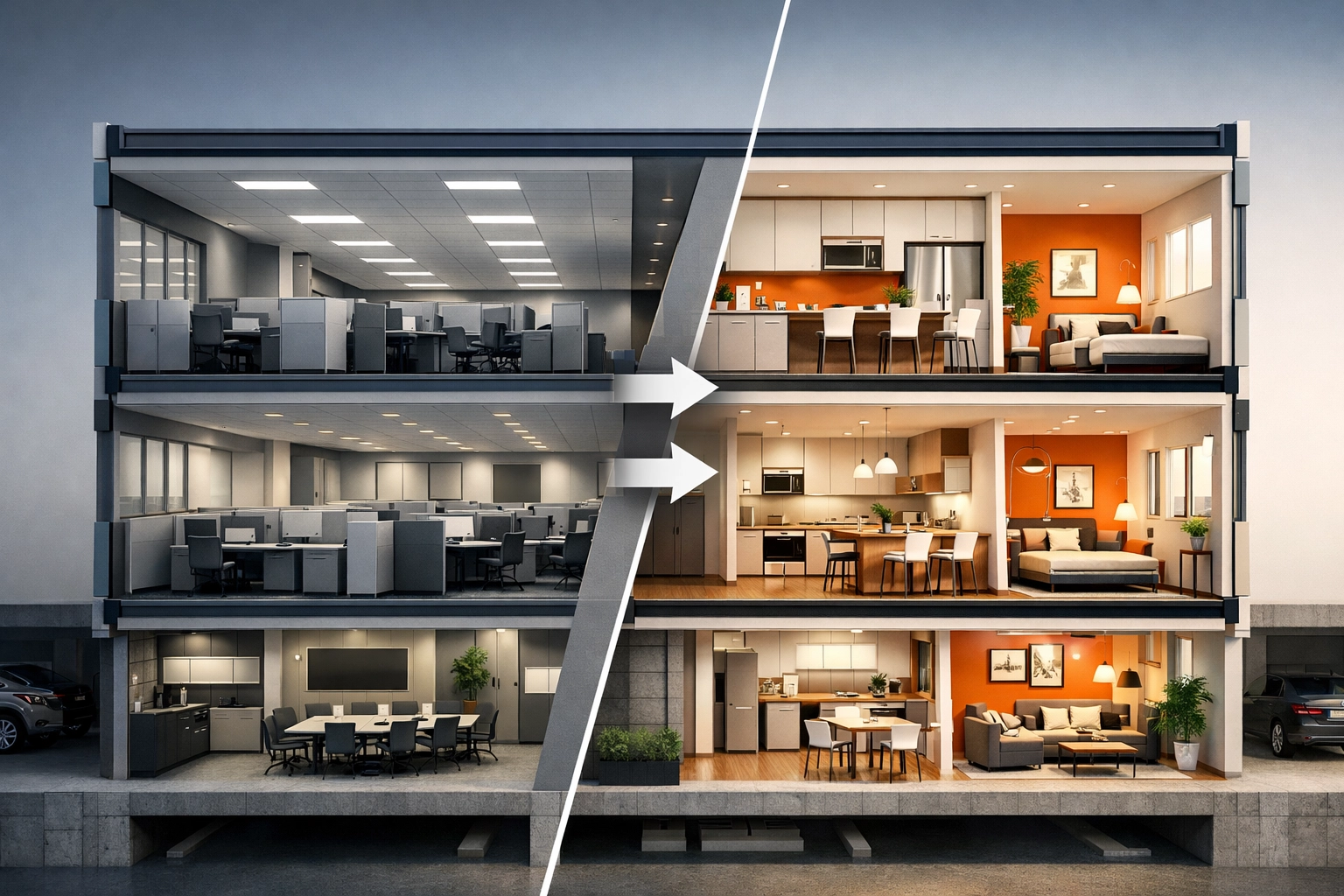
These stacked incentives matter because office-to-residential conversions are notoriously expensive and complicated. Buildings designed for open floor plates, central mechanical cores, and minimal plumbing don't easily adapt to residential layouts requiring natural light, individual kitchens, bathrooms, and egress requirements.[8] Construction costs can run 20-40% higher than ground-up residential construction in some cases, and lenders remain cautious about financing conversion projects given limited comparable transaction data.[9]
Why Previous Efforts Fell Short
San Francisco has seen only a trickle of office-to-residential conversions materialize despite years of political rhetoric and incremental policy tweaks. Two high-profile examples illustrate the challenge:
The Warfield Building on Market Street was slated for conversion but stalled after the property sold to new ownership, with the incoming buyer opting to explore alternative strategies.[10] 785 Market Street, another conversion candidate, has faced persistent financing challenges that have delayed or potentially derailed the project entirely.[2]
Based on reporting by Sarah Klearman of the San Francisco Business Times, developers and investors have repeatedly cited financing gaps as the primary barrier.[2] Even with transfer tax waivers and streamlined entitlements, pro forma models showed projects coming up short by millions of dollars: the difference between a viable investment and a non-starter.
Jacob Bintliff, manager of economic recovery incentives for San Francisco's Office of Economic and Workforce Development, told the Business Times that the city is now receiving "intensifying interest" from developers and investors, with four to five parties actively modeling projects and asking, "Am I modeling my pro forma correctly?"[2] The DRFD appears to be the missing puzzle piece that makes those spreadsheets turn green.
The Heart of the City Vision
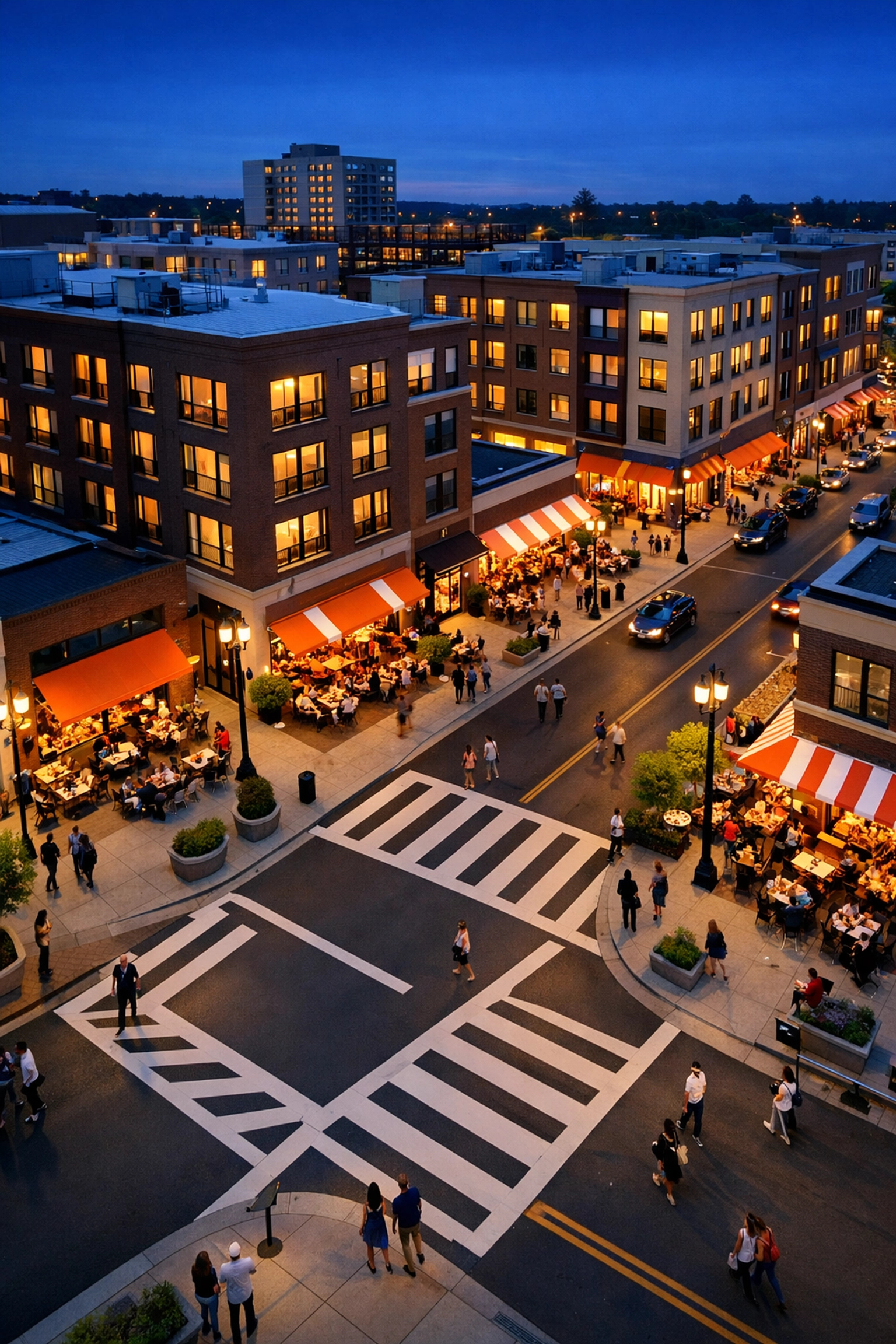
The DRFD is a centerpiece of Mayor Lurie's Heart of the City plan, a comprehensive strategy to transform San Francisco's downtown from a 9-to-5 office monoculture into a vibrant, 24/7 neighborhood.[11] The vision is straightforward: bring residents, students, workers, and visitors into the same physical space to create the foot traffic, amenity demand, and economic velocity that defines successful urban centers.[3]
This isn't just aspirational urbanism: it's a pragmatic response to the structural shift in how office space is used post-pandemic. Remote and hybrid work models have permanently reduced demand for traditional office space, particularly in older Class B and C buildings that lack the amenities and flexibility that tenants now demand.[12] Rather than wait for a office market recovery that may never come in its pre-2020 form, San Francisco is leaning into adaptive reuse as both an economic development tool and a housing production strategy.
Leigh Lutenski, director of development for the Office of Economic and Workforce Development, framed the program as an open invitation: "We want to challenge people: who is going to be the first?"[2] That challenge reflects both the opportunity and the risk: early movers will benefit from first-mover advantage in site selection and public attention, but they'll also navigate untested financing structures and construction complexities.
Early Market Response and Comparable Success Stories
While no San Francisco projects have yet officially enrolled in the DRFD, the program design draws heavily from New York City's successful experience with similar tax incentives. Lower Manhattan's conversion boom in the late 1990s and early 2000s, facilitated by tax abatements and zoning changes, resulted in the conversion of more than 12,000 office units into residential housing.[3] That transformation fundamentally changed Lower Manhattan's character, creating the residential density that now supports its thriving restaurant, retail, and cultural scenes.
San Francisco's program is arguably more generous in some respects: the 30-year incentive period is longer than most comparable programs, and the stacked incentives (transfer tax waiver, inclusionary relief, and TIF payments) create a deeper subsidy structure.[13] The question is whether that's enough to overcome San Francisco's uniquely high construction costs, complex permitting environment, and challenging financing landscape.
From a real estate investment perspective, the DRFD fundamentally changes the risk-return profile of downtown conversion opportunities. Properties that were previously distressed or stranded assets: worth more as financial write-offs than as operating buildings: now have a credible path to productive reuse and value creation. For investment firms focused on urban neighborhood revitalization and impact-driven real estate projects, this is exactly the kind of public-private partnership structure that can unlock stalled capital and generate both financial returns and measurable community benefit.
What Smart Critics Argue
Not everyone is convinced the DRFD will deliver on its promises. Skeptics raise several legitimate concerns:
The Affordability Gap: While the program waives inclusionary requirements for the first 1.5 million square feet, critics argue that market-rate conversions will do little to address San Francisco's most acute housing challenge: the shortage of housing affordable to low- and moderate-income households.[14] The units produced will likely rent or sell at market rates that remain out of reach for the majority of San Francisco residents, potentially creating an even more economically segregated downtown.
The response: The program's proponents argue that adding any housing supply helps ease pressure across the entire market, and that the alternative: leaving buildings vacant: produces zero housing at any income level.[15] Additionally, the city retains the ability to require affordability after the initial 1.5 million square feet threshold, creating a pathway to mixed-income downtown housing over time.
The Fiscal Risk: Tax increment financing has a mixed track record nationally, with some districts failing to generate projected revenue or creating opportunity costs by diverting tax dollars away from general fund priorities like schools and public safety.[16] If conversion projects underperform or if the broader real estate market declines, the city could find itself with less revenue than projected while having foregone other uses of that capital.
The response: The DRFD includes independent oversight through a Board of Directors appointed by the Board of Supervisors, creating accountability and transparency around project selection and incentive allocation.[3] Additionally, because the program shares only incremental revenue that wouldn't otherwise exist, the downside risk is limited compared to programs that redirect existing tax streams.
The Displacement Question: Some affordable housing advocates worry that an influx of market-rate residents could accelerate gentrification pressures in adjacent neighborhoods, particularly in the Tenderloin and South of Market areas where low-income residents and service providers are already facing displacement.[17]
The response: The program's geographic scope is tightly bounded to the commercial core, and conversion projects by definition are replacing office uses, not displacing existing residents. The question of secondary displacement effects remains valid and requires ongoing monitoring and mitigation strategies.
Key Takeaways
-
The DRFD provides up to 30 years of annual incentive payments backed by incremental property tax revenue generated by conversion projects: a structure that shares future gains without spending current tax dollars.[1][3]
-
Approximately 50 buildings could qualify, potentially producing 4,400 new residential units and housing for over 7,000 new downtown residents.[3]
-
The program stacks three major incentives: tax increment financing, transfer tax waivers, and relief from inclusionary housing requirements, creating a subsidy structure deep enough to close financing gaps that have stalled previous projects.[2][7]
-
Developers must enroll by December 31, 2032, creating a seven-year window designed to generate momentum and urgency in the market.[2]
-
The program is part of a broader "Heart of the City" strategy to transform downtown from an office monoculture into a 24/7 mixed-use neighborhood with residents, students, workers, and visitors.[11]
-
New York City's comparable program resulted in more than 12,000 converted residential units in Lower Manhattan, demonstrating the model's potential when properly structured and sustained.[3]
-
The program includes independent oversight through an appointed Board of Directors, creating accountability around project selection and incentive allocation.[3]
-
Early market response is strong, with multiple developers and investors actively modeling projects and engaging with city staff about enrollment.[2]
What to Do Next
For developers, investors, and real estate professionals interested in capitalizing on this opportunity:
-
Conduct preliminary site analysis of potential conversion candidates within the district boundaries. Focus on buildings with floor plates that can accommodate residential layouts (typically 15,000-20,000 square feet or less), adequate natural light, and structural capacity for added plumbing and mechanical systems.[8]
-
Engage early with the Office of Economic and Workforce Development to understand enrollment processes, timeline expectations, and documentation requirements. The city has indicated it welcomes early conversations with prospective applicants.[2]
-
Model the full incentive stack in your pro forma analysis. Include transfer tax savings, inclusionary relief value, and 30-year TIF payments to accurately assess project feasibility. Work with tax and real estate finance professionals familiar with TIF structures.[13]
-
Assess financing options including construction loans, mezzanine capital, and equity structures suitable for conversion projects. Consider whether Opportunity Zone tax benefits or other federal/state incentives can layer with DRFD benefits.[9]
-
Review comparable conversion projects in other markets (New York, Chicago, Philadelphia) to understand construction timelines, cost escalation patterns, and operational performance post-conversion.[3]
-
Conduct community outreach early in the process, particularly if your project is near residential neighborhoods or community benefit districts. Proactive engagement can smooth entitlement processes and reduce political risk.[17]
-
Explore partnerships with modular construction firms or adaptive reuse specialists who can bring cost efficiencies and accelerated timelines to conversion projects.[18]
-
Evaluate the full lifecycle value proposition, including operating income, exit value, and the impact premium that institutional investors increasingly assign to projects that generate measurable community benefit.[19]
-
Monitor enrollment activity as the first projects move forward. First-movers will provide valuable data on actual construction costs, financing structures, and market absorption that can inform subsequent projects.
-
Consider the competitive advantage of early entry. The best conversion candidates will get selected first, and the program caps total benefits at specific square footage thresholds: waiting too long could mean missing out entirely.[2]
Sources
[1] City and County of San Francisco, "Downtown Revitalization Financing District Established," Office of Economic and Workforce Development, February 12, 2026, https://oewd.org/drfd, Accessed February 13, 2026.
[2] Sarah Klearman, "San Francisco wants to see offices turn into housing downtown. This change could make it finally happen," San Francisco Business Times, February 13, 2026, https://www.bizjournals.com/sanfrancisco/news/2026/02/13/san-francisco-office-housing-conversion.html, Accessed February 13, 2026.
[3] City and County of San Francisco, "Downtown Revitalization Financing District: Plan and Fiscal Projections," Office of Economic and Workforce Development, January 2026, https://sf.gov/drfd, Accessed February 13, 2026.
[4] Urban Land Institute, "Tax Increment Financing: A Primer for Developers," ULI Development Case Studies, 2024, https://uli.org/tax-increment-financing, Accessed February 13, 2026.
[5] Government Finance Officers Association, "Tax Increment Financing Best Practices," GFOA Policy Center, 2025, https://www.gfoa.org/tif-best-practices, Accessed February 13, 2026.
[6] U.S. Census Bureau, "American Community Survey 5-Year Estimates: San Francisco Downtown Population," 2024, https://data.census.gov, Accessed February 13, 2026.
[7] San Francisco Planning Department, "Commercial to Residential Adaptive Reuse Program," Planning Code Section 145.1, Updated February 2026, https://sfplanning.org/adaptive-reuse, Accessed February 13, 2026.
[8] National Association of Office and Industrial Properties (NAIOP), "Office-to-Residential Conversions: Technical and Financial Feasibility," Research Foundation Report, 2025, https://www.naiop.org/conversion-feasibility, Accessed February 13, 2026.
[9] Mortgage Bankers Association, "Financing Office-to-Residential Conversions: Lender Perspectives and Emerging Structures," Commercial Real Estate Finance Report, Q4 2025, https://www.mba.org/cre-conversions, Accessed February 13, 2026.
[10] San Francisco Chronicle, "Warfield Building Conversion Plans Shelved After Ownership Change," Real Estate Section, November 2025, https://www.sfchronicle.com/realestate/warfield-conversion, Accessed February 13, 2026.
[11] Office of Mayor Daniel Lurie, "Heart of the City: A Plan for Downtown San Francisco," City and County of San Francisco, December 2025, https://sf.gov/heart-of-city, Accessed February 13, 2026.
[12] CBRE Research, "The Future of Office: Hybrid Work and Space Utilization Trends," Global Office Report 2026, https://www.cbre.com/future-of-office-2026, Accessed February 13, 2026.
[13] Lincoln Institute of Land Policy, "Tax Increment Financing and Urban Redevelopment: Comparative Program Analysis," Working Paper, 2025, https://www.lincolninst.edu/tif-programs, Accessed February 13, 2026.
[14] San Francisco Housing Action Coalition, "Downtown Housing Policy: Balancing Market-Rate Development and Affordability Goals," Policy Brief, January 2026, https://sfhac.org/downtown-policy, Accessed February 13, 2026.
[15] Bay Area Council Economic Institute, "Housing Supply and Affordability: The Market Dynamics of New Construction," Research Report, 2025, https://www.bayareacouncil.org/housing-supply-research, Accessed February 13, 2026.
[16] Brookings Institution, "Tax Increment Financing: Track Record and Reform Proposals," Metropolitan Policy Program, 2024, https://www.brookings.edu/tif-track-record, Accessed February 13, 2026.
[17] San Francisco Anti-Displacement Coalition, "Monitoring Gentrification and Displacement in Downtown Adjacent Neighborhoods," Community Impact Report, 2025, https://www.antidisplacement.org/downtown-report, Accessed February 13, 2026.
[18] Modular Building Institute, "Adaptive Reuse Applications for Modular Construction," Technical White Paper, 2025, https://www.modular.org/adaptive-reuse, Accessed February 13, 2026.
[19] Global Impact Investing Network (GIIN), "Impact Measurement in Real Estate: Community Benefit Metrics," Annual Investor Survey, 2025, https://thegiin.org/real-estate-impact, Accessed February 13, 2026.
At McFadden Finch Holdings Company, we believe that sustainable growth and urban neighborhood revitalization go hand in hand. Our portfolio reflects a commitment to impact-driven real estate projects that generate both financial returns and measurable community benefit. The Downtown Revitalization Financing District represents exactly the kind of public-private partnership that unlocks stalled capital, transforms underutilized assets, and creates the vibrant, mixed-use neighborhoods where people want to live, work, and invest.
Ready to explore conversion opportunities or discuss how MFHC can support your urban revitalization projects? Contact us today at (510) 973-2677 or visit www.m-fhc.com/contact-us to connect with our team.
#UrbanRevitalization #RealEstateInvestment #SanFranciscoDowntown #SustainableGrowth #ImpactInvesting