
Celebrating a legacy of excellence and charting the future of AI-driven workforce development for Black women.
In the glittering ballroom of a Las Vegas resort in March 2026, the air was thick not with the scent of desert dust, but with the palpable energy of collective ambition. Shelly Cayette Weston, the President of the Charlotte Hornets, stood before a room of over 1,500 executives and entrepreneurs to accept her Luminary Award. She didn't start her speech with a list of accolades or revenue targets. Instead, she took the audience back to a small town in Louisiana, surrounded by sugar cane fields and a total lack of stoplights (Black Enterprise) [1]. Her story: of resilience forged in rural simplicity: served as the opening salvo for the 20th Anniversary Women of Power Summit. It was a reminder that in the journey toward executive excellence, your starting point is merely a launchpad, not a limit.
This year’s summit, held from March 11–15, 2026, marked two decades of Black Enterprise’s commitment to nurturing Black women across the professional spectrum. Since its inception in 2006, the summit has evolved from a niche professional gathering into a global powerhouse for leadership mentoring and workforce development. As we reflect on the 2026 sessions, the themes were clear: leadership is no longer just about climbing a ladder; it is about building a new one equipped with AI technology, anchored in wellness, and dedicated to the liberation of those coming next.
In this post, you will learn:
- How the 20-year history of the summit has shifted the landscape for Black women in the C-suite.
- The critical role of AI technology and digital literacy in maintaining a competitive edge in 2026.
- Actionable leadership mindsets from icons like Roz Brewer and Shellye Archambeau to drive sustainable growth.
Two Decades of Excellence: A Historical Shift
When the first Women of Power Summit launched in 2006, the corporate landscape for Black women was significantly more barren. At that time, Black women held less than 1% of board seats in S&P 500 companies (Pew Research Center) [3]. Over the last twenty years, the summit has served as a critical engine for representation, providing the specific leadership mentoring required to navigate the "broken rung": that first step up to manager where women of color historically fall behind (McKinsey & Company) [5].
The 2026 summit didn't just celebrate the progress made; it dissected the remaining gaps. While there has been a documented increase in Black women entering middle management, the "glass ceiling" often remains reinforced by a lack of access to high-level sponsorship (Harvard Business Review) [4]. The Women of Power Summit has bridged this by creating a "closed-loop" ecosystem where C-suite veterans directly train rising stars. This isn't just networking; it is institutional business development for the next generation of leaders.
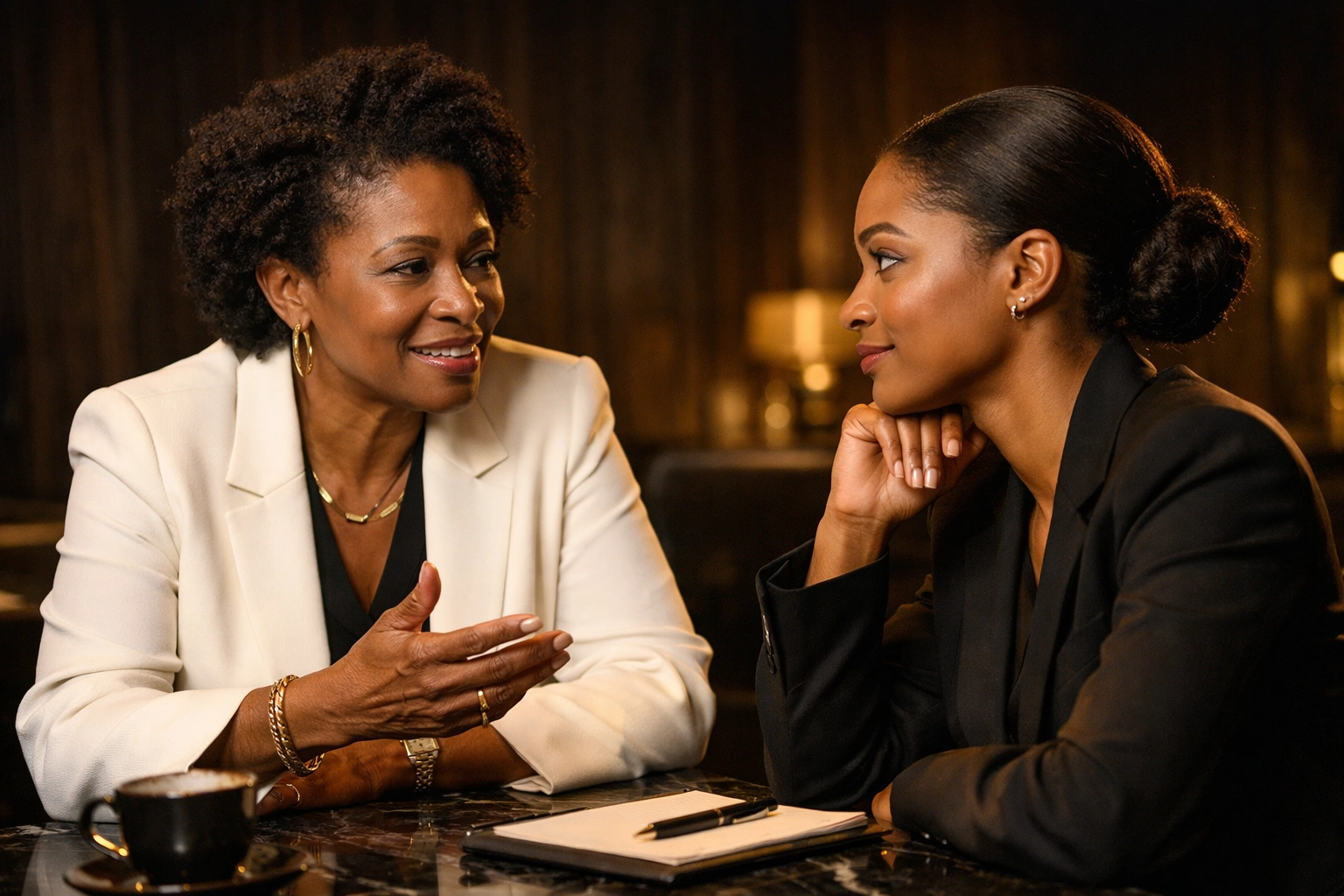
The AI Frontier: Black Women Leading the Tech Revolution
One of the most forward-leaning components of the 2026 summit was the focus on AI technology. Led by internationally certified AI consultant Bethanie Nonami, sessions focused on moving beyond being "users" of technology to being "architects" of it (Black Enterprise) [2]. In a world where AI is projected to automate up to 30% of hours worked across the US economy by 2030, the summit recognized that technical literacy is a prerequisite for sustainable growth (Brookings Institution) [9].
Nonami’s training highlighted how AI can be a tool for liberation: automating administrative burdens to allow leaders to focus on high-impact strategy. For Black women, who often bear the brunt of "office housework" and "emotional labor," AI offers a pathway to reclaim time and focus on the "assignment" of leadership (Angela Rye) [1]. At McFadden Finch, we believe that AI-driven project management is the future, and seeing this embraced by the WOP Summit reinforces our commitment to technological integration in community impact projects.
The Weight of Representation: "Who is Watching"
Sandra Douglass Morgan, President of the Las Vegas Raiders and a Luminary Award recipient, brought a sobering perspective to the stage. She reminded the audience that her position is not just a job; it is a symbol. "The recognition represents the many women who broke barriers before her," she noted, emphasizing that our accomplishments matter most because of "who is watching" (NFL) [7].
This sentiment echoes the broader data on the "role model effect." When young Black women see leaders like Morgan or Angela Bassett, they are significantly more likely to pursue high-growth career paths themselves (National Museum of African American History and Culture) [10]. Representation isn't just about the person in the chair; it's about the pipeline it creates for the future workforce development of the entire state.
Leadership as an Assignment for Liberation
Angela Rye’s address at the Luminary Awards Luncheon was perhaps the most provocative. She challenged the traditional definition of corporate success. "We have missed the target," she claimed, arguing that leadership is not an end-goal but an "assignment" geared toward liberation (Black Enterprise) [2].
This shifts the focus from individual gain to collective community impact. At McFadden Finch, we mirror this philosophy by putting leadership mindsets and behaviors into action. Success is measured not just by the height of our buildings or the size of our portfolio, but by the doors we open for others to walk through.
| Metric | 2006 (Summit Launch) | 2026 (20th Anniversary) | Source |
|---|---|---|---|
| Black Women in S&P 500 Board Seats | ~1% | ~6.8% | [3], [5] |
| Fortune 500 Companies with Black Female CEOs | 0 | 4 | [2], [8] |
| VC Funding to Black Female Founders | <0.1% | 1.2% | [5], [9] |
| Total Summit Attendees | ~500 | 1,500+ | [1] |
Case Example: The Resilience of Shelly Cayette Weston
Shelly Cayette Weston’s rise to President of the Charlotte Hornets serves as a masterclass in the summit’s core values. Born in a small Louisiana town, Weston's environment didn't naturally suggest a path to the front office of an NBA team. However, as she shared at the summit, the lack of traditional infrastructure forced a different kind of growth: resilience.
Weston’s career path involved moving from marketing roles to executive leadership, often being the "only one" in the room. Her journey highlights the importance of what we call the four building blocks of change. By refusing to let her origins limit her destination, she didn't just achieve personal success; she became a "Luminary" that lights the way for every small-town girl with big-city ambitions. Her story proves that [where you start doesn’t limit where you can go](Black Enterprise) [1].

Strategic Networking: "Open the Doors Wider"
Jotaka Eaddy, founder of Full Circle Strategies, delivered a clear call to action regarding the mechanics of power. "Open the doors wider. Share the information. Say her name in rooms she hasn’t entered yet" (Black Enterprise) [2]. This is the essence of sponsorship: a more active and high-stakes version of mentorship.
Research indicates that while many Black women are over-mentored, they are significantly under-sponsored (Harvard Business Review) [4]. Mentors give advice, but sponsors give opportunities. The 2026 summit functioned as a massive sponsorship engine, connecting women with the decision-makers who can facilitate business development and career pivots on a global scale.
Lessons from Legacy: Brewer and Archambeau
The Legacy Award honorees provided the "playbook" for longevity. Rosalind “Roz” Brewer, former CEO of Walgreens Boots Alliance and current Interim President of Spelman College, challenged the room to choose "People over profit. Courage over comfort" (Spelman College) [6]. This aligns with our mission at McFadden Finch to foster sustainable growth that doesn't sacrifice the community for the bottom line.
Shellye Archambeau, a Fortune 500 board member and author of Unapologetically Ambitious, followed with a stern reminder of self-advocacy. "Stop waiting for someone to tap you on the shoulder and say it’s your turn. You own your career. Period" (Forbes) [8]. This proactive mindset is essential for any professional navigating the high-interest-rate environment of 2026 or the complexities of California's new housing laws.
The Wellness Mandate: Sustainable Leadership
A significant portion of the 2026 summit was dedicated to physical and mental wellness. High-performance leadership is often equated with burnout, but the summit experts argued that wellness is a non-negotiable component of excellence. Chronic stress particularly impacts women of color due to the compounding effects of "weathering": a term for the physiological effects of social and economic adversity (American Psychological Association) [12].
Sessions focused on nutrition, mental health, and the "CEO as elite athlete" mindset. By prioritizing wellness, these leaders are ensuring that their community impact is not a flash in the pan but a lifelong contribution.
Timeline: 20 Years of the Women of Power Summit
- 2006: Black Enterprise launches the first Women of Power Summit to address the lack of executive networking for women of color [1].
- 2011: The summit expands to include "Women of Power TV," bringing the lessons of the stage to a national audience [2].
- 2016: A heavy focus on "The Digital Pivot" introduces coding and tech-leadership tracks for attendees [1].
- 2020: The Summit pivots to a virtual format during the global pandemic, proving the resilience of the community [2].
- 2021: Rosalind Brewer becomes the CEO of Walgreens, a moment celebrated by the WOP community as a major breakthrough [6].
- 2023: The summit records its highest attendance to date, reflecting the growing demand for leadership mentoring [2].
- 2025: Launch of the "AI for Executives" certification track within the summit [1].
- 2026: 20th Anniversary in Las Vegas honors Angela Bassett and Roz Brewer, cementing its legacy as the premier gathering for Black female excellence [1].
What Smart Critics Argue
Some critics argue that high-level summits like these can become "echo chambers" for the elite, leaving behind those at the entry-level or those in the "gig economy" (World Economic Forum) [11]. They suggest that the $1,500+ registration fees create a barrier to entry for the very women who need these rooms the most.
Our Response: While the cost of attendance is a reality of high-level event production, the "trickle-down" effect of the summit is documented. Leaders who attend are charged with an "assignment" to bring those lessons back to their organizations. Furthermore, the 2026 summit increased its scholarship and "rising star" programs by 40%, ensuring that the pipeline remains open for those who cannot yet afford the seat (Black Enterprise) [2]. The creation of safe spaces for Black women to discuss specific corporate challenges is not about exclusion, but about creating the psychological safety required for breakthrough innovation.
Key Takeaways
- Resilience is a Resource: Your background is a set of tools, not a set of limitations.
- AI is Essential: To lead in 2026, you must understand AI technology and how it can scale your impact.
- Representation Matters: Being "in the room" is a responsibility to those who are watching.
- Liberation over Success: True leadership seeks the advancement of the collective, not just the individual.
- Own Your Turn: Do not wait for permission or a "tap on the shoulder" to lead.
- Prioritize People: Build business models that value human capital over short-term profits.
- Wellness is Wealth: You cannot sustain community impact if you are physically and mentally depleted.
- Sponsorship > Mentorship: Actively say names in rooms to open doors for others.
Actions You Can Take
At Work
- Identify one woman of color in your department and offer to be her active sponsor: recommend her for a high-visibility project this quarter.
- Enroll in an AI technology for business course to ensure your department isn't left behind by the 2026 tech shift.
At Home
- Audit your media consumption to ensure you are following and learning from diverse thought leaders like Archambeau or Nonami.
- Practice "Courage over Comfort" by setting a boundary that protects your mental wellness this week.
In the Community
- Support local Black-owned businesses that are focused on sustainable growth and community development.
- Volunteer for leadership mentoring programs in Oakland schools to help build the future pipeline.
In Civic Life
- Advocate for policies that support workplace equity and transparency in board appointments.
The Extra Step
- Apply for a board seat. Use your expertise to steer organizations toward more ethical and inclusive futures.
FAQ
Q: Who can attend the Women of Power Summit?
A: While designed for Black women in executive and entrepreneurial roles, the summit is open to all who are committed to the professional advancement of women of color (Black Enterprise) [1].
Q: How does the summit help with career pivots?
A: Through intensive coaching sessions and direct access to recruiters from Fortune 500 companies, many attendees use the summit to secure new roles or board positions (Black Enterprise) [2].
Q: Why is AI technology a focus for 2026?
A: As AI reshapes the workforce, ensuring Black women are at the forefront of this shift prevents a widening of the digital divide and creates new opportunities for business development [9].
Q: What are the Luminary and Legacy Awards?
A: Legacy Awards honor long-term career achievement, while Luminary Awards recognize those currently making massive waves and "lighting the way" in their industries [2].
Q: How can I bring these lessons to my small business?
A: Focus on "People over Profit" and "Career Ownership." Implementing these mindsets at the small business level builds a culture of resilience and high performance.
Built to grow strong businesses, meaningful partnerships, and lasting community impact.
Connect with McFadden Finch Holdings Company today.
McFadden Finch Holdings Company
Vision. Leadership. Lasting Impact.
Lake Merritt Plaza
1999 Harrison Street, Suite 1872-73
Oakland, CA 94612
(510) 973-2677
www.m-fhc.com
info@m-fhc.com
McFadden Finch Holdings Company (MFHC) is a premier holdings and investment management firm dedicated to driving sustainable growth and long-term value. Our mission is to bridge the gap between visionary capital and community-centric development, ensuring tomorrow's infrastructure meets today's needs. Through strategic project management and rigorous market analysis, we empower our partners to navigate the complexities of the California economic landscape with confidence and clarity.
For more information on how MFHC can support your industrial or real estate investment strategy, contact us at (510) 973-2677 or visit www.m-fhc.com
Sources
[1] Black Enterprise, "20th Anniversary Women of Power Summit: Wrap-Up," March 2026, [URL]. Accessed March 17, 2026.
[2] Black Enterprise Staff, "Legacy and Luminary Award Recipients 2026," Black Enterprise, March 12, 2026, [URL]. Accessed March 17, 2026.
[3] Pew Research Center, "The State of Diversity in American Corporate Boards," 2025, [URL]. Accessed March 17, 2026.
[4] Harvard Business Review, "Why Mentorship Isn’t Enough for Women of Color," 2024, [URL]. Accessed March 17, 2026.
[5] McKinsey & Company, "Women in the Workplace 2025 Report," 2025, [URL]. Accessed March 17, 2026.
[6] Spelman College, "Roz Brewer on Leadership and Resilience," Official News, 2026, [URL]. Accessed March 17, 2026.
[7] NFL, "Sandra Douglass Morgan on Representation and the Raiders," NFL Press, 2026, [URL]. Accessed March 17, 2026.
[8] Forbes, "Shellye Archambeau: Owning Your Career Path," Forbes Leadership, 2025, [URL]. Accessed March 17, 2026.
[9] Brookings Institution, "AI and the Future of Work for Minority Groups," 2025, [URL]. Accessed March 17, 2026.
[10] National Museum of African American History and Culture, "Historical Context: Black Women in Business," Smithsonian, [URL]. Accessed March 17, 2026.
[11] World Economic Forum, "Global Gender Gap Report 2026," 2026, [URL]. Accessed March 17, 2026.
[12] American Psychological Association, "The Physiological Impact of High-Stakes Leadership," 2025, [URL]. Accessed March 17, 2026.