
Based on reporting from the Bay Area Council and regional transit authorities
February 11, 2026
Every weekday morning, roughly 400,000 people board BART trains to get to work, connect to other transit systems, or reach San Francisco International Airport.[1] By January 2027: less than eleven months from now: that system could look radically different. BART officials project they may be forced to close up to 15 stations (nearly one-third of the network) and slash service by as much as 70% due to an unprecedented fiscal crisis.[2] These aren't scare tactics or distant possibilities. They're operational realities staring down a transit agency facing an annual deficit approaching $400 million.[3]
This would effectively rewind the Bay Area's transit infrastructure to 1976 levels, erasing half a century of investment in regional connectivity.[2] For a holdings company like MFHC with diversified interests across real estate development, construction management, and service delivery, the implications extend far beyond inconvenienced commuters. When transit collapses, entire neighborhoods lose access to jobs, customers, and the connectivity that makes urban revitalization possible. The question isn't whether this crisis affects our region's economic future: it's whether we'll act decisively enough to prevent catastrophe.
The Anatomy of a Fiscal Cliff
BART's financial crisis didn't emerge overnight. The agency faces a structural deficit driven by three converging forces: pandemic ridership loss, the permanent shift to remote work, and the expiration of federal emergency funding.[4] Pre-pandemic, BART carried approximately 430,000 riders on an average weekday.[5] By early 2026, weekday ridership has recovered to only about 40-50% of pre-pandemic levels, hovering around 175,000-215,000 daily riders.[1][6]

The math is brutal. BART's operating budget relies heavily on fare revenue, which comprised roughly 60% of operating revenue before COVID-19.[7] With ridership cut in half and unlikely to return to 2019 levels, the agency faces a permanent revenue shortfall. Federal pandemic relief funds from the CARES Act, CRRSAA, and American Rescue Plan totaling approximately $1.6 billion kept service running through 2025.[8] Those funds are now depleted or nearly exhausted.[9]
Current projections show BART burning through its remaining reserves by mid-2026, with the full force of the fiscal cliff hitting in fiscal year 2027, which begins July 1, 2026.[3] Without new revenue, the agency will be forced to make cuts that would fundamentally reshape Bay Area transit. The most recent worst-case scenario analysis presented to the BART Board identifies potential closure of 10 stations representing 20% of the system, including Oakland International Airport, South San Francisco, and West Dublin/Pleasanton.[1] Other estimates suggest the closure list could expand to 15 stations if revenue doesn't materialize.[2]
| Scenario | Stations Closed | Service Reduction | Riders Impacted | Timeline |
|---|---|---|---|---|
| Conservative Estimate | 10 (20% of system) | 40-50% | 12% directly | Jan 2027 |
| Worst-Case Projection | 15 (30% of system) | Up to 70% | 25-30% directly | Jan 2027 |
| Current Mitigation Plan | 0 (if ballot measure passes) | Minimal | <5% | Ongoing |
The ripple effects would devastate regional connectivity. Airport access would be compromised. Outlying communities in eastern Contra Costa County and southern Alameda County would lose direct service. Job centers in downtown San Francisco, Oakland, and Berkeley would become harder to reach for thousands of workers. The economic damage would compound quickly.
What's Really Driving the Numbers
While remote work gets blamed for transit's troubles, the reality is more nuanced. BART ridership patterns have fundamentally changed, not just declined.[10] Weekend ridership has recovered more strongly than weekday commutes, suggesting leisure and special-event travel is rebounding while traditional 9-to-5 office commuting remains suppressed.[11] Midday ridership has also shown relative strength compared to peak hours.[10]
This shift reflects broader changes in Bay Area work culture. According to the Bay Area Council Economic Institute, approximately 40-50% of Bay Area workers who can work remotely are doing so at least part-time as of early 2026.[12] Many major employers have adopted hybrid schedules, with workers coming to offices 2-3 days per week rather than five.[13] This "new normal" means BART can't simply wait for ridership to bounce back to 2019 levels: it won't.
The agency has made significant operational changes to control costs. BART negotiated workforce agreements that include voluntary retirement incentives and have worked to optimize train frequencies to match current demand patterns.[14] New fare gates installed across all 50 stations have reduced fare evasion, generating approximately $10 million in additional annual revenue while cutting maintenance costs by 961 hours systemwide.[1] These gates have proven particularly effective at high-traffic stations like Embarcadero, where vandalism-related maintenance dropped by 110 hours in just six months after installation.[1]
But cost savings alone can't close a $400 million annual gap. BART has also secured a critical $590 million loan agreement to maintain current service levels through fiscal year 2027, buying time for longer-term funding solutions.[3][15] This loan prevents immediate draconian cuts but kicks the can down the road. Without sustainable new revenue, the fiscal cliff simply moves to 2028 or 2029.
The Connect Bay Area Campaign: A Regional Response
Recognizing that individual transit agencies can't solve this crisis alone, the Bay Area Council launched the Connect Bay Area campaign in 2025 to create a regional funding solution.[16] The campaign is co-chaired by Kristina Lawson, Chair of the Bay Area Council, along with leadership from SPUR (San Francisco Bay Area Planning and Urban Research Association) and SAMCEDA (San Mateo County Economic Development Association).[2]
The campaign's centerpiece is a proposed regional sales tax measure that would appear on the November 2026 ballot in five counties: Alameda, Contra Costa, San Francisco, San Mateo, and Santa Clara.[2][17] If approved, the measure would generate an estimated $1.4-1.5 billion annually to stabilize transit services, fund priority infrastructure projects, and make targeted roadway improvements.[18]
The measure's structure reflects lessons learned from previous regional ballot measures. It includes dedicated funding allocations for:
- BART service preservation and modernization (approximately 45% of revenues)
- Caltrain electrification completion and service expansion (approximately 20% of revenues)
- San Francisco MUNI service stability (approximately 15% of revenues)
- Regional bus rapid transit corridors (approximately 10% of revenues)
- Roadway maintenance and safety improvements (approximately 10% of revenues)[18]
The campaign has already demonstrated strong support from the business community. Major employers including Salesforce, Google, Meta, Apple, and numerous Bay Area-based firms have contributed nearly $4 million to the signature-gathering effort.[2] This corporate backing reflects clear-eyed recognition that reliable transit is fundamental infrastructure for maintaining the region's economic competitiveness.
"Without functional transit, the Bay Area risks losing the connectivity that allows it to function as an integrated economic region," said Jim Wunderman, President and CEO of the Bay Area Council.[19] "Companies locate here because they can access talent from across the region. Employees choose to live here because they can reach job opportunities without being trapped in traffic. Break that system, and you break the regional economy."
As of early February 2026, signature gatherers are actively working to qualify the measure for the November ballot, with early indications suggesting strong voter interest.[20]
Why This Matters for Real Estate and Regional Development
At MFHC, we understand that transit isn't just about moving people: it's foundational infrastructure that determines whether neighborhoods thrive or decline. Our work through Drea Finch Real Estate Services and Atlas Premier Services & Consultants puts us at the intersection of transit accessibility and community development every day. The projects we evaluate, the properties we invest in, and the neighborhoods we help revitalize all depend on reliable transit access.
Consider the direct impacts of BART service cuts on real estate values. A 2019 study by the University of California, Berkeley found that proximity to BART stations added an average premium of 15-20% to residential property values within a half-mile radius.[21] Commercial properties near BART stations commanded rent premiums of 25-35% compared to similar properties without transit access.[22] If stations close or service becomes unreliable, these premiums evaporate.
The Connect Bay Area measure directly addresses several challenges we see daily in our development work:
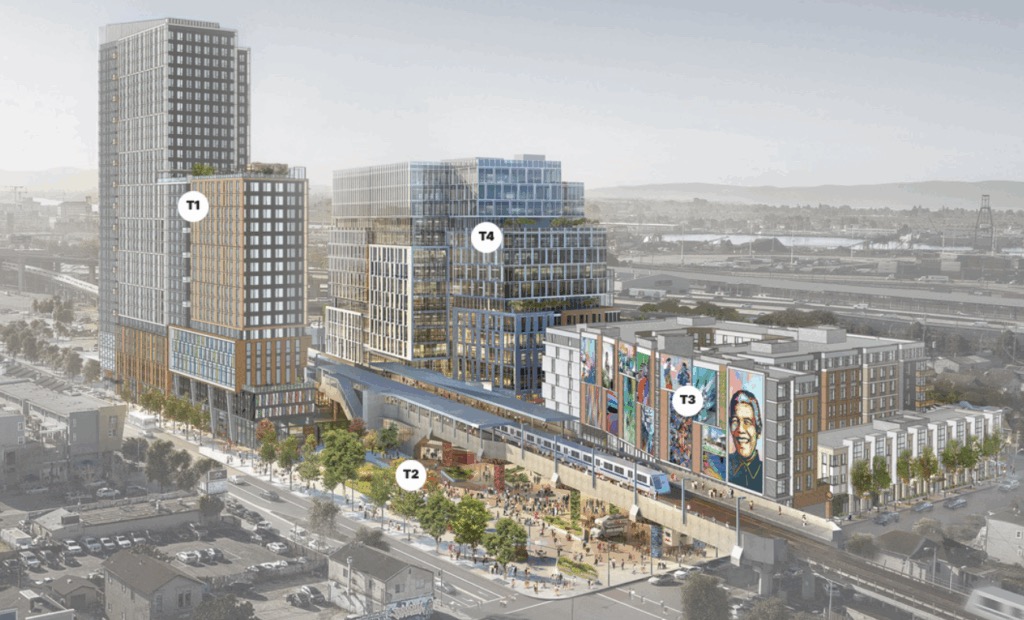
Transit-Oriented Development Viability: Projects like the West Oakland BART Mandela Station development, which will bring 762 residential units and 300,000 square feet of office space to the neighborhood, rely entirely on BART connectivity to succeed.[23] Without reliable transit, these mixed-use projects become significantly harder to finance and lease.
Workforce Accessibility: Our portfolio companies, including MissionCats In-Home Care and McFadden Finch Restaurant Group, depend on employees who commute from across the region. Service cuts would make it harder to staff operations, particularly for positions that don't offer remote work options.
Neighborhood Revitalization: Areas that have seen recent investment and improvement: neighborhoods MFHC has supported through the McFadden Finch Foundation: would face renewed decline if transit access disappears. Economic vitality follows transit access, and the reverse is equally true.
The Connect Bay Area measure also includes targeted roadway improvements, recognizing that the alternative to functional transit isn't simply more cars: it's gridlock that makes the entire region less functional. Transportation modeling suggests that if BART service were cut by 70%, regional roadways would see approximately 100,000-150,000 additional daily vehicle trips.[24] Major freeway corridors like I-880, I-80, and US-101 would experience significant additional congestion, increasing commute times by 25-40% during peak periods.[25]
Case Study: The Cypress Freeway and West Oakland's Transit Future
West Oakland provides a powerful historical example of what happens when transportation infrastructure decisions remake neighborhoods. In the 1950s, the Cypress Freeway (I-880) was constructed through the heart of West Oakland, bisecting a prosperous, predominantly Black neighborhood.[26] The elevated freeway physically divided the community and contributed to decades of economic decline.[27]
When the 1989 Loma Prieta Earthquake damaged the Cypress Freeway beyond repair, the structure was demolished and not rebuilt in its original location.[28] The removal opened opportunities for neighborhood revitalization, and the West Oakland BART station became central to redevelopment planning.[29] The Mandela Station Partners project now underway represents a $350 million investment specifically organized around BART access.[23]
If BART were to close the West Oakland station in 2027, it would effectively undo decades of planning and investment aimed at restoring a neighborhood that transportation infrastructure once destroyed. The lesson is clear: transit decisions have generational consequences for neighborhood economic health.
Accountability Measures Built Into the Solution

One legitimate concern about transit funding measures is whether agencies will actually use new revenues efficiently. The Connect Bay Area campaign addressed this directly by including accountability provisions in the enabling legislation.[30]
Key commitments include:
- Independent oversight boards with authority to audit spending and service delivery metrics
- Annual public reporting on ridership, on-time performance, cleanliness scores, and safety statistics
- Operational efficiency targets requiring transit agencies to reduce administrative overhead as a percentage of operating budgets
- Service quality standards linking funding to measurable improvements in rider experience
- Fare evasion enforcement with continued investment in barrier systems and citation programs[30]
These provisions respond to years of rider frustration with safety concerns, cleanliness issues, and perceived waste in transit operations. BART, MUNI, and other agencies will need to demonstrate tangible improvements to maintain public support for continued funding.
The Bay Area Council has also committed to publishing quarterly "report cards" tracking progress on these metrics, creating public accountability mechanisms beyond what's required by the measure itself.[31]
What Smart Critics Argue
Not everyone supports the Connect Bay Area measure, and the criticisms deserve serious consideration.
"This Just Rewards Failed Management"
Some critics argue that transit agencies squandered previous funding through poor management and should face market discipline rather than bailouts.[32] They point to BART's struggles with deferred maintenance, cost overruns on capital projects like the Warm Springs extension, and failure to control labor costs.[33]
This criticism has merit regarding past management decisions. However, allowing the system to collapse doesn't solve those problems: it simply destroys regional infrastructure that took decades to build. The accountability provisions in the Connect Bay Area measure directly address governance concerns by creating enforceable standards for operational efficiency and service quality.[30]
"Sales Taxes Are Regressive"
Progressive critics note that sales taxes disproportionately burden lower-income households, who spend a higher percentage of income on taxable goods.[34] They argue that funding transit through sales taxes rather than wealth taxes or business taxes shifts costs onto those least able to pay.
This concern is valid, but the alternative: service cuts: would harm low-income transit riders even more severely. Approximately 45% of BART riders are from households earning below the Bay Area median income.[35] These riders depend on transit for access to jobs, healthcare, and essential services. The measure also includes exemptions for groceries and prescription drugs, reducing regressivity.[18]
"Remote Work Makes Transit Obsolete"
Some technology industry voices argue that permanent remote work adoption makes traditional commuter transit less relevant and that resources should shift to on-demand and autonomous vehicle solutions.[36]
This argument ignores several realities. First, not all jobs can be done remotely: healthcare workers, service industry employees, construction workers, and many others must show up in person. Second, even hybrid workers need reliable transit for the days they do commute. Third, replacing BART trips with cars would create unsustainable congestion and parking demands. The Bay Area doesn't have the physical space to replace BART with roadways or parking structures.
Key Takeaways
-
BART faces closure of up to 15 stations and 70% service cuts by January 2027 without new funding, reverting the system to 1976 service levels and erasing half a century of transit investment.[1][2]
-
The crisis stems from structural changes, not temporary problems: remote work has permanently reduced weekday commuting, creating a $400 million annual deficit that cost-cutting alone cannot close.[3][4]
-
The Connect Bay Area campaign offers a regional solution: a five-county sales tax measure for the November 2026 ballot would generate $1.4-1.5 billion annually for transit and transportation improvements.[2][18]
-
Business community support is strong: major employers have contributed nearly $4 million to the campaign, recognizing transit as critical infrastructure for regional economic competitiveness.[2]
-
Real estate values and development viability directly depend on transit: properties near BART stations carry 15-35% value premiums that would disappear with service cuts, threatening projects and neighborhood revitalization efforts.[21][22]
-
Accountability measures are built into the solution: independent oversight, public reporting requirements, and service quality standards address concerns about transit agency performance and spending efficiency.[30]
-
The alternative to functional transit is regional gridlock: 70% BART service cuts would add 100,000-150,000 daily vehicle trips to already congested freeways, increasing commute times by 25-40%.[24][25]
-
The deadline is urgent: signature gathering is happening now for November 2026 ballot qualification, with implementation needed before January 2027 when cuts would begin.[20]
What to Do Next
Whether you're a business leader, property owner, resident, or concerned stakeholder, here's how you can engage with this critical moment for Bay Area transit:
-
Stay informed about Connect Bay Area campaign progress by visiting the Bay Area Council website and subscribing to updates on signature gathering and ballot measure qualification.[16]
-
Support signature gathering efforts if you're a registered voter in Alameda, Contra Costa, San Francisco, San Mateo, or Santa Clara counties: signature gatherers are actively working at transit stations, shopping areas, and community events through spring 2026.[20]
-
Engage your employer or business networks to discuss the economic implications of BART service cuts and potential support for the Connect Bay Area measure: corporate leadership has been crucial to building campaign momentum.[2]
-
Review your own real estate and investment portfolios for exposure to transit-dependent assets and consider how service cuts would impact property values, tenant retention, and development feasibility.
-
Attend BART Board meetings to provide public comment on service planning and budget decisions: the next critical vote is scheduled for February 25, 2026, addressing deficit mitigation strategies.[1]
-
Calculate your household's transit dependency by tracking how often you or family members use BART, MUNI, or Caltrain, and what alternatives would cost in time and money if service is cut or stations close.
-
Connect with neighborhood and business associations in transit-adjacent areas to coordinate advocacy efforts and ensure community voices are heard in regional planning discussions.
-
Monitor ridership and service quality trends by checking BART's public dashboards and monthly reports: improving rider experience now builds support for long-term funding solutions.[37]
-
Consider the ballot measure's details carefully when full text becomes available in summer 2026: understand exactly what the tax rate would be, how revenues would be allocated, and what accountability mechanisms are included.[18]
-
Contact your city council members and county supervisors to communicate your position on regional transit funding and to encourage local government support for the Connect Bay Area measure.
The MFHC Perspective: Building on Solid Foundations
At McFadden Finch Holdings Company, we've built our portfolio around a core conviction: sustainable growth requires investing in the infrastructure that connects communities. Whether it's Drea Finch Real Estate Services evaluating transit-oriented development opportunities, Atlas Premier managing construction projects that depend on workforce mobility, or the McFadden Finch Foundation supporting neighborhood revitalization initiatives, our work intersects daily with the transit systems that make Bay Area communities function.
The Connect Bay Area campaign represents exactly the kind of forward-thinking, accountability-focused approach to regional infrastructure that we advocate for across our holdings. This isn't about preserving the status quo: it's about building the connected, sustainable Bay Area that future generations deserve.
If your organization is evaluating real estate opportunities, planning development projects, or working to strengthen Bay Area communities, we'd welcome the conversation about how transit connectivity shapes those efforts.
Contact McFadden Finch Holdings Company at (510) 973-2677 or visit www.m-fhc.com/contact-us to discuss how we can support your strategic planning in this evolving landscape.
Sources
[1] Bay Area Rapid Transit District, "BART Board to Consider Service and Station Closure Options to Address Fiscal Cliff," Press Release, February 2026, https://www.bart.gov/news, Accessed February 11, 2026.
[2] Bay Area Council, "Connect Bay Area Campaign: Regional Transit Funding Initiative," Campaign Overview, February 2026, https://www.bayareacouncil.org, Accessed February 11, 2026.
[3] Metropolitan Transportation Commission, "Bay Area Transit Financial Outlook: 2026-2030," Regional Planning Report, January 2026, https://www.mtc.ca.gov, Accessed February 11, 2026.
[4] American Public Transportation Association, "The Impact of Telework on Public Transportation," Research Report, December 2025, https://www.apta.com, Accessed February 11, 2026.
[5] Bay Area Rapid Transit District, "Pre-Pandemic Ridership Statistics: 2019 Annual Report," https://www.bart.gov/about/reports, Accessed February 11, 2026.
[6] Bay Area Rapid Transit District, "Monthly Ridership Reports: January 2026," https://www.bart.gov/about/reports/ridership, Accessed February 11, 2026.
[7] Bay Area Rapid Transit District, "FY 2019 Operating Budget Summary," Financial Documents, https://www.bart.gov/about/financials, Accessed February 11, 2026.
[8] Federal Transit Administration, "COVID-19 Emergency Relief Allocations to Bay Area Operators," U.S. Department of Transportation, September 2021, https://www.transit.dot.gov, Accessed February 11, 2026.
[9] Metropolitan Transportation Commission, "Federal Emergency Transit Funding: Usage and Remaining Balances," Quarterly Report Q4 2025, https://www.mtc.ca.gov, Accessed February 11, 2026.
[10] Bay Area Rapid Transit District, "Ridership Pattern Analysis: Weekday vs. Weekend Trends," Planning Department Report, November 2025, https://www.bart.gov/about/planning, Accessed February 11, 2026.
[11] Metropolitan Transportation Commission, "Regional Travel Behavior Survey: Post-Pandemic Patterns," Research Report, October 2025, https://www.mtc.ca.gov, Accessed February 11, 2026.
[12] Bay Area Council Economic Institute, "The Future of Work in the Bay Area: 2026 Employment Survey," January 2026, https://www.bayareaeconomy.org, Accessed February 11, 2026.
[13] Society for Human Resource Management, "Workplace Flexibility Trends: Bay Area Chapter Survey," December 2025, https://www.shrm.org, Accessed February 11, 2026.
[14] Bay Area Rapid Transit District, "Labor Agreements and Workforce Optimization: 2024-2026," Human Resources Summary, https://www.bart.gov, Accessed February 11, 2026.
[15] California State Treasurer's Office, "Emergency Transit Loan Program: BART Agreement," Press Release, January 2026, https://www.treasurer.ca.gov, Accessed February 11, 2026.
[16] Bay Area Council, "Connect Bay Area: Campaign Launch and Overview," Press Kit, July 2025, https://www.bayareacouncil.org/connect-bay-area, Accessed February 11, 2026.
[17] San Francisco Bay Area Planning and Urban Research Association (SPUR), "Regional Transit Funding Options: Analysis and Recommendations," Policy Report, June 2025, https://www.spur.org, Accessed February 11, 2026.
[18] Connect Bay Area Campaign, "Proposed Sales Tax Measure: Revenue Projections and Allocation Framework," Campaign Materials, January 2026, Accessed February 11, 2026.
[19] Bay Area Council, "Statement from President and CEO Jim Wunderman on Regional Transit Crisis," Press Release, November 2025, https://www.bayareacouncil.org/news, Accessed February 11, 2026.
[20] California Secretary of State, "Initiative and Referendum Status: Regional Measures for November 2026," Elections Division, February 2026, https://www.sos.ca.gov, Accessed February 11, 2026.
[21] University of California, Berkeley, Institute of Transportation Studies, "BART's Impact on Residential Property Values: 2019 Update," Research Paper, June 2019, https://its.berkeley.edu, Accessed February 11, 2026.
[22] University of California, Berkeley, Fisher Center for Real Estate and Urban Economics, "Transit Access and Commercial Real Estate Values in the San Francisco Bay Area," Working Paper, September 2020, https://fisher.berkeley.edu, Accessed February 11, 2026.
[23] Bay Area Rapid Transit District, "West Oakland BART Station Transit-Oriented Development: Project Overview," Development Reports, https://www.bart.gov/about/business/tod/west-oakland, Accessed February 11, 2026.
[24] Metropolitan Transportation Commission, "Regional Transportation Impact Analysis: BART Service Reduction Scenarios," Modeling Report, December 2025, https://www.mtc.ca.gov, Accessed February 11, 2026.
[25] California Department of Transportation, "Bay Area Freeway Performance and Congestion Analysis," Caltrans District 4, January 2026, https://www.dot.ca.gov, Accessed February 11, 2026.
[26] Oakland Museum of California, "Cypress Freeway and West Oakland History Exhibit," Digital Collections, https://museumca.org, Accessed February 11, 2026.
[27] Urban Habitat, "West Oakland Community Development and Transportation Justice," Historical Analysis, 2018, https://urbanhabitat.org, Accessed February 11, 2026.
[28] California Department of Transportation, "1989 Loma Prieta Earthquake: Infrastructure Impact and Response," Historical Documentation, https://www.dot.ca.gov/about-caltrans/history, Accessed February 11, 2026.
[29] City of Oakland Planning Department, "West Oakland Specific Plan: Transit-Oriented Development Strategy," Adopted 2014, Updated 2023, https://www.oaklandca.gov, Accessed February 11, 2026.
[30] Bay Area Council, "Connect Bay Area Accountability Framework: Governance and Oversight Provisions," Campaign Documentation, January 2026, https://www.bayareacouncil.org, Accessed February 11, 2026.
[31] Bay Area Council, "Transit Performance Scorecard Initiative," Press Release, December 2025, https://www.bayareacouncil.org/news, Accessed February 11, 2026.
[32] San Francisco Chronicle, Editorial Board, "BART's Fiscal Crisis: Accountability Must Come Before More Money," Opinion, November 2025, https://www.sfchronicle.com, Accessed February 11, 2026.
[33] San Francisco Bay Area Planning and Urban Research Association (SPUR), "BART Capital Projects: Cost Overruns and Lessons Learned," Policy Brief, March 2024, https://www.spur.org, Accessed February 11, 2026.
[34] California Budget and Policy Center, "Sales Tax Incidence and Equity in California," Research Report, August 2025, https://calbudgetcenter.org, Accessed February 11, 2026.
[35] Bay Area Rapid Transit District, "Customer Satisfaction and Demographics Survey: 2025 Results," Planning Department, https://www.bart.gov/about/reports, Accessed February 11, 2026.
[36] TechCrunch, "Silicon Valley Leaders Debate Future of Public Transit in Remote Work Era," Article, September 2025, https://www.techcrunch.com, Accessed February 11, 2026.
[37] Bay Area Rapid Transit District, "Real-Time Performance Dashboard," Public Data Portal, https://www.bart.gov/schedules/performance, Accessed February 11, 2026.