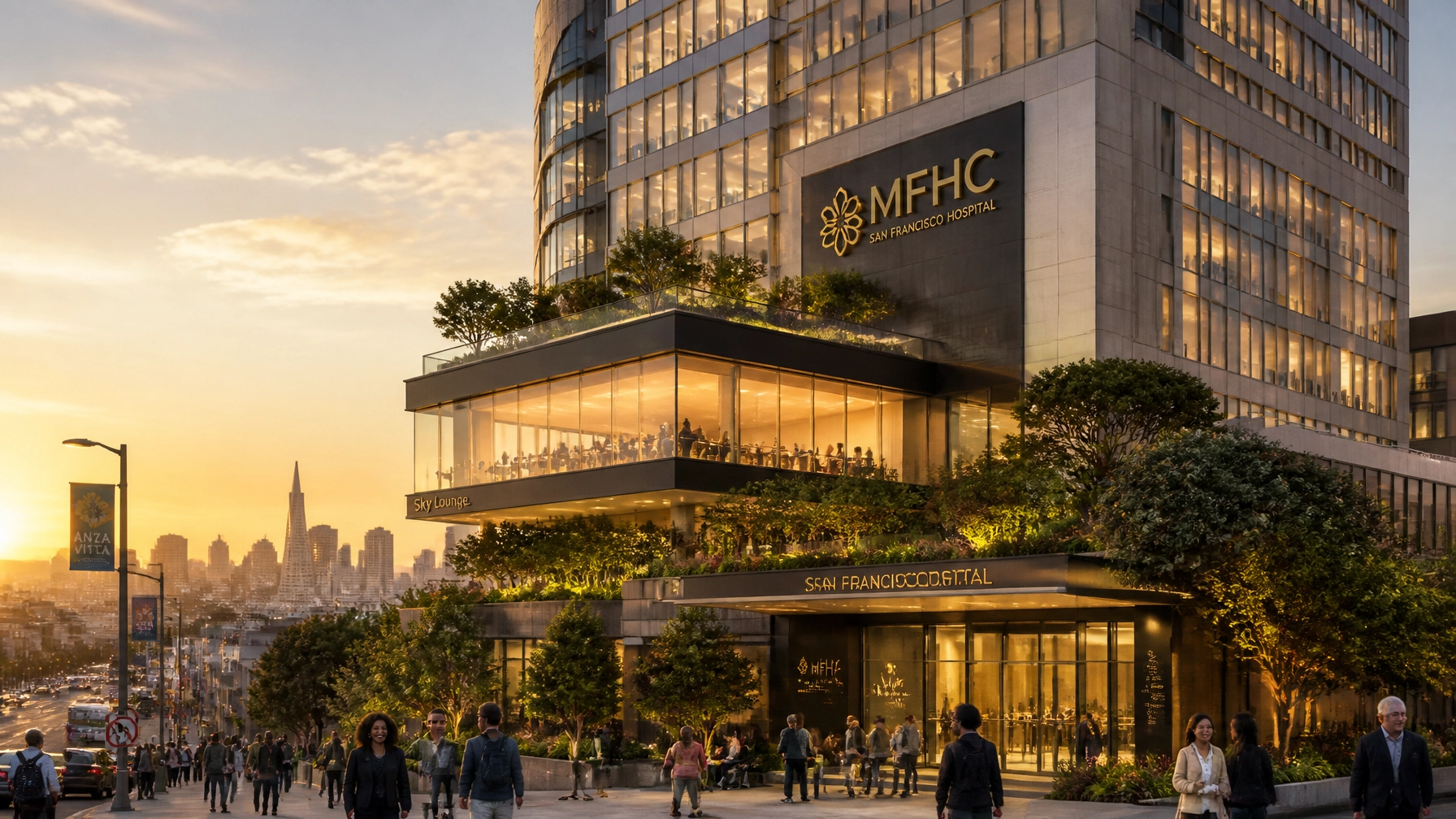
The Bay Area is currently moving through a period of intense structural recalibration that we are calling "The Great Sorting." As capital becomes increasingly selective, the gap between stabilized, high-quality assets and transitional or distressed properties is widening into a chasm. This week, we see the dual forces of AI-driven infrastructure demand and municipal fiscal pressure creating a landscape where precision is the only path to sustainable growth. For leaders in the Oakland and San Francisco markets, the strategy is no longer about broad-based recovery but about identifying the specific "flights to quality" that define the current cycle. We are looking at a market that rewards operational excellence and punishes those clinging to the low-interest-rate assumptions of the past decade.
Bay Area Business and Economy
The Silicon Valley restructuring continues to ripple through the regional labor market as we head into June. Recent data from Joint Venture Silicon Valley indicates that while the region has delivered the highest number of commercial developments since 2021, the tech sector is undergoing a fundamental shift in its workforce composition. Over 400,000 regional jobs now include tasks that are heavily impacted by AI automation, leading to a "U-shaped" recovery where high-income investment gains are decoupled from broad-based employment growth. For East Bay executives, this means a workforce in transition, requiring new approaches to office space and corporate culture that prioritize high-value, non-automatable interactions.
San Francisco’s tax structure is currently facing its most significant test as large multinationals re-evaluate their footprints. A new report from the Bay Area Council Economic Institute highlights that the city’s business tax burden dramatically tops its peer cities, acting as a primary constraint on post-pandemic recovery. This is driving a migration of corporate interest toward submarkets like Oakland and the East Bay, which offer more competitive cost structures while maintaining proximity to the core innovation ecosystem. The takeaway for the regional business community is clear: the central business district is no longer the default choice, and value-driven locations are gaining long-term leverage.
Despite the headwinds in soft-tech, the South Bay is seeing a surge in advanced manufacturing and semiconductor investment. Projects like the new Nokia facility in South San Jose are bringing specialized industrial jobs to the region, signaling a pivot toward "hard tech" that requires physical infrastructure and long-term capital commitment. This diversification is critical for the regional economy’s stability, moving away from a pure reliance on software and toward a more resilient mix of production and innovation. For real estate and construction partners, this shift represents a move toward high-spec, specialized facilities that demand rigorous project management and technical expertise.
Portfolio Industry Watch
The 2026 real estate landscape is being defined by a massive "flight to quality," as highlighted in recent market updates. Capital is flowing almost exclusively to strong sponsors and stabilized assets with transparent cash flows, leaving Class B and C office spaces in a state of prolonged distress. In the multifamily sector, we see a sharp bifurcation between newer, high-amenity developments and older, rent-regulated stock. Pre-1974 assets are seeing delinquency rates rise as they struggle with the "silent killer" of the current market: insurance costs that are rising 2 to 3 times faster than the CPI. Managing these rising operational expenditures is now a primary focus for any real estate development firm looking to maintain net operating income.
In the hospitality and restaurant consulting space, the recovery has stabilized, but deferred capital expenditures from the pandemic era are finally coming due. Full-service hotels are outperforming limited-service properties, but owners are facing a "cap-ex cliff" that is impacting property condition and financing options. Our consulting group sees this as an opportunity for operational refinement; success in 2026 depends on a brand's ability to deliver premium culinary and lodging experiences that justify higher price points to a discerning, high-income consumer base. The margin for error in hospitality has disappeared, and quality of service is the primary differentiator.
The construction and project management sector is navigating a "U-shaped" Treasury yield curve that complicates long-term planning. While the Federal Reserve has eased some near-term pressure, long-term yields remain elevated due to inflation risks and structural changes in the economy. This means that borrowing costs for transitional assets remain high, with lodging and office spreads particularly wide. Success in the current environment requires a shift toward "sustainable growth": prioritizing projects with clear refinancing strategies and high-efficiency designs that mitigate long-term utility and insurance inflation. Precision in project management is no longer just about timelines; it is about protecting the asset's terminal value.

Civic and Policy Watch
Oakland is currently navigating a period of significant governance transition following the recent special mayoral election. With the city facing a budget shortfall of nearly $130 million, the incoming leadership is under immense pressure to stabilize municipal finances while addressing urgent needs in public safety and housing. The fiscal constraint means that the city is increasingly looking to "Philanthropreneurial" partnerships: private investment that drives community impact: to bridge the gap in infrastructure and service delivery. For business owners, this signals a shift toward more collaborative, public-private models for urban development.
The California legislative landscape is seeing renewed focus on "green economy" incentives that leverage the Port of Oakland for regional growth. New state-level policies are being drafted to support clean-energy logistics and industrial decarbonization, which could unlock significant capital for East Bay projects. However, the deadline for several key zoning adjustments under the Oakland General Plan is approaching this summer, and businesses must engage now to ensure that land-use policies support the next generation of industrial and mixed-use development. Staying ahead of these regulatory shifts is essential for any firm looking to build lasting institutions in the Bay Area.
AI, Innovation, and the Future of Work
The most consequential shift in the 2026 real estate market is the explosion of data center demand driven by the AI revolution. While cap rates across most sectors have widened significantly due to higher debt costs, data center cap rates have remained remarkably stable. This signals that investors are pricing in massive future cash flow growth that offsets the doubled cost of capital. For the Bay Area, this creates a unique set of challenges and opportunities. The region’s power grid and land constraints mean that new data center development is a high-stakes game requiring deep expertise in both infrastructure and policy.
AI is also transforming the "Future of Work" at a foundational level. We are seeing a shift from traditional office-centric models to "AI-integrated environments" where physical space is designed to support high-level creative and strategic collaboration that cannot be automated. This is why trophy office assets are still performing well despite the broader sector's distress; they provide the premium environments that top-tier talent demands. For small businesses and hospitality operators, the adoption of AI for backend logistics and customer service is no longer optional: it is a survival mechanism to combat rising labor costs and operational complexity. The future of work is not just about where we work, but about how we leverage technology to augment human capability.

Community Impact in Action
The Oakland Museum of California (OMCA) continues to serve as a beacon of institutional resilience and community engagement. By aligning its operations with local social movements and providing a platform for diverse voices, OMCA demonstrates how cultural institutions can drive measurable community impact even in a challenging economic climate. Their commitment to representing the lived experiences of Oakland’s people of color ensures that the museum remains a central pillar of the city’s identity, attracting visitors and fostering a sense of shared purpose that is vital for social cohesion.
In the grassroots sector, the "Green Economy" initiatives emerging from the East Bay are showing how business growth can be directly tied to environmental justice. Several Oakland-based startups are focusing on clean energy access for underserved neighborhoods, creating "good-paying jobs" that provide a path to economic stability for local residents. These organizations are proving that sustainable development is not just about carbon footprints; it is about building an inclusive economic engine that lifts all parts of the community. At MFHC, we see these institutions as the blueprint for the next generation of Bay Area enterprises.

Executive Calendar
Business of Pride – San Francisco Business Times
Date: June 11, 2026
Time: 4:30 PM–7:30 PM
Venue: TBA (San Francisco)
Register: SF Business Times Events
Cost: $150 – $250
Contact: SF Business Times Events Team
San Francisco Bay Area Small Business Expo 2026
Date: June 25, 2026
Time: 10:00 AM–5:00 PM
Venue: South San Francisco Conference Center, 255 S Airport Blvd, South San Francisco, CA 94080
Register: Small Business Expo Registration
Cost: Free (Basic) to $250 (VIP)
Contact: (212) 651-0700
LakeFest Oakland
Date: June 27, 2026
Time: 11:00 AM–6:00 PM
Venue: Sail Boat House, Lake Merritt, Oakland, CA
Register: LakeFest Oakland Info
Cost: Free to the public
Contact: info@lakefestoakland.com
Bay Area Council 80th Annual Dinner
Date: Late June 2026 (Contact for exact date)
Venue: TBA
Register: Bay Area Council Events
Cost: Corporate Sponsorships
Contact: events@bayareacouncil.org
The current market is a testing ground for the "Philanthropreneur" worldview. It is no longer enough to simply build for profit; we must build for impact and institution-level stability. As we navigate the complexities of this Great Sorting, MFHC remains committed to bridging the gap between visionary capital and community-centric development. We invite our partners and fellow leaders to engage with us as we turn these bold, data-driven ideas into thriving enterprises that will define the Bay Area’s future.
Built to grow strong businesses, meaningful partnerships, and lasting community impact. Connect with McFadden Finch Holdings Company today.
McFadden Finch Holdings Company
Vision. Leadership. Lasting Impact.
Lake Merritt Plaza
1999 Harrison Street, Suite 1872-73
Oakland, CA 94612
(510) 973-2677
www.m-fhc.com
info@m-fhc.com
McFadden Finch Holdings Company (MFHC) is a premier holdings and investment management firm dedicated to driving sustainable growth and long-term value. Our mission is to bridge the gap between visionary capital and community-centric development, ensuring tomorrow’s infrastructure meets today’s needs. Through strategic project management and rigorous market analysis, we empower our partners to navigate the complexities of the California economic landscape with confidence and clarity.
For more information on how MFHC can support your industrial or real estate investment strategy, contact us at (510) 973-2677 or visit www.m-fhc.com.
Published weekly by The McFadden-Finch Holdings Company. MFHC builds value-driven ventures across hospitality, real estate, community philanthropy, and pet care, uniting expertise across industries to deliver sustainable growth, quality, and trust. To explore partnership or engagement, visit www.m-fhc.com.
Disclaimer: This content is for general informational purposes only and does not constitute legal, financial, tax, investment, real estate, business, or other professional advice. Reading this content does not create an advisory, client, fiduciary, or contractual relationship with McFadden Finch Holdings Company. Because every business, investment, property, and strategic situation is different, you should consult qualified professionals regarding your specific circumstances. McFadden Finch Holdings Company makes no warranties regarding the accuracy or completeness of this information and is not responsible for third-party content, links, products, services, or organizations referenced. Testimonials, examples, case studies, and projected outcomes are illustrative only and do not guarantee similar results.