Commercial building owners across the Bay Area face a persistent challenge: the unpredictable nature of equipment failures. One Oakland property management firm discovered this reality when their HVAC system failed on a 95-degree July afternoon, leaving 40,000 square feet of office space without cooling for three days. The emergency repair bill exceeded $28,000, tenant complaints flooded in, and two businesses threatened to break their leases early.
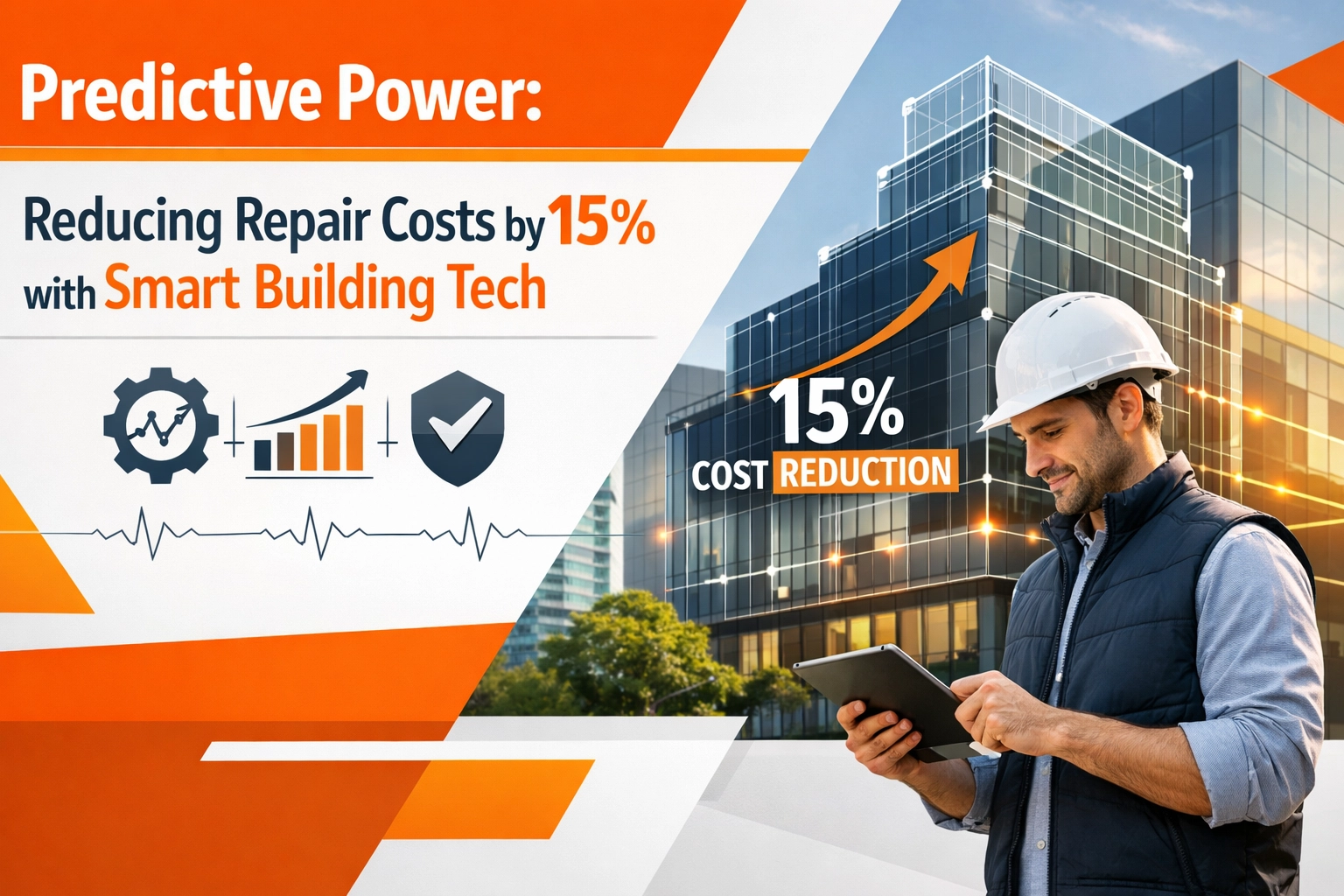
Six months later, that same firm implemented predictive maintenance technology powered by IoT sensors: and reduced their annual repair costs by 15% while eliminating emergency calls entirely. This transformation represents more than cost savings; it demonstrates how smart building technology is reshaping commercial building maintenance across the region.
The Hidden Cost of Reactive Maintenance
Traditional building management operates on a reactive model: wait for something to break, then fix it. This approach carries significant hidden expenses that extend far beyond the repair invoice.
Unplanned downtime disrupts tenant operations and erodes trust. When an elevator fails in a six-story medical building, patients miss appointments, staff productivity drops, and the building's reputation suffers damage that persists long after repairs conclude.
Emergency service premiums inflate costs by 40-60% compared to scheduled maintenance. The HVAC company that charges $180 per hour for routine service demands $300 per hour for after-hours emergencies: plus expedited parts delivery fees and minimum service charges.

Collateral damage compounds the initial failure. A leaking roof that goes undetected damages insulation, creates mold problems, and ruins interior finishes. What began as a $3,000 membrane repair becomes a $45,000 remediation project.
According to a comprehensive Deloitte study on industrial maintenance strategies, organizations using reactive approaches spend 12% more on maintenance costs annually compared to those implementing predictive strategies. In commercial real estate, where operating margins typically range from 30-45%, a 12% maintenance cost increase directly impacts profitability.
How Predictive IoT Changed the Game
The Oakland property management firm that reduced repair costs by 15% implemented a building management system that fundamentally altered their maintenance approach. Rather than waiting for failures, they began identifying problems weeks or months in advance.
IoT sensors installed throughout their portfolio monitor critical systems continuously. Vibration sensors on HVAC motors detect bearing wear before noise becomes audible. Temperature sensors in electrical panels identify hotspots indicating loose connections or overloaded circuits. Water sensors beneath plumbing fixtures catch slow leaks that traditional inspections miss.
These sensors transmit data every 15 minutes to a centralized platform where artificial intelligence algorithms analyze patterns. The system learned that a specific rooftop unit's compressor drew 8% more current than baseline three weeks before failure. When a second unit showed the same pattern, the system generated a maintenance alert.

The maintenance team scheduled a technician visit during normal business hours. The technician replaced a wearing bearing for $680: preventing a $6,200 compressor replacement that would have occurred two weeks later during peak cooling season.
This single intervention delivered a 9:1 return on the predictive maintenance investment. Over twelve months, similar interventions across HVAC, plumbing, electrical, and elevator systems reduced total repair expenditures by 15% while simultaneously improving system uptime by 9%.
The Technology Behind the Transformation
Smart building maintenance technology operates through four integrated layers that work together to deliver predictive capabilities previously unavailable to commercial property managers.
Sensor Layer: IoT devices monitor equipment health metrics including temperature, vibration, current draw, pressure, flow rates, and operational cycles. Modern sensors operate wirelessly, drawing power from energy-harvesting technology or batteries lasting 5-7 years, eliminating installation complexity and ongoing maintenance requirements.
Connectivity Layer: Building-wide networks transmit sensor data to cloud-based platforms using cellular, WiFi, or LoRaWAN protocols. This connectivity enables real-time monitoring from anywhere, allowing property managers to oversee multiple buildings from a single dashboard.
Analytics Layer: Machine learning algorithms process incoming data streams, comparing current readings against historical baselines and manufacturer specifications. The system identifies anomalies indicating developing problems: like a gradually increasing motor temperature or a pump drawing excessive current: that human inspectors would miss.

Action Layer: When the analytics engine detects potential issues, it generates prioritized maintenance recommendations. A critical alert for an elevator safety system triggers immediate notification, while a minor efficiency degradation in a cooling tower fan schedules routine attention during the next quarterly service visit.
This integrated approach transforms building management from reactive crisis management into proactive system optimization.
Beyond Cost Reduction: Comprehensive Benefits
While 15% cost savings represents the most immediately quantifiable benefit, predictive maintenance delivers value across multiple dimensions that strengthen overall property performance.
Extended Equipment Lifespan: By addressing minor issues before they cascade into major failures, predictive maintenance extends machinery life expectancy by an average of 20%. An HVAC system designed for 15-year service life reaches 18 years, deferring $120,000+ in replacement capital expenditure.
Energy Efficiency: Equipment operating outside optimal parameters consumes excess energy. A chiller with refrigerant charge 10% below specification works harder to maintain temperature, increasing electricity consumption by 8-12%. Predictive systems identify and correct these inefficiencies, reducing utility costs by 5-8% annually.
Improved Safety: Predictive technology identifies potential hazards before they threaten occupants. Fire alarm systems with failing backup batteries, emergency lighting with degraded illumination, and ventilation systems with deteriorating air quality all receive early intervention that prevents safety incidents.

Enhanced Tenant Satisfaction: Unplanned outages disrupt business operations and create frustration. Predictive maintenance eliminates 80% of unexpected service interruptions, allowing tenants to focus on their core business rather than facility problems. Properties implementing these systems report 25% fewer maintenance-related complaints and higher lease renewal rates.
Sustainability Advantages: Optimized equipment operation reduces energy consumption and extends useful life, decreasing the carbon footprint associated with manufacturing and transporting replacement components. Buildings implementing predictive maintenance report 12-15% reductions in greenhouse gas emissions from facility operations.
Real-World Implementation: What Property Managers Need to Know
Transitioning from reactive to predictive commercial building maintenance requires strategic planning and phased implementation that balances investment with return.
Start with Critical Systems: Focus initial sensor deployment on equipment with highest failure impact and replacement cost. HVAC systems, elevators, life safety equipment, and water distribution infrastructure deliver the strongest ROI from predictive monitoring.
Integrate with Existing Infrastructure: Modern IoT platforms connect with legacy building management systems, preserving previous investments while adding predictive capabilities. This integration approach reduces implementation costs by 40% compared to complete system replacement.
Establish Baseline Performance: Predictive algorithms require 30-90 days of normal operation data to establish performance baselines. During this learning period, the system calibrates itself to each building's unique characteristics and usage patterns.
Train Maintenance Teams: Predictive technology augments rather than replaces skilled technicians. Training programs help maintenance staff interpret system recommendations, prioritize interventions, and validate predictive alerts through targeted inspections.
Measure and Optimize: Track key performance indicators including maintenance costs per square foot, unplanned downtime hours, energy consumption per degree day, and tenant satisfaction scores. Use these metrics to refine predictive algorithms and demonstrate ROI to stakeholders.
The Bay Area Advantage
California's commitment to energy efficiency and sustainability creates unique opportunities for properties implementing predictive maintenance technology. The state's Title 24 energy standards increasingly incorporate smart building requirements, making predictive systems essential for compliance in new construction and major renovations.
Bay Area properties face additional pressures from high operating costs, competitive tenant markets, and stringent environmental regulations. Predictive maintenance addresses these challenges simultaneously: reducing expenses, improving occupant experience, and supporting sustainability goals that matter to environmentally conscious tenants.
Properties demonstrating operational excellence through technology also command premium valuations. A recent analysis of commercial real estate transactions found that buildings with comprehensive IoT-enabled maintenance systems sold for 7-12% higher prices per square foot compared to similar properties lacking these capabilities.
Taking Action: Your Next Step
The 15% cost reduction achieved through predictive IoT maintenance isn't theoretical: it's replicable across property types, sizes, and markets. The technology has matured beyond early adoption into proven, reliable systems delivering measurable returns within 12-18 months of implementation.
Property owners and managers ready to transition from reactive to predictive maintenance can begin with a comprehensive assessment identifying high-value opportunities within their existing portfolio. This evaluation examines current maintenance costs, equipment age and condition, energy consumption patterns, and tenant satisfaction metrics to quantify potential benefits specific to each property.
McFadden Finch Holdings Company has guided Bay Area property owners through this transformation, helping clients implement predictive maintenance strategies that reduce costs while improving operational performance. Our team understands the unique challenges facing commercial properties in Oakland, San Francisco, Walnut Creek, and Palo Alto: from seismic safety requirements to wildfire prevention standards.
Request an IoT maintenance audit for your property to discover how predictive technology can reduce your repair costs, extend equipment life, and enhance building performance. The conversation begins with understanding your current challenges and opportunities: then developing a customized roadmap that delivers measurable results.
#SmartBuildings #PredictiveMaintenance #CommercialRealEstate #BuildingManagement #PropertyTech