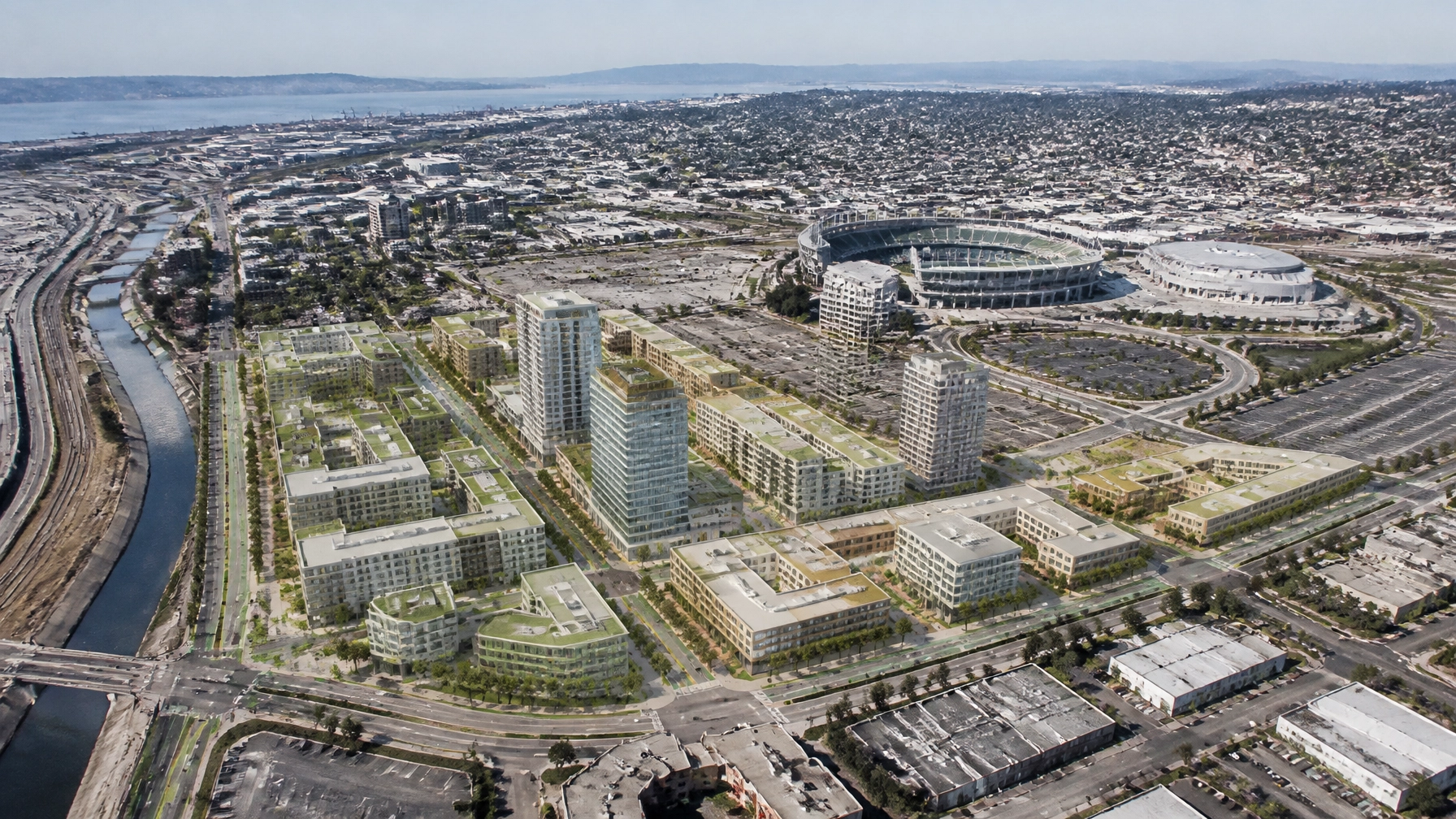
The long-awaited sale of the Oakland Coliseum and Arena site is entering a more intricate phase, one that deserves close attention from business leaders, developers, civic stakeholders, and East Bay residents alike. This week, the Oakland City Council is expected to consider a deal structure that would place the city in the role of lender as part of a sophisticated real estate transaction. For anyone tracking major Bay Area land use and redevelopment, the proposal shows how difficult it can be to reactivate a 112-acre site while balancing public accountability, fiscal discipline, and neighborhood expectations. It also illustrates a broader truth about urban transformation: large projects rarely move forward through simple purchase agreements alone. They often require layered financing, phased obligations, and long-term alignment between public and private interests.
A New Financing Framework
The proposed structure centers on the Oakland Acquisition Company, or OAC, an entity made up of Loop Capital and AASEG, splitting the purchase of the Coliseum complex into two major components. Under the updated terms described in public reporting, the 9-acre Oakland Arena site would be sold for $50 million in cash at closing. The 103-acre Coliseum site, by contrast, would move through a seller-financing structure rather than a fully cash-based close.

OAC has already paid a $5 million deposit, and the remaining $55 million tied to the Coliseum parcel would be paid in three installments over a five-to-seven-year period after closing, with a 5 percent compound interest rate. In practical terms, that means the City of Oakland would transfer the property while collecting a portion of the purchase price over time. That is a meaningful strategic pivot. It allows the buyer to gain site control sooner, begin planning, and move deeper into the entitlement process without waiting to assemble the entire balance up front.
For a site of this scale, that timing matters. Entitlements for a redevelopment project involving housing, commercial uses, infrastructure, transportation planning, and potential venue repositioning can take years. Environmental review, zoning coordination, utility planning, circulation analysis, and community engagement all add time and cost before construction can begin. A seller-financed framework can be appealing in this context because it lets the real estate process and the financing process run in parallel rather than sequentially. That does not remove risk, but it can improve project momentum if the safeguards are strong and the parties remain aligned.
Strategic Outcomes and Fiscal Safety Nets
Beyond the headline sale figures, the transaction presents several immediate and long-range fiscal implications for Oakland. Public reporting indicates that proceeds are expected to support the city's CalPERS unfunded pension liability. That matters because one-time asset transactions often carry the greatest public value when they are used to reduce structural obligations rather than simply backfilling near-term operating pressures.
The proposal also relieves the city of an ongoing operational burden. The Coliseum complex has required significant annual spending for operations, maintenance, and security, with the city and Alameda County each reportedly paying about $6 million per year to keep the property functioning. Offloading those responsibilities to a new owner changes the municipal cost equation right away. In an era when city budgets remain under pressure, removing that recurring obligation is not a minor side benefit. It is one of the most important economic features of the transaction.

At the same time, city officials have reportedly built several protections into the seller-financing arrangement. A deed of trust would allow the city to foreclose if OAC defaults. OAC is also expected to secure a third-party guaranty or payment bond by January 2027, creating another layer of protection for the unpaid balance. Those measures are important because seller financing can unlock progress, but only if the seller has enforceable remedies and credible backstops.
The city also retains a potential upside if the redevelopment advances successfully. Public reporting has indicated that Oakland could receive an additional $15 million once building permits are issued for new construction, along with 6 percent of gross annual ticket sales at both venues. That revenue stream has been estimated at roughly $3 million per year. If realized, those future payments would mean the deal is not only about unloading a difficult asset, but also about preserving participation in the long-term value of the site.
Market Dynamics and Community Impact
The timing of the transaction is especially notable because the tenant landscape at the Coliseum remains in flux. The Oakland Roots and Oakland Soul recently announced they would not return to the site next year, citing operating costs and venue limitations that constrained match-day flexibility and long-term growth. That departure is disappointing for fans and for the area's current event ecosystem, but it also reinforces a core point: the existing venue setup has not been meeting the needs of modern operators in a durable way.
That reality strengthens the case for a broader site transformation rather than incremental patchwork. A property this large, and this symbolically important, needs a forward-looking plan that responds to present-day economics, transportation patterns, development costs, and community expectations in East Oakland. The success of any future vision will depend not only on capital, but also on whether the redevelopment creates practical benefits such as jobs, housing, public access, small business opportunity, and a stronger tax base.
The Arena parcel also appears to remain a valuable asset in its own right. Reporting has suggested that OAC has been in discussions about a possible sale of the Arena site to Oak View Group or Legends Global. If serious interest from venue management firms continues, it signals that the East Oakland location still holds major strategic value for entertainment, events, and regional activity. Even amid the uncertainty surrounding the broader complex, outside interest in the Arena helps validate the site's underlying market relevance.
The MFHC Lens: Planning for the Future
At McFadden Finch Holdings Company, we view developments like this through a practical Philanthropreneur lens. Large-scale urban redevelopment is never just about closing a deal. It is about whether financing, planning, construction, governance, and community outcomes can be aligned over time in a way that produces durable value.
Through Drea Finch Real Estate Services, MFHC understands that complex real estate projects often require financing structures that do more than transfer title. They have to allocate risk, preserve optionality, and create enough runway for planning and approvals to catch up with investment ambition. Through Atlas Premier Services & Consultants, we also recognize that the desire to move quickly only works when regulatory sequencing, entitlement strategy, and project management discipline are taken seriously from the beginning.

As Oakland looks to reposition one of its most recognized properties, the central question is not simply whether the transaction closes. The deeper question is whether the structure creates the conditions for responsible execution, measurable community benefit, and long-term confidence in what comes next. The proposed financing model suggests that even highly complicated public-private transactions can be shaped to support transformation, provided the protections are real, the planning is rigorous, and the community purpose remains clear.
Built to grow strong businesses, meaningful partnerships, and lasting community impact. Connect with McFadden Finch Holdings Company today.
McFadden Finch Holdings Company
Vision. Leadership. Lasting Impact.
Lake Merritt Plaza
1999 Harrison Street, 18th Floor
Oakland, CA 94612
(800) 994-9028
(510) 973-2677
www.m-fhc.com
info@m-fhc.com
McFadden Finch Holdings Company (MFHC) is a premier holdings and investment management firm dedicated to driving sustainable growth and long-term value. Our mission is to bridge the gap between visionary capital and community-centric development, ensuring tomorrow's infrastructure meets today's needs. Through strategic project management and rigorous market analysis, we empower our partners to navigate the complexities of the California economic landscape with confidence and clarity.
Disclaimer: This content is for general informational purposes only and does not constitute legal, financial, tax, investment, real estate, business, or other professional advice. Reading this content does not create an advisory, client, fiduciary, or contractual relationship with McFadden Finch Holdings Company. Because every business, investment, property, and strategic situation is different, you should consult qualified professionals regarding your specific circumstances. McFadden Finch Holdings Company makes no warranties regarding the accuracy or completeness of this information and is not responsible for third-party content, links, products, services, or organizations referenced. Testimonials, examples, case studies, and projected outcomes are illustrative only and do not guarantee similar results.