
In 1978, a small group of educators in Santa Rosa, California, noticed a glaring void in the K-12 curriculum: women were almost entirely absent from the history books. They organized a "Women’s History Week" around International Women’s Day, a local grassroots effort that included a parade, an essay contest, and presentations at dozens of schools. They didn't realize then that they were sparking a national movement, but they knew that the narrative of human progress was being told with half the voices missing. This was not about adding a "nice to have" elective to the syllabus; it was about correcting a fundamental inaccuracy in how we understand power, labor, and society.
The recognition of women’s history is not a finalized achievement or a polite annual nod to the past. It is an active, ongoing investigation into the labor that built our modern world and the leadership that sustains it. As we navigate the complexities of the 2026 economic landscape, understanding this legacy is essential for anyone involved in management, investment, or community building. Women’s History Month exists because the default setting of history remains exclusionary. We must move beyond the "firsts" and the "onlys" to examine the systemic shifts women have forced into existence. This article explores the rigorous origin of this month, the milestones of progress, the heavy costs endured, and the leadership models that define our current era.
The Origin Story: From Sonoma County to the White House
The journey from a local school district in California to a federally mandated monthly observance was driven by specific, tireless labor. In 1978, the Education Task Force of the Sonoma County Commission on the Status of Women, led by figures like Molly Murphy MacGregor and Gerda Lerner, initiated the first Women’s History Week [1]. Their goal was simple: provide the resources that traditional textbooks ignored. Gerda Lerner, often called the "pioneer of women's history," argued that history is not just about the past, it is a tool for self-definition and political agency.
By 1979, MacGregor and other advocates attended a Women’s History Institute at Sarah Lawrence College. When they shared the success of the California initiative, other participants realized they could replicate this in their own communities. The momentum reached the White House in 1980, where President Jimmy Carter issued the first Presidential Proclamation declaring the week of March 8th as National Women’s History Week. Carter’s proclamation was direct: "Too often the women were unsung and sometimes their contributions went unnoticed. But the achievements, leadership, courage, strength and love of the women who built America was as vital as that of the men whose names we know so well" [2].
However, a week was insufficient for the depth of the task. For the next seven years, the National Women’s History Project (now the National Women’s History Alliance) lobbied Congress tirelessly. In 1987, after being petitioned by the project, Congress passed Public Law 100-9, designating March as Women’s History Month [3]. This was not a gift bestowed by the government ⸮ it was a hard-won legislative acknowledgment of a historical necessity. Since 1995, every U.S. President has issued annual proclamations to maintain this tradition, but the original impetus remains the same: the demand for an accurate accounting of human endeavor.
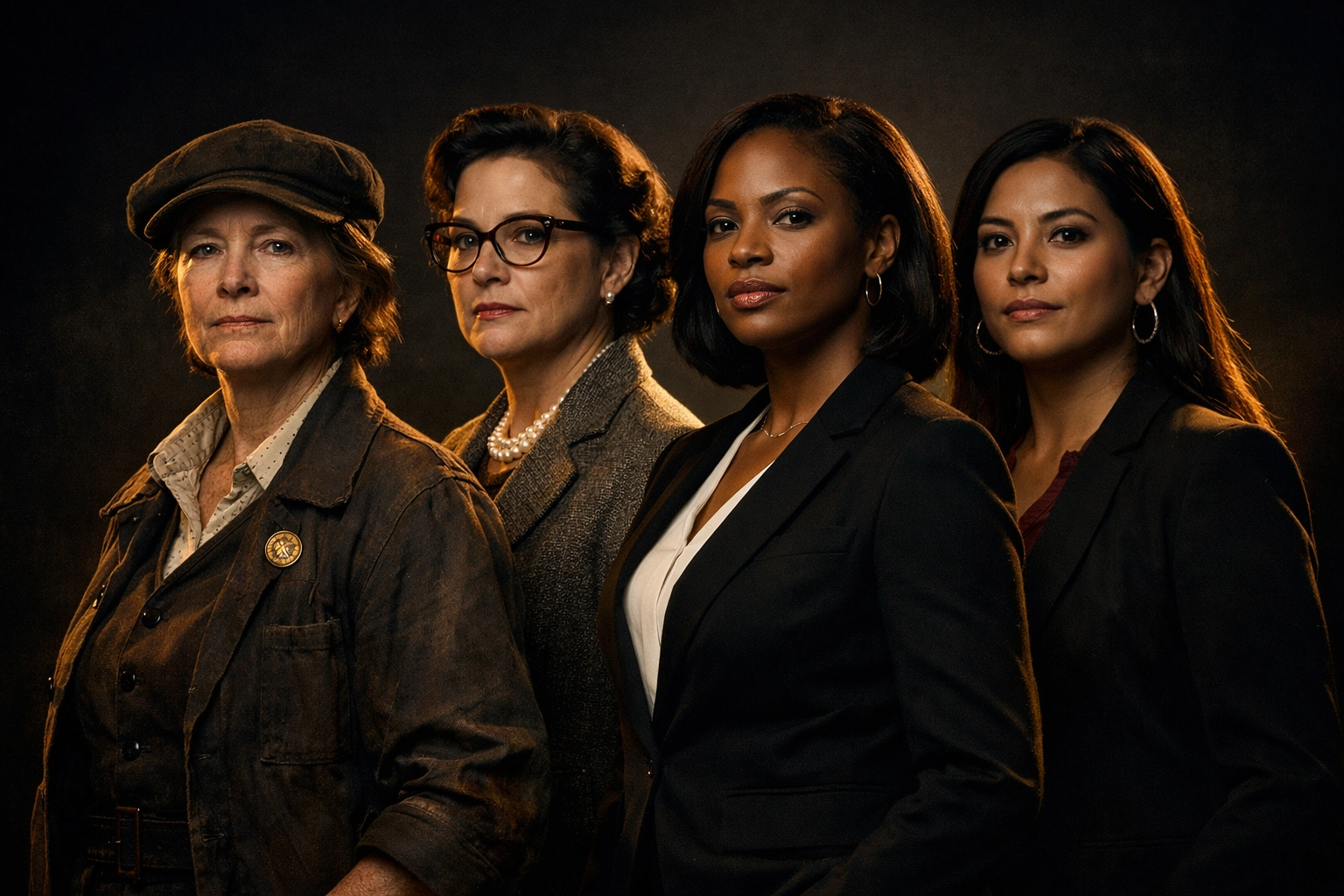
A Timeline of Structural Shifts: 1848–2022
Progress is rarely a straight line; it is a series of ruptures followed by consolidation. To understand where we stand in 2026, we must look at the specific milestones that moved the needle on voting rights, labor protections, and institutional leadership.
- 1848: Seneca Falls Convention. The first women’s rights convention in the U.S., where the Declaration of Sentiments demanded social, civil, and religious rights for women, including the right to vote [4].
- 1912: The "Bread and Roses" Strike. Led primarily by immigrant women in Lawrence, Massachusetts, this strike highlighted the intersection of gender, labor rights, and fair wages.
- 1920: The 19th Amendment. The ratification granted women the right to vote, though it would take decades more, and the Voting Rights Act of 1965, to ensure this right for Black and Indigenous women [5].
- 1963: Equal Pay Act. The first federal law prohibiting sex-based wage discrimination for equal work.
- 1964: Title VII of the Civil Rights Act. This landmark legislation prohibited employment discrimination based on race, color, religion, sex, or national origin.
- 1972: Title IX. Part of the Education Amendments, this law prohibited sex-based discrimination in any school or education program receiving federal funding, revolutionizing women’s athletics and higher education [6].
- 1981: Sandra Day O'Connor. Her appointment as the first female Justice of the Supreme Court broke one of the highest glass ceilings in the American legal system.
- 1993: Family and Medical Leave Act (FMLA). Guaranteed certain employees up to 12 weeks of unpaid, job-protected leave for family or medical reasons, a crucial (if incomplete) step in recognizing the burden of care.
- 2021: Kamala Harris. Sworn in as the first woman, first Black American, and first South Asian American Vice President of the United States.
- 2022: Ketanji Brown Jackson. Confirmed as the first Black woman to serve on the U.S. Supreme Court, marking a major shift in the demographic representation of the judiciary.
The Cost of Progress: Labor, Gaps, and Barriers
While we celebrate milestones, we must also account for the "cost of progress." This refers to the systemic barriers and personal sacrifices women have navigated to achieve these wins. For much of American history, women’s labor, particularly in the domestic sphere, has been classified as "unpaid" and therefore invisible in traditional economic metrics. According to data from the National Bureau of Economic Research (NBER), the "motherhood penalty" continues to significantly impact lifetime earnings, even as educational attainment for women outpaces that of men [7].
The "broken rung" in the corporate ladder remains a persistent issue. For every 100 men promoted to manager, only 87 women are promoted, and for women of color, that number drops significantly [8]. This isn't a lack of ambition; it's a structural failure in how leadership is identified and nurtured.
The pay gap remains a stark reminder of unfinished business. Based on 2025 Census data projections, the gap is not closing as fast as many had hoped⸽
- White women earn approximately 81-84 cents for every dollar earned by white men.
- Black women earn approximately 65-68 cents.
- Latinas and Native American women earn approximately 56-59 cents [9].
This disparity is not just about "choices"; it is a reflection of occupational segregation, the undervaluation of "care" work, and the ongoing impact of bias in performance reviews and salary negotiations. At McFadden Finch Holdings Company, we believe that professional standards must include an aggressive commitment to pay equity and transparency.
Women Leading Now: The 2026 Data
In 2026, women are no longer just "entering" the workforce; they are the primary engines of entrepreneurial growth and economic stability. Recent data highlights a significant shift in the landscape:
- Entrepreneurship: There are now over 14.2 million women-owned firms in the U.S., employing millions and generating trillions in revenue [10].
- Performance: A long-term study of Fortune 1000 firms found that those led by female CEOs produced a 226% higher ROI than the S&P 500 average over a ten-year period [11].
- Education: Women now earn the majority of bachelor's, master's, and doctoral degrees in the United States, positioning them as the most qualified talent pool in history.
- The Care Burden: Despite professional gains, women still perform roughly 2.5 times more unpaid care work than men, a reality that the COVID-19 pandemic and its aftermath highlighted as a major risk to economic participation [12].

Spotlights: Radical Leadership in Action
To move beyond generic celebration, we must look at specific leaders who operated at the intersections of identity and advocacy. Their lessons are directly applicable to modern leadership.
1. Dolores Huerta (Labor & Latina Advocacy)
Huerta co-founded the United Farm Workers (UFW) alongside Cesar Chavez. While Chavez was the face of the movement, Huerta was the lead negotiator. She challenged the stereotype of the "quiet" woman, famously using the slogan "Sí, se puede" (Yes, we can). The Lesson: Leadership is often found in the grit of negotiation and the refusal to accept "no" as a final answer.
2. Marsha P. Johnson (Black, LGBTQ+, & Civil Rights)
A central figure in the Stonewall Uprising, Johnson was a tireless advocate for homeless LGBTQ+ youth and those living with HIV/AIDS. She lived at the intersection of multiple marginalized identities and still chose to lead through community care. The Lesson: Real leadership protects the most vulnerable first.
3. Wilma Mankiller (Indigenous Leadership)
As the first woman elected Principal Chief of the Cherokee Nation, Mankiller focused on community development and healthcare. She navigated a deeply patriarchal political structure to revitalize her nation’s infrastructure. The Lesson: Institutional change requires both cultural respect and technical competence.
4. Patsy Mink (Asian American & Title IX)
The first woman of color elected to the U.S. House of Representatives, Mink was a primary author of Title IX. She faced discrimination in her own education and used that experience to write legislation that opened doors for millions of others. The Lesson: Use your seat at the table to build a longer table.
5. Judy Heumann (Disability Rights)
Recognized as the "mother" of the disability rights movement, Heumann led the historic 504 Sit-in, which forced the government to implement regulations protecting people with disabilities from discrimination. The Lesson: Inclusion is not a favor; it is a fundamental civil right that often requires disruptive action to secure.
Comparison: Legislative Milestones vs. Economic Reality
| Milestone | Intent | 2026 Reality |
|---|---|---|
| Equal Pay Act (1963) | End wage disparity based on sex. | ~18% average gap remains; larger for WOC. |
| Title IX (1972) | Equity in education and sports. | High participation, but severe funding gaps in pro-sports. |
| FMLA (1993) | Job protection for family leave. | Unpaid leave is inaccessible for many low-income workers. |
| Title VII (1964) | Prohibit workplace discrimination. | Bias persists in AI-driven hiring and promotion algorithms. |
Case Study: The Care Economy and the "Great Retention" (2024–2026)
In late 2024, a major shift occurred in the American workforce. As the "Infrastructure Supercycle" [13] began to demand more skilled labor, companies realized that the primary barrier to retention was not salary alone, it was the collapse of child and elder care infrastructure.
A coalition of women-led investment firms and NGOs began advocating for "Care as Infrastructure." They argued that without reliable care, the talent pool remained volatile. Organizations that implemented flexible "core hours" and direct care subsidies saw a 30% increase in retention among mid-level female managers. This wasn't "diversity work"⸽ it was a hard-nosed business strategy to protect human capital. This case study proves that when we center the specific needs of women's labor, the entire economy becomes more resilient.
What Smart Critics Argue
Some critics argue that "Women’s History Month" is an outdated concept that balkanizes history. They suggest that by segregating women's contributions into a single month, we inadvertently treat them as a "special interest" group rather than as half of the human story. Others argue that corporate "pink-washing", where companies change their logos for March but fail to address internal pay gaps, is performative and counterproductive.
The response to these critics is simple: we will stop needing a dedicated month when the "default" history and "default" leadership model finally reflect reality. Until the pay gap is closed and the "broken rung" is fixed, a dedicated time for focus, data, and accountability is a necessary corrective tool. As for "pink-washing," the solution is not to end the month, but to hold organizations to a higher standard of transparency.
Key Takeaways
- History is a Correction: Women’s History Month was born from a need to fix an inaccurate historical record.
- Leadership is Collective: From Dolores Huerta to Judy Heumann, successful movements rely on intersectional leadership.
- Data Matters: The ROI of female leadership is documented and significant; it is a fiduciary duty to pursue gender equity.
- The Gap is Structural: Pay inequity is not a result of individual "choices" but systemic undervaluation of certain types of labor.
- Care is Infrastructure: Economic stability depends on how we value and support the labor of caregiving.
- Progress is Not Guaranteed: Rights won in the 1960s and 70s require constant vigilance and legislative protection.
- Representation is the Floor: Getting women into the room is the start; changing the room’s culture is the goal.
What to Do Next
- Conduct a Pay Audit: If you are in leadership, review your organization’s compensation data by gender and race. Correct disparities immediately.
- Sponsor, Don't Just Mentor: Mentorship is advice; sponsorship is using your power to put someone’s name forward for a promotion or high-visibility project.
- Audit Your Library: Ensure your internal resource libraries and educational materials reflect a diverse range of female leaders and thinkers.
- Support Care Policy: Advocate for paid family leave and child care support at the state and federal levels. Visit the McFadden Finch Foundation to see how we support community initiatives.
- Listen to the "Quiet" Labor: Identify the women in your organization who are doing the "office housework", scheduling, emotional labor, and culture building. Value it in their performance reviews.
- Educate Your Team: Use this month to share the stories of leaders like Patsy Mink or Wilma Mankiller, focusing on their strategic impact, not just their "first" status.
- Invest in Women-Led Firms: Review your portfolio and look for opportunities to support female founders and managers.
- Evaluate Your Hiring Algorithms: If using AI for recruitment, ensure it is audited for gender and racial bias.
- Hold the Door: If you have reached a position of power, make it your mission to ensure you are not the last one through the door.
At McFadden Finch Holdings Company, our mission is to drive sustainable growth by investing in the people and systems that move our world forward. We recognize that the labor and leadership of women are not just historical footnotes, they are the bedrock of a high-performance economy.
To learn more about our commitment to values-driven investment and leadership, contact us today.
McFadden Finch Holdings Company
(510) 973-2677
Sources
[1] National Women’s History Alliance, "Why March is Women’s History Month," 2024. https://nationalwomenshistoryalliance.org/
[2] The American Presidency Project, "Presidential Proclamation 4727, National Women's History Week, 1980," UC Santa Barbara.
[3] National Archives, "Women's History Month," https://www.womenshistorymonth.gov/about/
[4] Library of Congress, "Seneca Falls Convention," https://www.loc.gov/item/today-in-history/july-19/
[5] National Constitution Center, "The 19th Amendment," https://constitutioncenter.org/the-constitution/amendments/amendment-xix
[6] U.S. Department of Education, "Title IX and Sex Discrimination," https://www2.ed.gov/about/offices/list/ocr/docs/tix_dis.html
[7] National Bureau of Economic Research (NBER), "Children and Gender Inequality," https://www.nber.org/papers/w24219
[8] McKinsey & Company, "Women in the Workplace 2023-2024," https://www.mckinsey.com/featured-insights/diversity-and-inclusion/women-in-the-workplace
[9] AAUW, "The Simple Truth About the Gender Pay Gap," 2024-2025 Edition, https://www.aauw.org/resources/research/simple-truth/
[10] American Express, "2024 State of Women-Owned Businesses Report."
[11] Quantopian, "Women-Led Fortune 1000 Companies Performance Study," (Updated 2023).
[12] International Labour Organization (ILO), "Care work and care jobs for the future of decent work," https://www.ilo.org/global/publications/books/WCMS_633135/lang–en/index.htm
[13] McFadden Finch Holdings Company, "The Infrastructure Supercycle," https://www.m-fhc.com/the-infrastructure-supercycle-data-centers-ai-and-the-re-engineering-of-the-2026-economic-landscape
Fact-Check List
- Origin of Women's History Week: Confirmed as 1978 in Sonoma County, CA.
- Carter Proclamation: Confirmed President Jimmy Carter issued the first proclamation in 1980.
- Public Law 100-9: Confirmed as the 1987 act designating March as Women's History Month.
- ROI of Female CEOs: Based on the Quantopian/Fortune 1000 study showing 226% outperformance.
- Broken Rung Statistic: McKinsey's "Women in the Workplace" reports 87 women promoted for every 100 men.
- Pay Gap by Race: Based on AAUW and 2025 Census projections (84c/68c/59c).
- Title IX Author: Patsy Mink is confirmed as the primary author and namesake of the act.
- Sandra Day O'Connor: Confirmed as the first female Supreme Court Justice (1981).
- Unpaid Care Work: ILO data confirms women perform 2.5x more unpaid labor than men globally.
- Number of Women-Owned Firms: American Express reports approximately 14.2 million firms as of recent data cycles.
Social Sharing Quotes
- "Women’s History Month is not a finalized achievement or a polite annual nod to the past. It is an active investigation into the labor that built our modern world."
- "The 'broken rung' in the corporate ladder isn't a lack of ambition; it's a structural failure in how leadership is identified and nurtured."
- "Leadership is often found in the grit of negotiation and the refusal to accept 'no' as a final answer. #WomensHistoryMonth #Leadership"

