
The latest data from McKinsey & Company and LeanIn.Org delivers a stark warning: corporate America is backsliding on women's advancement precisely when businesses need the strongest, most diverse leadership benches in history. The Women in the Workplace 2025 report marks the 11th year of tracking progress, and for the first time, reveals troubling reversals that demand immediate leadership attention.
For MFHC leaders and portfolio companies, this isn't just a diversity issue, it's a competitive advantage at risk. Here's what the data shows, why it matters for your business outcomes, and the concrete steps successful leaders are taking in 2026.
The State of Women in the Workforce: Progress Interrupted
The numbers paint a clear picture of momentum lost. Only 54% of companies now say women's career advancement ranks as a high priority, a dramatic drop from 87% in 2019. This isn't a gradual decline; it's a sharp reversal that coincides with broader cultural and political headwinds affecting workplace diversity initiatives.
What's driving this retreat? Companies are scaling back supportive programs including remote work flexibility, formal sponsorship systems, and targeted career development. Meanwhile, return-to-office mandates disproportionately impact mothers, and online cultural movements promoting traditional roles are influencing workplace dynamics.
The result: the first-ever documented "ambition gap" where women report lower interest in promotion than men. Across all levels, 80% of women express interest in advancement compared to 86% of men. The gap widens significantly at entry-level (69% of women versus 80% of men) and senior leadership positions (84% of women versus 92% of men).
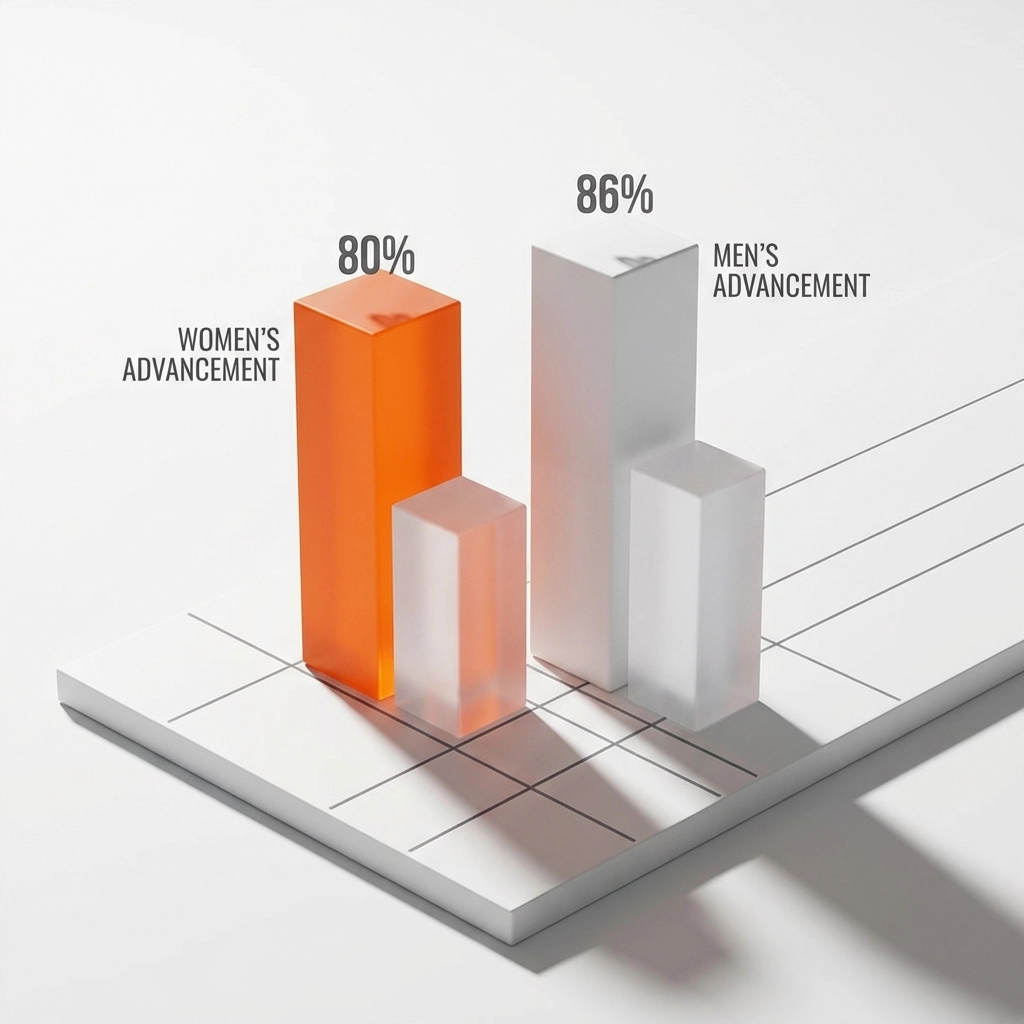
Critically, research shows this ambition gap disappears entirely when women receive equal career support. This means the problem is structural, not intrinsic, and therefore solvable with the right leadership commitment.
The Broken Rung & Flexibility Stigma: Barriers That Compound
The Persistent Promotion Gap
The "broken rung" at the first step to management remains the most significant barrier to leadership diversity. For every 100 men promoted to manager, only 93 women advance, and the numbers drop further for women of color. This early-career bottleneck creates a pipeline problem that compounds at every level.
The mathematics are unforgiving: fewer women in management means fewer candidates for senior roles, which means less diverse leadership benches. Companies cannot fix leadership diversity later if they fail to address this foundational issue.
The Remote Work Penalty
Women working remotely face a troubling double standard. Women who work remote most of the time report fewer sponsors and fewer promotions, while men see no such penalty for identical arrangements. This flexibility stigma particularly impacts mothers, who are more likely to need remote work accommodations.
Nearly 25% of entry-level and senior women cite personal obligations as advancement barriers, compared to just 15% of men. When companies eliminate flexible work options, they effectively eliminate critical accommodations that allow women to compete on equal footing.

Why Sponsorship Drives Outcomes
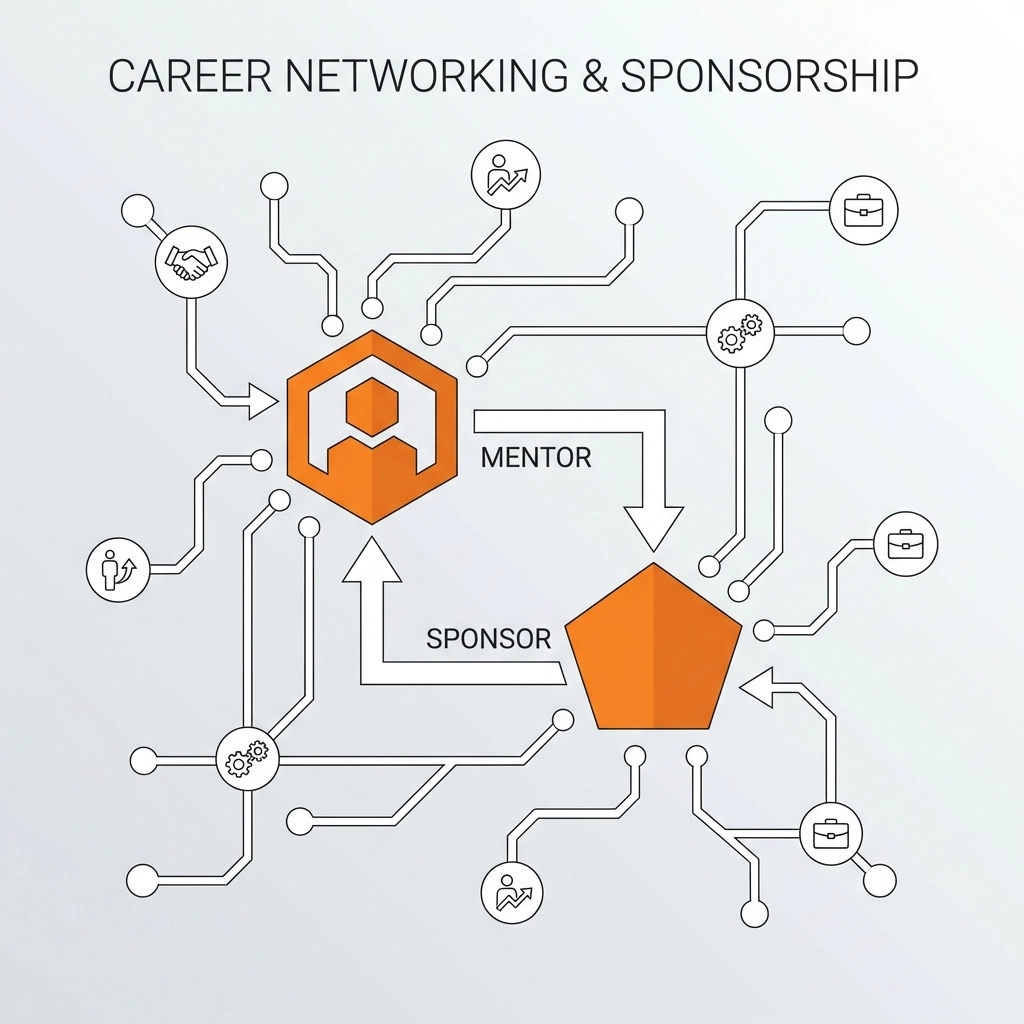
The data on sponsorship reveals both the problem and the solution. Employees with sponsors earn promotions at nearly double the rate of those without sponsorship, yet women consistently receive less sponsorship support than their male colleagues.
Entry-level women start behind in sponsorship and stay behind throughout their careers. This gap explains much of the advancement disparity, as sponsors provide:
• Visibility to senior leadership and decision-makers
• Advocacy during promotion discussions and succession planning
• Stretch opportunities that build promotion-worthy experience
• Network access that opens doors to new roles and responsibilities
• Honest feedback about performance and advancement requirements
The sponsorship advantage is measurable and significant. Companies tracking sponsorship outcomes see clear patterns: employees with active sponsors advance faster, earn more, and report higher job satisfaction.
Concrete Steps MFHC Leaders Must Take
Based on the research findings and successful implementation models, here are the specific actions MFHC leaders should prioritize in 2026:
1. Put Sponsorship on a Scoreboard
Create transparent tracking systems for sponsorship by level, function, and outcome. Monitor:
- Sponsorship participation rates by gender and level
- Promotion rates for sponsored versus non-sponsored employees
- Sponsor-to-outcome ratios across different departments
- Career progression timelines for sponsored women versus men
Implementation tip: Quarterly reviews with visible metrics drive accountability and highlight successful sponsorship programs.
2. Train Managers on Career Support as Core Job Function
Career advocacy cannot be optional or informal. Successful companies are training managers to view career development as a fundamental responsibility, then rewarding follow-through. Key training elements include:
• How to identify high-potential women early in their careers
• Structured sponsorship and mentorship program participation
• Bias recognition in promotion and succession discussions
• Flexible work arrangement management without advancement penalties
Link manager performance reviews to team advancement outcomes, particularly for women and underrepresented groups.
3. Audit Promotions Quarterly and Publish Patterns Internally
Transparency drives accountability. Companies seeing the strongest progress conduct quarterly promotion audits that track:
- Promotion rates by gender, level, and department
- Time-to-promotion comparisons across demographic groups
- Succession planning diversity at all leadership levels
- Exit interview data from departing women leaders
Publish findings internally to create organizational awareness and urgency around promotion equity. When patterns become visible, solutions follow.
4. Protect and Expand Flexibility Without Advancement Penalties
The data is clear: flexibility stigma creates real career consequences for women. Leaders must actively combat this by:
• Ensuring remote workers receive equal consideration for promotions
• Training managers to evaluate performance outcomes, not location
• Creating advancement pathways that don't penalize flexible arrangements
• Monitoring promotion rates specifically for employees using flexible work options
Successful companies are discovering that flexibility done right enhances performance rather than hindering it.
5. Address the Broken Rung with Intentional Development
Focus intensive development resources on entry-level women to fix the early-career promotion gap. This includes:
- Targeted leadership development programs for high-potential women
- Cross-functional project assignments that build visibility
- Formal feedback and advancement planning conversations
- Manager training on recognizing and developing women's leadership potential
The research shows that early intervention creates lasting pipeline improvements that compound over time.
Why This Matters for MFHC's Portfolio Success
Companies with stronger gender diversity at leadership levels consistently outperform competitors on key business metrics. The correlation between diverse leadership and business outcomes includes:
• Better decision-making through diverse perspectives and reduced groupthink
• Stronger financial performance with diverse leadership teams showing superior ROI
• Enhanced talent attraction as top candidates increasingly value inclusive workplaces
• Improved client relationships reflecting customer base diversity
• Reduced turnover costs through more inclusive, supportive work environments
For MFHC portfolio companies, this represents a competitive advantage that's measurable in both talent acquisition and business results.
Our approach to leadership development emphasizes building diverse, high-performing teams that drive sustainable growth across all business sectors.
Summary: The Choice Is Clear
The Women in the Workplace 2025 data presents a clear choice for corporate leaders: recommit to women's advancement with strategic focus and measurable actions, or risk losing ground on diversity gains that directly impact business performance.
The encouraging news: this is a solvable problem. When women receive equivalent support through sponsorship, development, and flexible advancement pathways, the ambition gap disappears and promotion rates equalize.
For MFHC leaders, 2026 represents a decisive opportunity to differentiate through inclusive leadership development that drives both social impact and business results.
Frequently Asked Questions
What's causing the decline in women's workplace advancement?
Companies are scaling back supportive programs including remote work, sponsorship systems, and targeted development, while cultural headwinds and return-to-office mandates disproportionately impact women.
How significant is the sponsorship gap?
Employees with sponsors are promoted at nearly twice the rate of those without, yet women consistently receive less sponsorship support throughout their careers.
Can the "ambition gap" be fixed?
Yes: research shows the gap disappears entirely when women receive equal career support, proving this is a structural issue with structural solutions.
What's the "broken rung" and why does it matter?
The broken rung refers to the first step to management, where only 93 women are promoted for every 100 men. This early-career bottleneck creates pipeline problems that compound at every leadership level.
Ready to audit your promotion and sponsorship practices? Contact MFHC to discuss leadership development strategies that drive both diversity and business performance across your portfolio companies.
Want to join our next DEI strategy session? Connect with our team to explore evidence-based approaches to inclusive leadership development.